LeAnn Rimes — Blue
Curb Records · Released July 9, 1996
Produced by Wilbur C. Rimes and Chuck Howard · Co-produced by Johnny Mulhair · Mastered by Glenn Meadows at Masterfonics
In the spring of 1993, a Fort Worth radio man named Bill Mack handed a cassette to a talent manager named Marty Rendleman. Mack had been the "Midnight Cowboy" of country radio since 1969, working the overnight shift on WBAP and talking to truckers and insomniacs from midnight to five, and for most of that time he had been carrying around a song. He had written "Blue" back in the late 1950s, a slow country waltz built on a descending melody that seemed to leave the floor open on purpose, and he had written it hearing exactly one voice. "I just couldn't hear anyone but Patsy sing it," he'd say. He was about to send the demo to Cline's producer, Owen Bradley, when the news came that Patsy Cline had died in a plane crash, and the song lost the only singer Mack had ever imagined for it.
He didn't give up on it. A few others took a run at "Blue" across the years that followed — Roy Drusky cut a version, and a Fort Worth lounge singer named Polly Stevens pressed a few hundred cassettes of her own in the early nineties — and none of them stuck. Mack held onto the song anyway. He knew what he had; he just hadn't found the room for it yet. By the time he pressed that cassette on Rendleman, "Blue" had been waiting the better part of four decades for the right throat to come along.
Rendleman passed the tape to Wilbur Rimes, father and manager of a ten-year-old from Garland, Texas, who had been singing almost since she could talk. Wilbur listened, didn't care for it, decided it was too grown for a kid, and threw it out. His daughter fished the cassette back out of the trash. She has told this part of the story for years like someone recounting a bet she already knew she'd win: she played Mack's demo and threaded a yodel through the chorus — bright, unexpected, a whole second melodic line the songwriter had never conceived — and it rewired the song from the inside. Wilbur heard what she'd done and reversed himself on the spot. "She put that little yodel lick in it," he said, "and I said, 'That's it. She made it her own.'" The child had outvoted the producer, and she was right.
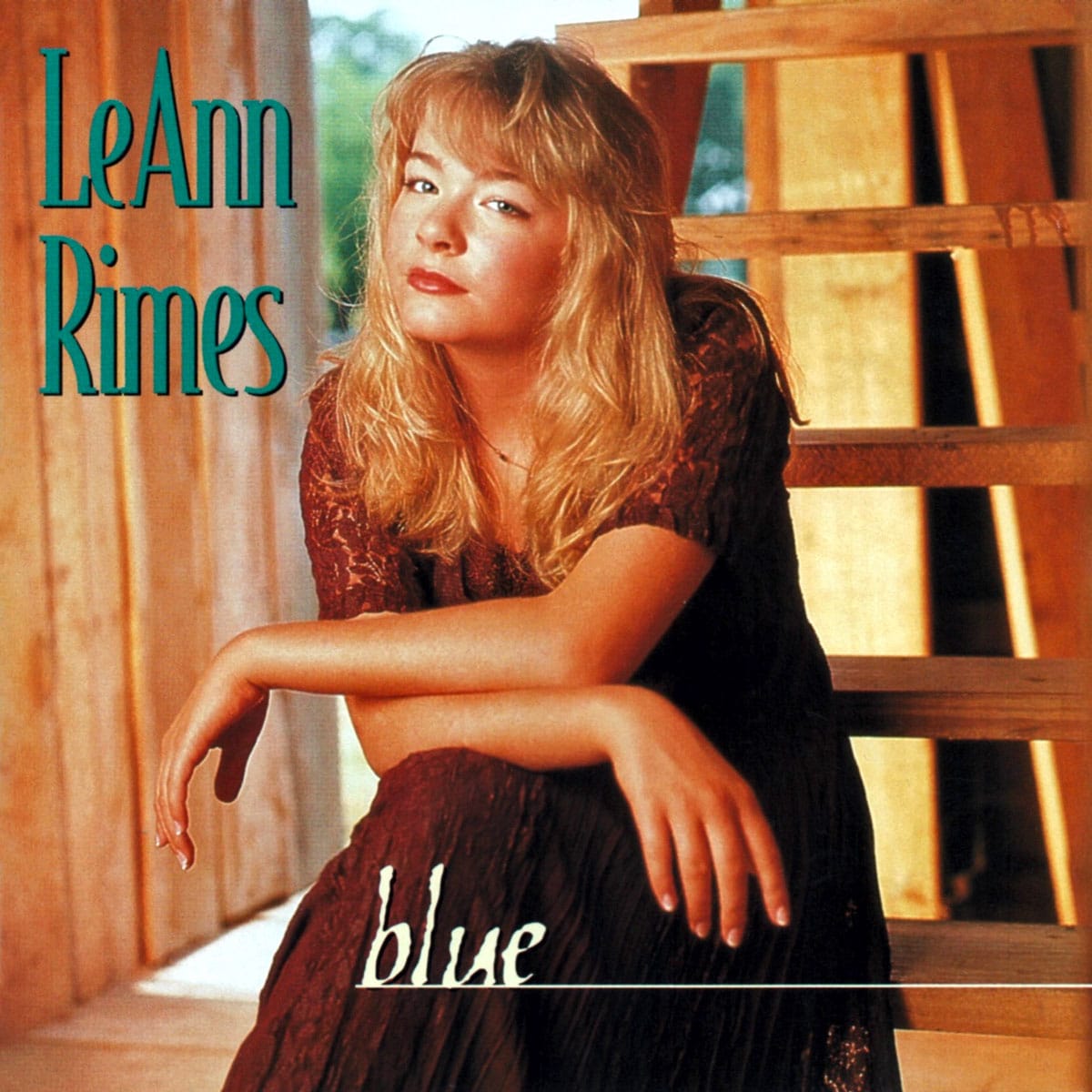
Three years later, on July 9, 1996 — thirty years ago this week — Curb Records released Blue as her major-label debut. She had turned thirteen the previous August. It moved more than a hundred and twenty thousand copies in its first week, one of the largest opening weeks Nashville had ever seen from a newcomer of any age, hit No. 1 on Billboard's Top Country Albums chart and No. 3 on the Billboard 200, and before the sales cycle wound down had been certified six-times platinum in the United States, with millions more across Canada, Australia, and the U.K. — roughly eight million worldwide. It remains the best-selling record of her career, and she made it before she could drive. Her own read on the numbers, at fourteen, was the correct one: "When they say I sold a hundred and twenty-nine thousand albums in a week, it's like, this is cool. If I dwelled on it, I'd be a pain."
THE KID FROM GARLAND
Nobody who had been paying attention in Texas was surprised. She had won Star Search at eight. She had sung the national anthem at Dallas Cowboys games, a cappella, and the a cappella part had started as an accident — at a rodeo in 1992 the sound system swallowed the backing track, and rather than freeze, the kid simply sang it alone, unaccompanied, in front of the crowd. "It didn't faze her at all," Rendleman remembered. "We were all freaking out, and she just went out there. Stage fright has never been a problem." That became her signature: the anthem, big and unhurried, no net under it.
By eleven she had made an independent album, All That, cut partly in the studio that would give Blue its soul, and it was strong enough to start a bidding war. The industry veterans circled. Jimmy Bowen, running Liberty Records, loved the voice and wouldn't sign her — he pointed a finger at Wilbur and said, "Don't you steal her childhood!" Decca came calling; so did Narvel Blackstock, Reba McEntire's manager and husband. And then there was Mike Curb, who took the little indie tape home on a family vacation, got so pulled in by "Blue" that he stopped at a filling station and phoned Wilbur from a pay phone, and turned up to close the deal flanked by two of his own daughters, about LeAnn's age. Curb won. Whatever else the industry disagreed about, everyone in it could hear the same thing on that tape.
BUDDY HOLLY'S ROOM
Blue wasn't made in a single room, but the room it started in is the whole story. The earliest sessions ran at Norman Petty Studios in Clovis, New Mexico — the little building where a twenty-year-old Texan named Buddy Holly cut "That'll Be the Day" and "Peggy Sue" in 1957 and rearranged American popular music without asking anyone's permission. It was no accident that a Texas kid's album ran through that particular room. LeAnn's attorney and co-manager, Lyle Walker, owned the place. Petty had died in 1984, but the studio kept working as a legacy facility, and Johnny Mulhair — a local guitarist and engineer who had been recording LeAnn since she was small — produced and engineered her there, cutting her vocals on the vintage gear from Petty's own collection and running them out through the echo chamber Petty had built by hand. A kid from Garland sang into the same air Buddy Holly had.
As the sessions grew, the work moved to Rosewood in Tyler, Texas, near the family's Garland home, and on to Mid-Town Tone & Volume and OmniSound in Nashville, with overdubs at KD Studios and mixing split among Masterfonics, Petty's, and Rosewood. Three producers shared the credits — Wilbur Rimes; Chuck Howard, who handled five tracks including "One Way Ticket" and "Honestly"; and Mulhair, co-producing three — and the call sheet filled with Nashville's first string. Dann Huff and Brent Rowan on guitars, John Jorgenson's Telecaster in the mix, Paul Franklin and Bruce Bouton on steel, Glenn Worf on bass, Chad Cromwell and Greg Morrow splitting the drum chair, Larry Franklin on fiddle, Steve Nathan on keys, Terry McMillan on percussion, Milo Deering adding steel and mandolin, and Pam Rose and Mary Ann Kennedy — Kennedy Rose — stacking the harmonies. For a debut by a thirteen-year-old, that is a serious room, and not one player in it treated the project like a novelty. The record sounds exactly like what it was: a real album, made by grown professionals, built around a kid who could keep up with any of them.
THE ACCIDENTAL SINGLE
"Blue" was never supposed to lead. Curb had lined up "The Light in Your Eyes," a Dan Tyler song, as the first single, and shot its video first. Then radio programmers heard a ten-second snippet of the title track in LeAnn's electronic press kit — leaked or strategically shared, depending on who's telling it — and they locked onto the yodel and that antique waltz tempo and would not let go. "Every time we play that song the phone lines just explode," an Austin music director said that spring. "Then, when they find out that LeAnn is only thirteen, the reaction is, 'You gotta be kidding.'" The label scrambled to reverse course and rushed "Blue" out as the official lead single on June 4, 1996.
There is a wrinkle inside the wrinkle, one most listeners have never registered. Rimes said years later that the version Curb released was the one she'd recorded at eleven, during the All That sessions in Clovis — not the newer cut made for the album — and that the label put it out by mistake. Three distinct "Blue"s existed by 1996: the Clovis original, the single derived from it, and a third recording made at Rosewood for the album proper. The one that reached No. 10 on Hot Country Songs, crossed to No. 26 on the Hot 100, and won the Grammy was a child's vocal captured in Buddy Holly's old studio and let loose into the world before anyone at the label had planned for it. The record that answered nearly forty years of Bill Mack's waiting got out the door by accident.
The video only sharpened the moment. Chris Rogers shot it at Barton Springs Pool in Austin's Zilker Park, and it went on to win two Billboard Music Video Awards — a clip of a barefoot teenager that somehow carried the weight of a torch song written before her parents had met.
THE LIGHT IN YOUR EYES
And the Dan Tyler song got where it was going anyway — though the road ran longer and stranger than anyone planned. Tyler's connection to the family predated the record deal, and by his accounting he was the first Nashville music professional to work with them. Like LeAnn, he was born in Mississippi, and it was through a Mississippi connection that a VHS tape reached him — the little girl singing the national anthem at a ball game. The tape had a phone number on it. Tyler called, and Wilbur Rimes answered from work: "I could hear the clank of the oil rig in the background as we spoke." The family had come to Texas when LeAnn was small — primarily, Tyler says, for the performance opportunities a bigger market could offer a child who could already do what she did — and by the time he began advising them, she was well on her way. He grew close to Wilbur, to LeAnn's mother, and to Lyle Walker — the same Lyle Walker whose Clovis studio would give the album its soul.
What Tyler heard on that tape put him at odds with an entire industry. "Most everyone on the Row 'passed' on her because of her age," he tells Generation Country. "But, to me, her age matched with her amazing voice was the thing that set her apart." He gives Mike Curb credit for reading the same dynamic — and remembers that Jimmy Bowen and all the majors passed, which squares with the story Bowen's own finger-wagging already told.
"The Light in Your Eyes" was one of the few original songs she had — alongside "Blue" itself — and Tyler had written it alone and published it himself, a detail with real arithmetic in it: in the CD era, every copy carried a nine-cent mechanical royalty, and the album would sell more than six million copies domestically. For a solo-written, self-published song, the benefits were, as Tyler puts it, significant — the kind of payday Nashville's co-write-and-split economy almost never hands one person whole. Curb thought the song was perfect for a child artist, and believed in it to the tune of a couple hundred thousand dollars of video before "Blue" rearranged everything. Tyler is cheerfully unguarded about what that felt like: "Yes, my song was intended to be her first single but 'Blue' blew it away, forgive the pun. At the time, I was sorely disappointed but the great success of 'Blue' set the stage for the historic launch of her career."
"It was very gratifying when my song was eventually released as a single," he says — and then it ran into a piece of chart history. By Tyler's account it was on its way to No. 1 when Curb released LeAnn's "How Do I Live" and went to war with MCA, Tony Brown and Trisha Yearwood over dueling versions of the same song. "Curb sacrificed 'Light' to promote 'How Do I Live,' but we still made it to #5!" LeAnn's version became the pop smash; Trisha's took the country hit; and the song meant to open the album closed it out a top-five winner, a year late and a hit regardless. Some songs keep their appointments no matter how the schedule gets rearranged.
The ledger on the song closed, as far as Tyler knew, decades ago. "It was a win-win for me and LeAnn," he says, "and I thank her from the bottom of my heart."
Then, all these years later, the song paid him one more royalty, and this one never showed up on a statement. Tyler recently stumbled across an old interview with a very young Taylor Swift, naming the Blue album — and the example of LeAnn herself, a kid actually doing it — as what set her chasing the same life, describing how she played that record over and over. Somewhere inside all those spins was his song, and its writer has been enjoying the thought ever since. "I enjoy imagining a young Taylor listening to and even studying/learning my song," he says, "and how it might have played a role, albeit minor, in her amazing career."
He knows "The Light in Your Eyes" has reached thousands of people by now, and he hopes it helped some of them through the hard stretches. He wouldn't mind hearing somebody new sing it someday, either. "Oh well," he says. "Songwriters are dreamers."
THE RECORD
The album runs eleven songs in under thirty-five minutes, and it moves. The title track opens, and Mack's melody does less than you'd expect — that descending waltz line leaves enormous space for a singer to occupy, and Rimes occupies all of it. The yodel isn't decoration; it functions as a second voice, a call-and-response she's carrying on with herself, and she once described it, precisely, as a "soul break."
"Hurt Me," written by Deborah Allen, Rafe Van Hoy, and Bobby Braddock — the same Braddock who wrote "He Stopped Loving Her Today" — went out as the second single and stalled at No. 43. Allen had recorded it herself on her 1994 album All That I Am, and Rimes's more restrained reading is the better for the restraint. "One Way Ticket (Because I Can)," from Judy Rodman and Keith Hinton, became the album's lone chart-topper — two weeks at No. 1 over the Christmas of 1996, making Rimes the fourth teenage act ever to top the format, off a vocal reportedly caught in a single take, with a Chris Rogers video shot around San Francisco. It stands, to this day, as the only country No. 1 of her career: the signature song never got there, and the unassuming mid-tempo did.
"My Baby," another Deborah Allen song, was the tracklist's boldest stroke. My baby is a full-grown man is a startling line to hand a thirteen-year-old, and it started a small argument in the family before she ever sang it. She sang it like she meant every word, and her defense of that was better than the worry it answered: "I'm an interpreter of a song," she said. "If I like the song, I'm going to sing it. And I don't think I have to live it to sing it." Two decades on she'd smile at the whole thing — "I truly know what it's about now, and I didn't when I was singing it. I was thirteen, and I thought I knew everything." "Honestly" and "The Light in Your Eyes" hold the album's middle stretch, range shown without grandstanding. "Talk to Me" carries the record's one Rimes co-write, alongside Ron Grimes and John Mark Rutherford. "I'll Get Even with You," credited to the publishing entity Coweta House, is the closest the album comes to outright fun, and "Good Lookin' Man," from Joyce Harrison, and "Fade to Blue," by Jim Allison, Anne Reeves, and Lang Scott, round out the sequence.
And then there is track nine. Tex Owens wrote "Cattle Call" in 1934, watching snow fall over Kansas City and feeling for the cattle out in it — words and melody in half an hour. Eddy Arnold recorded it across five decades and made it his signature; his 1955 version sat at No. 1 for two weeks. For Blue, Arnold — seventy-eight, largely retired from the studio — came back for one more pass at his own monument, standing beside a girl of thirteen, the two of them trading a yodel across more than sixty years on a song older than either of their careers. Nobody staged it as a torch-passing ceremony, and it doesn't play like one. It plays like two singers, six decades apart, enjoying the exact same trick. It's the track people skip past on the sleeve and then stop what they're doing when it actually comes on.
Even the album's stray rounds found the target. Her "Unchained Melody," tucked onto a B-side, drew so much unsolicited airplay it climbed to No. 3 the following March and forced a compilation into existence just to house it. The giveaway charted, too — "Put a Little Holiday in Your Heart," a promotional Christmas single bundled free with the album at Target, crept to No. 51 in January. For roughly a year, this teenager could not release a recording, on purpose or by accident, that the country declined to play.
THE PHENOMENON
What that year actually looked like is its own kind of marvel. She played more than a hundred dates in a single stretch and gave interviews at a rate that reached three hundred and fifty requests a week, and she did it while remaining, improbably, a kid. Her father still hand-wrote the band's set lists in a spiral notebook. The musicians appointed themselves her guardians — "We're the only band with a curfew," the bass player joked, and the steel player added that they weren't going to let her date until she was forty. There was a publicist and a heavyweight agent and a thousand-member fan club, and the whole operation still ran like a family that happened to be very good at one thing.
And under the novelty of the age was the thing that made the age irrelevant. A middle-aged man once handed her a letter saying her voice had talked him out of taking his own life. People were not marveling at a trick. They were responding to a singer.
THE STIR
The Patsy Cline comparisons arrived within the week and never left, and for once the legend had the facts behind it: Mack had written the song hearing Cline, and the voice that finally carried it home had the same unhurried, bottom-heavy gravity. Charlie Dick, Cline's widower, heard "Blue" and had to pull his car off the road. "She's got a little bit of a lot of people in her voice," he said of Rimes. "I hear Brenda Lee. I hear Patsy. I hear other people." And of the song itself, quietly: "I'm sorry Patsy couldn't have had a shot at it." Bill Mack could scarcely believe the turn his old waltz had taken. "When I heard her sing on stage, the hair stood up on my arms," he said. On his sixty-fourth birthday, watching the impossible finally happen, he put it plainest of all: "This beats everything — when a song that's almost three times older than its singer becomes a hit." Rimes, for her part, wore the comparison lightly and honestly; Cline was her favorite of the traditional women, she said, but "I really don't try to sound like her."
The skeptics existed, and time has not been kind to them. The Los Angeles Times ran its review under the headline "Rimes Needs Time to Grow," a sentence that has aged into unintentional comedy. Entertainment Weekly's Alanna Nash made the sharpest observation of the season: raw, old-fashioned country with a voice that big at its center could only cause this kind of stir in the bland Nashville of the mid-nineties because the singer was thirteen. The point beneath the point was that the sound itself was overdue. The audience had already voted, and the ballots were cash registers.
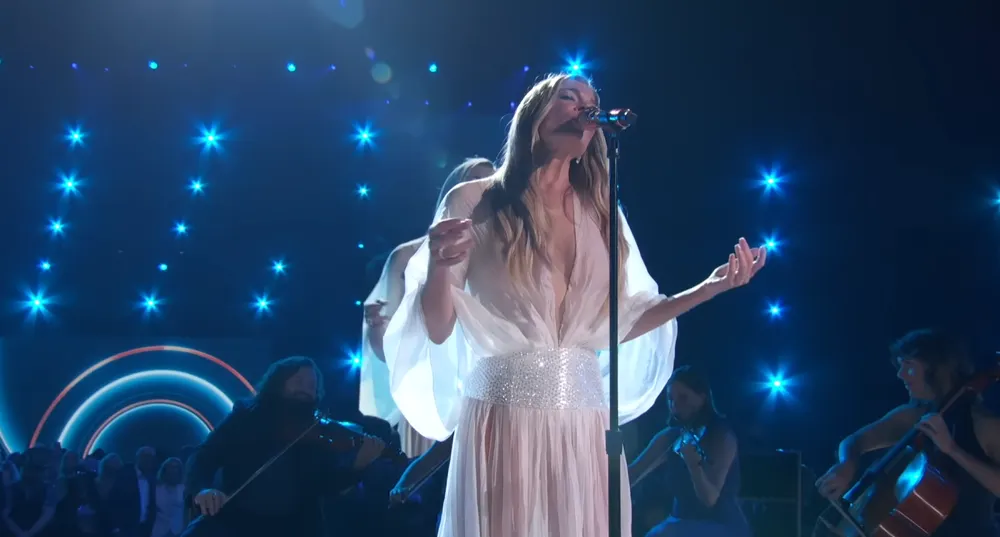
Then came February of 1997 and the 39th Grammy Awards. Rimes won Best Female Country Vocal Performance and Best New Artist — at fourteen years and five months, the youngest solo artist ever to win a Grammy to that point, and the first country act ever to take Best New Artist, over No Doubt, Jewel, and Garbage in a year alternative rock assumed belonged to it. Bill Mack, in the room after decades of shopping the song, won Best Country Song and drew a Song of the Year nomination across all genres. The ACMs handed her Top New Female Vocalist, Song of the Year, and Single Record of the Year. The CMAs followed with the Horizon Award — youngest nominee and youngest winner in the show's history — and the American Music Awards added Favorite New Country Artist. Somewhere in that trophy pile is the whole argument the album made: the traditional country sound was never a museum piece. It was inventory the format had quit stocking, and the moment somebody stocked it, six million people bought it.
WHAT IT PROVED
By 1996 mainstream country had been drifting toward pop for years — Shania Twain's The Woman in Me had gone Diamond, Faith Hill was ascending, and the format's biggest records reflected the evolution. Into that landscape walked a thirteen-year-old singing a yodeling waltz over steel and fiddle, cut partly on vintage microphones in Clovis, and it outsold nearly everything around it. Billboard would later rank Rimes No. 17 in overall sales for the entire 1990–1999 decade; she was a teenager for most of it. She'd cross over massively on her own terms within the year — "How Do I Live" was already coming — but the debut reminded the industry how large the audience for classic country still was.
The business learned a second lesson just as fast: the doubted premise — that a child couldn't carry a grown sound to a mass audience — was dead, and Nashville spent the next several years signing teenagers to prove it again. Lila McCann arrived inside eighteen months; Jessica Andrews and Billy Gilman followed. None of them had the instrument, which was rather the point. There was one LeAnn Rimes, and the format had very nearly declined to find out.
The proof kept walking through doors for decades. Mickey Guyton has talked about watching a young Rimes sing the anthem at a Texas Rangers game and being stunned that a girl who could have been in her class was up there holding an entire stadium; that, she has said, was the night she decided she wanted to do this too. Two of the women who would shape country's next quarter-century, each of them tracing the beginning to the same Texas teenager.
THIRTY YEARS LATER
Last November, Rimes announced the "30 Years of Blue" tour — theaters, not arenas — and it opened April 19 at the Winspear Opera House in Dallas, a few miles from Garland, not far from the WBAP studios where Bill Mack once worked his overnight shift — and from a certain trash can. The route has carried it through the Martin Woldson Theater at the Fox in Spokane and Benaroya Hall in Seattle with the Seattle Symphony, with stops from Waukegan, Illinois to Wilmington, North Carolina and more dates running through the year, the setlists pulling from Blue and everything the thirty years since have added to it. "Revisiting Blue and reflecting on the last thirty years of music has been the sweetest gift," she said in the announcement. "These songs hold so many pieces of my life, and somehow they feel brand new again." A blue-marbled vinyl marked the twentieth anniversary in 2016; what the thirtieth brings beyond the tour remains, at this writing, for Curb to decide.
Bill Mack died on July 31, 2020, at eighty-eight. He had carried "Blue" from the Patsy Cline era to the ten-year-old who finally heard what it needed. The song won him a Grammy — no small thing for a man who had already put a No. 1 in George Strait's hands with "Drinking Champagne" and worked a lifetime behind a radio microphone besides. He just wrote it, and then he waited, and the waiting turned out to be the biggest part of the job.
Three decades later the record still sounds like what it always was — a great country album that a whole industry almost talked itself out of making, saved by a thirteen-year-old with more nerve and more voice than anyone around her. The yodel nobody asked for turned out to be the part everybody needed. Thirty years on, it still is.
LeAnn Rimes · Blue · Curb Records · 1996
Produced by Wilbur C. Rimes and Chuck Howard · Co-produced by Johnny Mulhair · Recorded at Norman Petty Studios, Clovis, NM; Rosewood Studio, Tyler, TX; Mid-Town Tone & Volume and OmniSound, Nashville · Mastered by Glenn Meadows at Masterfonics