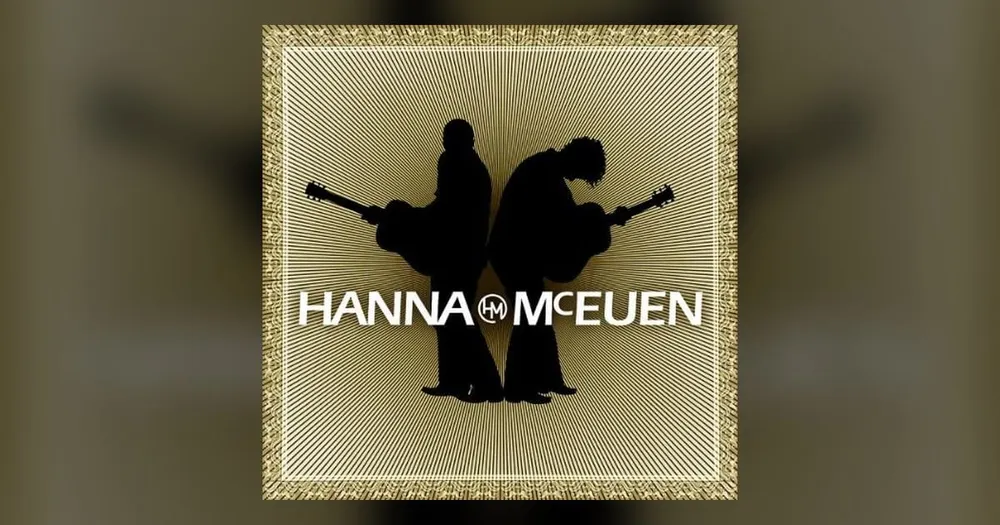
DreamWorks Nashville · Released August 16, 2005
Produced by Jaime Hanna, Jonathan McEuen, and James Stroud
With Glenn Worf, Greg Morrow, Dan Dugmore, Kenny Greenberg, Gordon Mote, Gabe Witcher and Phil Salazar
Late in 2001, two members of the Nitty Gritty Dirt Band picked up the phone and called their sons. The band was assembling Will the Circle Be Unbroken: Volume III, the third installment of the studio reunion that had been joining musical generations since 1971, and Jeff Hanna and John McEuen had an idea nobody weighed too heavily: bring in Jaime and Jonathan to cut Gary Scruggs' "Lowlands." The cousins worked up an arrangement at Jaime's place in Nashville and brought it to the session. "I don't think anyone in the band thought it would be anything more than a special moment," Jaime told the Index-Journal in 2006. "Kind of an 'aww' moment for the dads," Jonathan agreed.
Then the tape rolled, and the two fathers stood behind the glass and looked at each other. What came through was not an "aww" moment. It was a blend — the kind you inherit rather than rehearse. A video for "Lowlands" followed; the video put them on The Tonight Show and the Grand Ole Opry stage; the Opry put them in front of label scouts, and DreamWorks Nashville won the deal. The Dirt Band had spent thirty years proving the circle could reach across generations of strangers. Now it had run the experiment on its own bloodline, and the result wanted a record.
The bloodline is stranger and better than the shorthand. Jaime Hanna and Jonathan McEuen are first cousins — sons of identical twin sisters, Rae and Kae, who at sixteen trailed the Dirt Band's van to a radio station in Salt Lake City, met the band, and ended up marrying into it. That makes the cousins kin twice over: through the twins and through the band. They grew up near each other outside Evergreen, Colorado, in houses where music was the family trade, closer than cousins and just short of brothers. The Everly Brothers are the unavoidable reference for what these two do with a melody line, and here the comparison is not a style note. It is genetics — two voices cut from the same maternal cloth, singing songs written inside the same band. When "Something Like a Broken Heart" entered the country chart that spring, the comparison the trade press reached for was the Judds — the last time blood kin had made a duo the country chart had to reckon with.
They took the long way to the microphone, and the two routes explain the record. Jaime started on drums, got ambushed by the guitar as a teenager, and moved to Nashville after high school, where Pete Anderson's razor-wire tone on his father's Dwight Yoakam records pulled him toward a sound. Songwriting followed, and so did a friendship with Raul Malo, then months from breaking through with the Mavericks. Jaime played him a song; the two started writing; a Bluebird Cafe sit-in later, the Mavericks hired him as, in his words, their "harmony, rhythm guitar and percussion guy," and his first publishing deal came with it.
Jonathan's road ran through Colorado and California: singing along with the radio at two, onstage at his father's Red Rocks revue by grade school, and under contract to The Mickey Mouse Club at twelve, in the class that minted Britney and Christina, until the deal collapsed — "because I couldn't tap dance," he explains. In his father's bluegrass world he was the licensed "electrical guy," hauling an amp into rooms where Bill Monroe would eye the rig and ask whose guitar that was back there. The talent announced itself early and sideways. One day in Jonathan's teens, John McEuen heard Hendrix's "The Star-Spangled Banner" wailing up from downstairs on what he took for endless repeat, and hollered down to turn that record off. The answer came back up the stairs: "I'm not playing the album. I'm playing guitar." He came up trading licks with Sam Bush and Vassar Clements, fronted his own bands in Los Angeles, and learned that some of what played there was "too cool for school, not country enough when I got to Nashville."
Those two educations meet on this album: twelve songs, every one written or co-written by Hanna and/or McEuen, produced by the cousins alongside James Stroud, the veteran who also happened to run their label. Between them they play electric and acoustic guitars, harmonica, banjo, resonator guitar and mandolin, and the playing is restrained to the point of self-denial — two hotshot guitarists spending an entire record refusing to show off. On the record itself the label surrounded them with Nashville's first string — Glenn Worf on bass, Greg Morrow on drums, Dan Dugmore's pedal steel, Kenny Greenberg's electric guitar, Gordon Mote on keys. The touring band was where the strangest resume in Nashville that year assembled: T.J. Russell on bass, son of Leon Russell, and Jesse Siebenberg on drums, son of Supertramp's Bob Siebenberg — every chair held a second generation. As a unit they were green, barely two dozen gigs deep when the album dropped, but Jaime had logged years of hard road miles with the Mavericks and Jonathan a lifetime beside his father, and all that separate mileage shows up in how easily the record swings.
"Fool Around" opens at a gallop, hard Western swing with a guitar figure that would sit comfortably in the Mavericks' set and travel with a little more menace. "Something Like a Broken Heart," the single, is the calling card, a song about the emptiness that survives good company. "It just describes everything you feel after someone has left you," Jaime said — the life around you can be full and the hole stays. It climbed to number 38 on Hot Country Songs, which in 2005 was enough to matter and not enough to save anybody. "Rock and a Heartache" swaggers on Tex-Mex organ like a young Elvis turned loose in San Antonio. "Tell Me" flirts over a Sir Douglas Quintet shuffle. "Blue Sunrise" goes dark and cinematic, Chris Isaak wandering into the Eagles' canyon, and "Is It Only Me" mines the same midnight vein. Jonathan's songs supply the stillness: "Ocean," the quietest thing here, and the plainspoken waltz "Prayer for You" — co-written, in a nice piece of family business, with touring drummer Jesse Siebenberg — the one track not about love or its wreckage. "Wild Eyes of Love" uncorks the album's lone twin-guitar showpiece and makes you wish for three more.
Then there is "Read Between the Lies," the youngest song on the record and the only one the cousins wrote together, with Jaime's steady collaborator Alan Miller, in 2004, expressly for the album. A soulful meditation on ambiguity and infidelity, it is also where the harmony climbs into the high-lonesome register, the one moment on the album that sounds like their fathers' band. Two men who had been singing together their whole lives waited until the record deal to write together, and the first thing they built was the bridge back home. "It usually takes a song seven to ten years to fully develop," Jonathan said of their catalog. This one arrived in a year and became the spine.
The cousins knew what they were carrying and said so with a candor that reads well twenty years on. Jaime put pride first and the catch second: they came from somewhere worth naming, and then "you have to show them something" beyond the name. Jonathan pointed to Shooter Jennings and Holly Williams and drew the same line — "this isn't about who our dads were." It was about having been in the room their whole lives, watching how the work was done. And his uncle Jeff had already handed him the family's house wisdom for the day one of them out-charted the other: "Somebody's gonna get the first No. 1," and the friendship had to be built to survive it. "I think we're gonna be just fine."
The music held up its end. The machinery did not. The label on the spine was DreamWorks Nashville, and by the time the album reached stores the parent label had already been sold to Universal and shut down, the Nashville imprint was being folded into the larger operation, and the singles were being worked by MCA Nashville — a record promoted by the company then digesting the company that signed it. This debut turned out to be the last album DreamWorks Nashville ever released. Their fathers could have told them how that goes. The Dirt Band finished an album for Rising Tide in 1998 and watched the label close before the record could ship; it moved to Decca, which folded too; DreamWorks finally released it in 1999 — the same house, under the same James Stroud, that would sign the sons six years later and then vanish beneath them. "Tell Me" stalled at 56. "Ocean" never charted. That August a Denver Post writer caught the band playing inside a Hardee's in southwestern Missouri for a lunch crowd more interested in the fries. "It was the kind of thing that can dismantle a band in a minute," Jonathan said that day, then shrugged it into perspective: "It's all groundswell marketing. That's what all of this is." Jaime's accounting was simpler: "Hardee's wasn't so bad. We did get free hamburgers."
If the record has a flaw, it is the sheen. The production is so polished, so dense and seamless, that the solos sink back into the mix instead of climbing out of it — two dozen gigs' worth of studio caution wrapped around a band that plainly had more grit than the tape let through. That is the whole indictment. An album whose worst quality is being too well made was never the problem, and the audience wasn't either. When the reporter at that Hardee's asked about a follow-up, Jonathan reached for the old Nashville proverb about the first record taking ten years and the second taking six months, then caught himself mid-laugh: "Damn, we're gonna have to make sure that second one is a good one." The second one never came. There was a coda — a 2007 audiophile session for the boutique AIX label called Tried and True, Albert Lee sitting in, the duo loose and live in a room, all the grit the debut kept under glass finally audible — and then the partnership wound down the way orphaned bands do, no fight, no press release. Jonathan went home to Ventura and became something the charts have no column for: the keeper of a scene. He has spent the decades since as a fixture of the California coastal country world he grew up in, making his own records at his own pace — among them a country-swing tribute to Jerry Garcia cut with fiddler Phil Salazar, the same Salazar who fiddles on this album's "Ocean" — and sharing stages with Willie Nelson, Vince Gill, Dave Mason, and the same Vassar Clements he'd traded licks with as a kid. He never stopped playing with the family, either; for years he toured as one-third of E=mc3, a trio with his father and his younger brother Nathan. And his father, who has stood next to most of the great pickers alive, rates Jonathan among his five favorite blues players — and insists the bloodline has nothing to do with the ranking. Jaime joined Gary Allan's road band and kept writing. His father's scouting report mirrors his uncle's on Jonathan, right down to the self-demotion: the style, Jeff says, is rooted in Mark Knopfler's approach, and the verdict arrives as pure Jeff: "I have limitations as a guitarist. Jaime, not so much."
But this family runs on a longer clock than a label cycle. In 2018 the Nitty Gritty Dirt Band did the thing its whole history had been rehearsing for: it brought Jaime Hanna into the band itself, and he has spent the years since standing beside his father, singing the family blend on the biggest stages the band ever played, all the way through the farewell tour. The 2005 record everyone filed under bad luck looks different from here. It was the audition, and the family heard it. The circle did what it always does — it let him in.
VERDICT: A first-rate debut sung in actual blood harmony — first cousins, sons of identical twins and of the Nitty Gritty Dirt Band, wrapping Everly-schooled country-rock around a vocal blend no producer could fake — released as the final act of a label being dissolved out from under it. The charts got to number 38 and quit. The record deserved the other ending, and in the long run, through the family band itself, it got one.
Essential tracks: "Something Like a Broken Heart," "Read Between the Lies," "Rock and a Heartache," "Fool Around," "Ocean", "Blue Sunrise."
RECOMMENDED LISTENING
"Something Like A Broken Heart"
"Ocean"
Hanna-McEuen · Hanna-McEuen · DreamWorks Nashville · 2005
Produced by Jaime Hanna, Jonathan McEuen, and James Stroud
Sources: album liner notes and credits (DreamWorks B0001399-02); BMI MusicWorld, "Hanna-McEuen," by Deborah Evans Price, September 15, 2005; The Aspen Times, "E=mc3: Father plus sons equals music magic," by Stewart Oksenhorn; Vintage Guitar magazine, "Jeff Hanna: Decades of Dirt," by Ward Meeker, September 2022; The Denver Post, August 2005; the Index-Journal, March 12, 2006; period interviews with the duo, 2005–2006.