BEHIND THE SONG
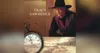
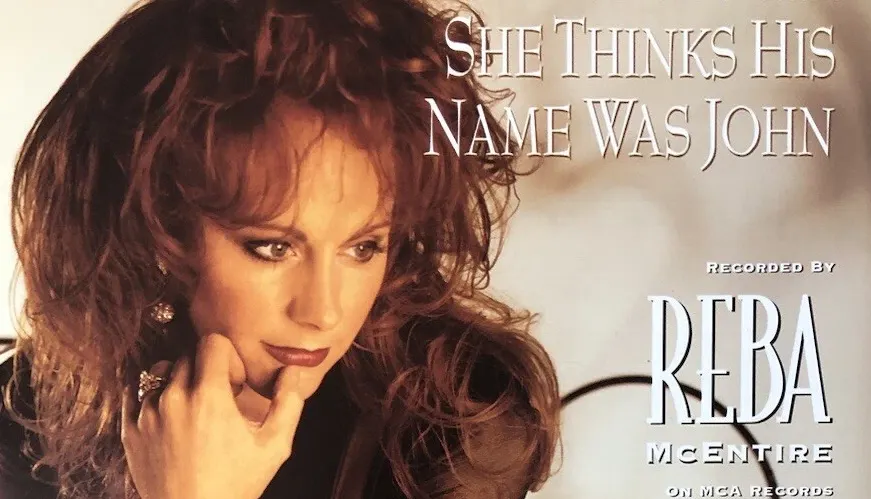
From Read My Mind (MCA, April 26, 1994) · Single released July 30, 1994
Written by Sandy Knox and Steve Rosen · Produced by Reba McEntire and Tony Brown
Mighty Nice Music (BMI) / Bash Music (ASCAP), administered by Bluewater Music Corp.
In the summer of 1994, in the middle of a country radio dial full of sunshine and tailgates, Reba McEntire released a single about a woman dying of AIDS. No major country star had ever done it. The disease was the leading cause of death for Americans between twenty-five and forty-four, and Nashville had mostly kept its distance, and into that silence came a slow piano ballad that named the unnameable by refusing, in the end, even to name the man who caused it. It was considered too grim to be a single at all. It became one of the most important records Reba ever made, and it got there because listeners would not let it die. This is how it happened.
BILLY
The song began with a brother. Sandy Knox — a Houston-raised Nashville songwriter who had already handed Reba the No. 1 "Does He Love You," the duet with Linda Davis that won the 1994 Grammy for Best Country Vocal Collaboration, and the Top Five "Why Haven't I Heard From You" — wrote it for Billy Knox. He was a straight man, and in 1979 he was being treated for cancer when he received a blood transfusion. What no one knew was that the blood carried HIV. The man who had donated it later died of AIDS.
It was, as Knox put it to a Nashville reporter that summer, a history-making case. The virus was still being called GRID then; doctors believed it could lie dormant only a couple of years, not the five it hid in Billy before the cancer went into remission and he suddenly got deathly sick again. He died in 1984, just twenty-nine years old, at a moment when almost nothing about the disease was understood. "Everybody was worried about herpes back then," Knox told the Mobile Press Register.
The loss cut so deep that she could not write about it for years. When she finally did, roughly a decade on, she called the song her tribute to Billy, and she has said she still found it hard to talk about. Before Read My Mind came out she gathered her family for what she called a pow-wow, to warn them the story was about to become public. Her mother did not hesitate. "If that song keeps one other mother from watching her child die of AIDS," she told her daughter, "I'm all for it."
THE SONG
Knox built it on restraint, and the restraint is the whole achievement. The word "AIDS" never appears. Neither does "sex," or "sick," or "dying." "I didn't want to use words like AIDS, sex, sick, dying," she told the Press Register. "I think it's powerful because it sneaks up on you. Every line is a clue." She has described picturing the disease as the bull's-eye of an archery target and then writing all around it, never once putting an arrow in the center.
So the song works by inventory instead. The woman at its heart can account for every man she has ever been with — where they live now, who they married, how many children they have, some of them still friends. There is one exception, and it is the one that matters: a chance meeting at a party a few years back, broad shoulders and blue eyes and hair so black, a friend of a friend who let his smile sweep her away. In her heart she knew it was wrong, but too much wine, and she left his bed at dawn. She never learned his name for certain. She thinks it was John.
There is no repeating chorus to lean on, and no turn toward comfort at the end. The melody moves at the pace of something inevitable, almost a lullaby, which is exactly what makes it devastating — a gentle tune carrying an ungentle truth: 'Cause she let a stranger kill her hopes and dreams.
Getting it finished took years, and it nearly didn't happen. Knox had the idea and couldn't complete it alone, and when she went looking for a co-writer she kept getting turned down — about five writers passed, she told Music Row in 1996, before Steve Rosen agreed to help her finish it. The ones who declined were doing the math. "It's almost like they thought it was a haunted house," she said. "'Do you want to go in there and see what happens?' 'No, I don't want to waste my time.'" Rosen was young enough not to weigh it that way. "One of the main reasons Steve Rosen wrote it with me is that he was so young, he hadn't been tainted by the limits of the music industry," Knox said. "Everyone else thought of the consequences. They didn't think it was a lucrative song to write." It took a writer with nothing yet to protect to walk into the house with her.
HOW REBA HEARD IT
Reba knew what she had almost immediately. As she has recounted the moment, a publisher played her a stack of songs and stopped her on the way out the door with one they said probably nobody else would sing — and the second she heard "She Thinks His Name Was John," she said, "I want it." She produced the record with Tony Brown and set her voice low and plain against the piano, no theatrics, and let the story carry itself.
She was clear-eyed about why she was doing it. "I think it's a great message song," she said in a 1994 radio interview, laying out the plot plainly and then the point of it: "That's what all of us face today — the deadly disease of AIDS. It's a very terrible thing, but it does happen. I think it's better if you talk about it, get it out in the open." The hope she named was specific — that a listener in that situation might "stop and think," might abstain. "I think that's worth every bit of me singing that song."
She did not even give it a video. She had already shot one for another song on Read My Mind when, as she told a reporter that summer, her label came back and said radio was screaming for "John." It went out bare, unusual for country then, and she preferred it that way. Listeners could "do their own video in their own mind." One thing surprised her: the song was her teenage stepchildren's favorite on the record. "I know adults that don't get it," she said. "Teenagers do."
THE HEIGHT SHE SANG IT FROM
It matters where Reba was standing when she made this choice, because she was standing at the top. Read My Mind debuted at No. 2 on both the all-genre Billboard 200 and the country chart on its way to triple platinum, and it arrived alongside her autobiography, Reba: My Story, a national bestseller. She had five singles in that album and a network concert special to push them. This was not an artist reaching for relevance. This was the reigning queen of the format at the peak of her commercial power, with every reason to keep feeding radio what it was already buying — and she spent that exact moment on the one song radio least wanted to touch.
THE GROUNDSWELL
It was never supposed to be a single. MCA had lined up "Till You Love Me" as the second single from the album, had already shot a video for it, and had no plans to send a song about AIDS and a one-night stand to a conservative format. Then the audience got there first.
Stations began pulling the album cut and playing it on their own, and the phones lit up. In Houston, Dene Hallam's KKBQ jumped on it the moment the record arrived, spinning it four and five times a day. "We had phenomenal response and had people crying on the phones," he said. In Dallas, Brad Chambers at KPLX was among the first to break it. "So many people called in who knew somebody with the disease," he remembered. "In many conversations with MCA we tried to convince them that this was the song to go with. I guess they were afraid of controversy at first." The response in Houston, Dallas, Detroit, and San Francisco built into something the label could no longer manage, and over about eight weeks the groundswell forced MCA's hand. The AIDS song became the single.
The man running MCA's promotion department had no doubts left. "It's too big," said Scott Borchetta — years before he founded Big Machine Records and signed a teenager named Taylor Swift. "Nobody can stop it." He was right. The single climbed week by week, No. 27, then No. 21, into the teens, and it began threatening the pop chart, reaching No. 1 on Billboard's Bubbling Under list, one rung short of the Hot 100. For a four-and-a-half-minute country ballad about a woman dying alone, that was a remarkable distance to travel.
It did not travel unopposed, and that is part of the story too. Some programmers would not touch it, and their reasons said as much about the format as about the song — it was slow, it was a downer, country listeners came to radio for escape. Others added it holding their breath. Bob Winters at WXTA in Erie held off nearly three weeks, worried about the tempo, until his own listeners called to ask why he wasn't playing it. That pattern repeated across the country: reluctance at the desk, demand from the audience. The No. 15 peak tells both halves at once — many stations still would not give it heavy rotation, and enough listeners refused to let it disappear anyway. It was only the fourth time since her first No. 1 at the start of 1983 that a Reba single had missed the Top 10, and it may be the most important miss of her career.
THE HALOS AND THE CLOUDS
The resistance was not personal to this song; by the mid-nineties country radio had become openly, almost mechanically averse to exactly this kind of record. Programmers preached "positive uptempo," rated songs on mood scales that ran from good times down to death, and quietly declined anything about dying — the same instinct that made even a Vince Gill masterpiece like "Go Rest High on That Mountain" a hard sell. Knox, watching Nashville's writers censor themselves before they ever finished a page, called it "the radio gargoyle sitting on their shoulder," whispering the only question that mattered to a paycheck: Will it play at radio?
In that climate a song about a woman dying of AIDS had almost no business on the air, and the honest reason it got there is worth saying plainly: it was who was singing it. As one prominent radio consultant framed the whole business, stars have halos over their heads and new acts begin with clouds. A newcomer walking "She Thinks His Name Was John" into a program director's office would have been shown the door. Reba's stature was the wedge that pried it open — and MCA's promotion chief was not inclined to apologize for shoving through. "We look at the artistic credibility of a 'Go Rest High on That Mountain' or a 'She Thinks His Name Was John,'" Borchetta said. "If certain people can't stand reality, stay in the closet."
THE MOMENT
Later that year, at the Billboard Music Awards, Reba sang it with the AIDS Memorial Quilt hung behind her, panel after panel of the dead sewn by the people who loved them. When she finished, a room full of the music industry stood up. For a song that had struggled to get on the radio, it was a striking answer from the business itself — a recognition that whatever the format's nerves, this was the record that had finally said the thing out loud.
THE COMPANY IT KEPT
It did not come from nowhere, and it did not come easily. Reba's own camp placed it in a longer line of country singers using hits to say hard things — Tammy Wynette spelling out "D-I-V-O-R-C-E" in 1968, Loretta Lynn cutting the birth-control declaration "The Pill" in 1975, and more recently Garth Brooks on domestic violence in "The Thunder Rolls" and Martina McBride in "Independence Day." "That's one reason country has become more popular," Reba's publicist argued at the time. "It addresses issues that affect everyday people." The genre had also been inching toward AIDS specifically, mostly through individual acts of nerve — Kathy Mattea wearing three red ribbons to the 1992 CMA Awards against instructions and naming the three friends she'd lost, the 1994 benefit album Red Hot + Country, a short-lived country AIDS-awareness campaign whose public-service spots were turned down by CMT.
But those were ribbons and benefits and gestures of solidarity. "She Thinks His Name Was John" was different in kind: an actual hit-bound single, sung in character, by the format's biggest star, that put a listener inside the last days of someone the epidemic had killed. That is why it kept getting called the first of its kind, and why it still gets called that.
WHAT IT DID
The chart number is the least interesting thing about it. The song never left Reba's stage — it became one of the moments audiences waited for through the nineties and long after, a hush in the middle of a big arena show. It keeps finding people who were not born when it came out, passed along the way sad, true songs get passed along, one listener telling the next what it's actually about. Knox saw its reach up close the one time she watched Reba perform it. "I was in tears the whole time," she said. "As a songwriter you want to write something that makes an impression. Watching the audience, I realized it really had that impact."
Sandy Knox spent much of the life that followed on the same fight. Years later she started her own label, Wrinkled Records, built on the idea of great music with a heartbeat, and one of its cornerstone projects was Strong Medicine — the debut album of Jimbeau Hinson, the songwriter behind the Oak Ridge Boys' No. 1 "Fancy Free," who had lived with HIV in secret for decades before he was willing to record openly about it. That is the shape of a person who wrote "She Thinks His Name Was John" and meant every word — not a writer who visited a subject once for effect, but one who kept the door she'd opened propped for the rest of her career. The song remains the truest thing on her résumé, the one she assembled out of a brother she outlived.
The genius of it, all these years on, is still that name. A whole life ended by a stranger, and the last thing the song gives you is the smallest, most human failure of memory — she thinks his name was John. She isn't sure. That uncertainty is the entire weight of the thing. Knox understood it, and so did Reba: the quietest way to say something enormous is to leave the loudest word off the page and trust a country audience to hear it anyway. In the summer of 1994, they did — and one of them, calling a Pensacola station in a tear-choked voice to ask that it be played, told the program director the reason. In her case, she said, she thought his name was Joe.
Reba McEntire · "She Thinks His Name Was John" · written by Sandy Knox and Steve Rosen · from Read My Mind (MCA, 1994) · produced by Reba McEntire and Tony Brown