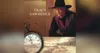
"Fishin' in the Dark" — Nitty Gritty Dirt Band
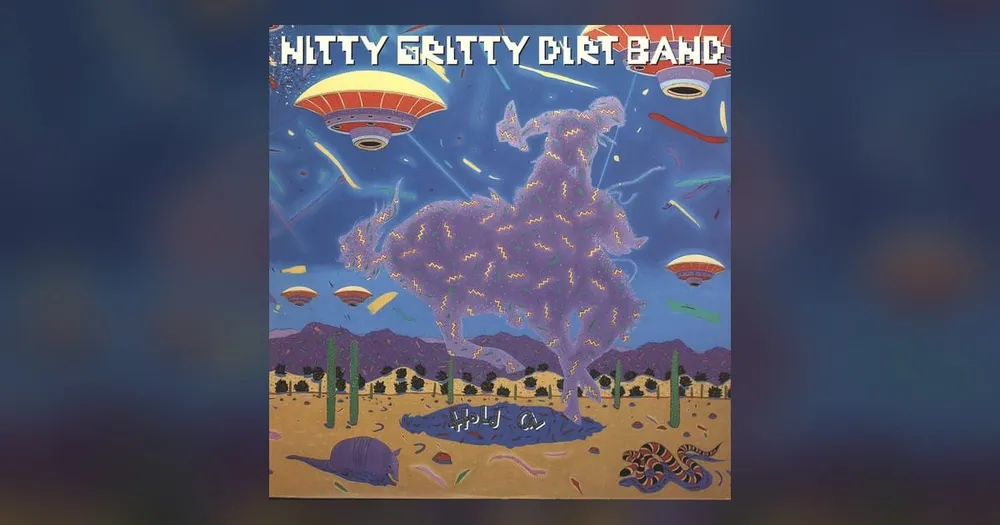
From Hold On (Warner Bros., 1987)
Written by Jim Photoglo and Wendy Waldman · Produced by Josh Leo · Lead vocal by Jimmy Ibbotson
One morning in 1984, in a room at the Shoney's Inn on Demonbreun Street in Nashville, a songwriter from Los Angeles woke up, reached for his tape recorder, and played two pieces of music before he was fully awake. One of them was in a minor key. The other was in a major key. The minor one became a hit and is mostly forgotten. The major one became "Fishin' in the Dark."
THE MORNING
Jim Photoglo was in town on one of three trips he made to Nashville that year, and he had been experimenting with a particular way of playing guitar — a chord voicing built on only the first and fifth tones, with no third. Leave out the third and a chord refuses to commit; it is neither major nor minor until a melody comes along and decides for it. "One morning I woke up and I turned on my tape recorder, sat up and played these two pieces of music," Photoglo told Bart Herbison of the Nashville Songwriters Association International, in an interview The Tennessean published in its Story Behind the Song series in 2015. "Both of them had that same chordal thing, but one of them had the minor mode and one had the major mode."
He took both to Wendy Waldman. They wrote the minor, bluesy one first, and it did what a good song is supposed to do: "You Can't Run Away From Your Heart" got cut by Terri Gibbs, Kathy Mattea and Patty Loveless, and became a hit for Lacy J. Dalton. A respectable career gets built on mornings like that one. Except the tape wasn't finished. The major-key twin was still sitting there, sunny and uncommitted, waiting for its idea.
THE FISHING IDEA
Waldman was the reason Photoglo was in Nashville at all. A second-generation songwriter — her father, the film and television composer Fred Steiner, wrote the "Perry Mason" theme, and Photoglo liked to add the "Bullwinkle" music to the résumé — she had made her first recordings in Bryndle, the Los Angeles band she shared with Karla Bonoff, Andrew Gold and Kenny Edwards, and when it splintered, Warner Bros. signed her alone; Rolling Stone called her 1973 debut, Love Has Got Me, the singer-songwriter debut of the year. California folk-rock royalty, in other words, who had chosen Nashville on purpose. She had met Photoglo in L.A., suggested he try the town, and sponsored him around it, introducing him to everyone she knew. Her pen wasn't done with pop, either: years after this story, she'd co-write "Save the Best for Last," Vanessa Williams' 1992 pop No. 1 — one writer, two songs the whole country knows by heart.
He arrived with a small advantage of his own: he'd been a pop act himself. Signed to 20th Century Fox Records, he'd put "We Were Meant to Be Lovers" into the Top 40 in 1980 and carried "Fool in Love with You" to No. 25 the year after — and country radio had played some of them. "With a name like Photoglo, you don't hear it all the time, so people remembered it," he told Herbison. "That opened a lot of doors for me. But I was writing primarily with her." Nashville kept recording him for decades — "Honky Tonk Heart" for Highway 101, "Ain't No Short Way Home" for the Oak Ridge Boys, "Hometown Honeymoon" a No. 3 for Alabama, and "She Loves Me (The Best That I Can Be)" reaching all the way back to pop in the voice of James Ingram.
So when they sat down again with the major-key piece, Waldman walked in carrying the idea — and the idea had come from public radio. She had just finished listening to "A Prairie Home Companion," Garrison Keillor's weekly postcard from the fictional Minnesota lake country, and she said: let's write a song about fishing.
Photoglo's reaction deserves its place in songwriting history. "The first thing I thought was, 'I want to run away screaming, because I love my song,'" he told Herbison. He had a melody he believed in, and his co-writer wanted to spend it on bait and tackle. Then she finished the thought. "But she said, 'No, fishing in the dark.'"
Three words instead of two, and everything changed. A song about fishing is a novelty. A song about fishing in the dark is about something else entirely — the fishing is the alibi. "We started messing around with it, and it just happened, you know?" Photoglo said. "We did it for fun. We weren't trying to be like any other song."
Asked about it now, four decades on, Photoglo confirms how little either writer saw coming. "I had written a piece of music, and Wendy had the title," he tells Generation Country. "The idea wasn't developed before we got together. And, no, we didn't know what we had."
THE PARTY
What they had went onto tape in the least glamorous studio in Nashville. "We cut the demo in an 8-track studio Wendy had in her apartment," Photoglo tells us. But the demo isn't how the song found its band. The song did that at a party, out loud.
Photoglo, Waldman and a guitarist-producer named Josh Leo had all come from Los Angeles to Nashville around the same time, and all three lived in the same building over on 10th Avenue. "Back in the early days, we'd all get together, and Wendy and I would cook," Photoglo told Herbison. "We all had these tiny apartments." Leo had just landed a job: producing the Nitty Gritty Dirt Band, a group that had already cut one Photoglo song years earlier, back in the Norbert Putnam days.
Leo remembers the night from his side of the room. The gathering was at Waldman's place — Photoglo was there, Kathy Mattea, and the Ozark Mountain Daredevils, whom Waldman was then producing. "Someone said, hey, play that new song that you're gonna record — and they played 'Fishin' in the Dark,'" Leo tells Generation Country. "When I heard them play it, I wanted it for the Nitty Gritty Dirt Band." How long did that take? He knew "in the middle of the first chorus" that it was a smash. "So I asked Wendy if I could record it on the Dirt Band, and she said, 'Sure — whoever puts it out first wins.'" The Daredevils' version eventually surfaced on a release that never saw American shelves. Leo, four decades on: "I guess we won."
"Josh did find the song," Photoglo confirms. "He heard it one night at a party." Leo's verdict, as Photoglo recounted it to Herbison, was instant: "Man, the Dirt Band, this is perfect for them." No pitch meeting, no song plugger — a song played across a living room, and the man who heard it held the keys to exactly the right band. "I was standing in the right place when they captured lightning in a bottle," Photoglo said. And the room kept its chemistry: years later, Photoglo and Leo — the writer and the neighbor who heard it — wrote "Hometown Honeymoon" together and sent it to No. 3 for Alabama.
THE RECORD
Leo can still recite the session, layer by layer: Hanna on acoustic, Ibbotson on mandolin, Fadden on drums, Leo on electric, Bob Carpenter covering piano and — the session's quietest secret — the bass. "There's no bass guitar on 'Fishin' in the Dark,'" Leo tells us. "It's keyboard bass — and there's no keyboard bass in any of the verses. It only comes in on every chorus." Steve Gibson overdubbed the banjo, Fadden added jaw harp to the second verse, and the little explosion before each chorus is a backwards snare — analog tape physically flipped over so the hit could be recorded in reverse. The vocal is a relay: Ibbotson sings the verses, Hanna takes the choruses. "Ibby was pretty quick with vocals, always," Leo says. "Couple of takes and comp together."
Four decades on, the producer wants one thing in the permanent file. "I was glad that we had the biggest success they've ever had with them playing on their own record," Leo says — and then he makes it a declaration: "I would like the world to know that the reason 'Fishin' in the Dark' is so good is because it's them — not session musicians!"
The record Leo produced put Jimmy Ibbotson's voice on Photoglo's melody, and the co-writer's own review has not softened since 1987. "I was floored by the record Josh produced. The track and the vocals blew me away," Photoglo tells us — and the memory of the first listen has stayed exact: "It didn't sound like anything I'd ever heard before." The producer heard the same thing from the other side of the glass. "Once it was mixed, we kept playing 'Fishin' in the Dark' over and over," Leo remembers, "because it was just so fresh sounding. I'll never forget that."
Radio agreed. "Fishin' in the Dark" went to No. 1 in the fall of 1987 — the same October chart week, as it happens, in both the United States and Canada — and became the signature hit of the band's second act. That would be a fine ending. It turned out to be barely the middle.
THE SONG THAT WOULDN'T LEAVE
Most hit singles have a life span, and radio enforces it. This one never learned the routine. Garth Brooks recorded it twice — for his 2005 album The Lost Sessions, and again for his Blame It All on My Roots boxed set. Kenny Chesney carries it in his live show, and so do more acts than anybody has counted; Emerson Drive cut it, the Swon Brothers sang it on The Voice, and Photoglo has recorded it himself. Country songs started name-checking it in their own lyrics, enough of them that Billboard once ran a piece cataloguing the references and calculating that, 27 years after its release, the song was still pulling enough radio airplay to sit at No. 57 on the charts had it been a current single.
The sales side kept pace with the airplay. The single was certified gold as a digital download in 2011 and platinum in 2014 — 27 years after it first came out, bought by a generation that wasn't alive when Ibbotson sang it. Somewhere along the way it stopped behaving like a hit record and started behaving like a folk song — the kind a crowd sings back louder than the band plays it.
And the man who wrote it eventually climbed inside it. Photoglo joined the Nitty Gritty Dirt Band himself — on bass, which means the song cut without a bass guitar finally got one, from its own co-writer — and spent the band's final years, through the farewell tour that ended in Denver in June 2026, playing his own song every night, standing a few feet from the men who'd made it famous. "I'm filled with gratitude every time I hear it," he tells Generation Country.
THE ANSWER
There is an obvious last question, and everyone who has ever written a song wants it answered. What makes this one immortal? Why does a fishing song cut on an apartment 8-track outlive nearly everything that ever sat beside it on the radio?
We asked the man who wrote it. His answer is the most honest one a songwriter can give, and the best possible place to leave this.
"I wish I knew the answer," Photoglo says, "because if I knew, I'd have kept trying to do it again."
Nitty Gritty Dirt Band · "Fishin' in the Dark" · written by Jim Photoglo and Wendy Waldman · from Hold On (Warner Bros., 1987) · produced by Josh Leo · lead vocal by Jimmy Ibbotson · 2015 interview quotes courtesy of Bart Herbison and the NSAI's Story Behind the Song series, as published in The Tennessean, March 1, 2015, compiled by Dave Paulson; airplay, cover, and legacy data from Billboard Country Update, August 7, 2014, by Phyllis Stark; new quotes from Jim Photoglo and Josh Leo to Generation Country, July 2026.