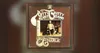
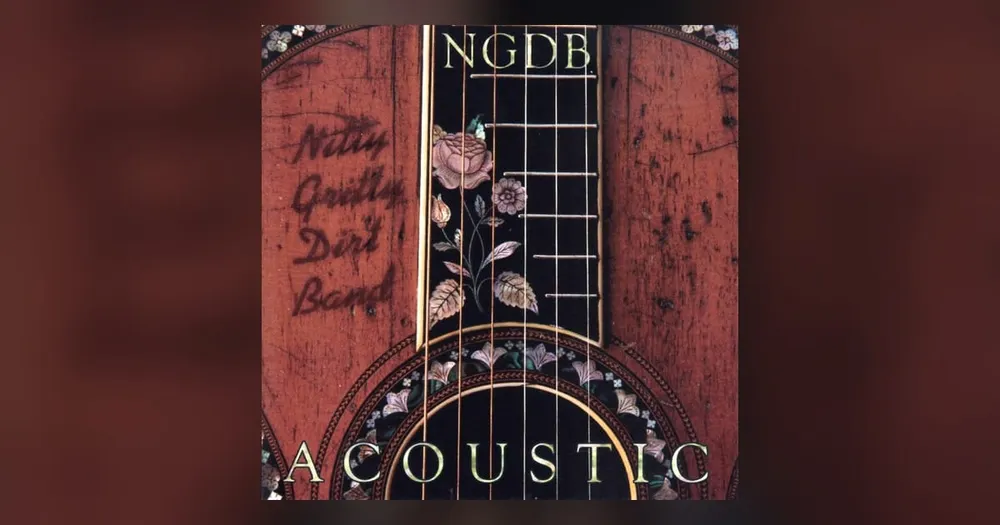
In 1994, in a Colorado studio, the Nitty Gritty Dirt Band recorded a small piano ballad and almost no one noticed. It wasn't a single. It wasn't even called "Bless the Broken Road" yet — on the track list of an unassuming album called Acoustic, a record built on the premise that the band could strip its sound back to wood and wire, it appeared as "The Broken Road." The song was pretty. It was also homeless — a tune that would go on to live out its own lyric, wandering through more than a decade of wrong houses before it finally found the one it was built for.
The origin story has one loose bolt: the two men who were there never agreed on the room. Marcus Hummon remembers McCabe's Pub in late 1993, drinks going down, the two of them "pretty into our cups." Bobby Boyd remembers a hallway at BMG Music Publishing and something closer to a deliberate song pitch. Boyd worked there as a song-plugger, hustling other writers' material to producers, and he knew the distance between what he pitched — Hummon, Bob McDill, Hugh Prestwood — and what he wrote. His drinking had helped end his first marriage; in the aftermath he'd found a new wife and something like hope. That night, or that afternoon, he got candid with Hummon about the divorce and the mistakes, and then, at the end of the whole litany of regret, he turned it over: "On the one hand, if I could go back and change all those things I would do that. On the other hand, every single thing that happened to me, whatever got me to this point with this woman, it has to be right."
Bar or hallway, the transaction was the same: Boyd had handed his autobiography to a better writer and told him to keep it. "I'm a Christian, and I believe God took these wrong turns, mistakes, divorce and alcohol and got me to where he wanted me to be," Boyd told Peter Cooper of The Tennessean on the eve of the 2006 Grammys. "We'd never get here if we'd never had a flat tire or been stuck in rehab. That's what was whacking me over the head, and that's what I was telling Marcus." "What Bobby said that night was really poignant," Hummon recalled. He went home, sat at the piano, and worked out a chorus that ended with the line "God blessed the broken road that led me straight to you."
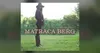
Jeff Hanna was on his honeymoon while all this was happening. He had helped found the Dirt Band in 1966 and spent the decades since singing "Mr. Bojangles," "Dance Little Jean," and "Fishin' in the Dark" on the road; in December of '93 he married the songwriter Matraca Berg — Hummon sang at the ceremony, and the minister was Hummon's wife, the Rev. Becca Stevens. When the newlyweds got home, in January of '94, Hummon brought Hanna the piece of a song and the idea underneath it — that things aren't always right the first time — and the chorus found a man who was living it. "Matraca and I had both been married before, and the song really fit how we felt," Hanna told Michael McCall of Country Weekly. "That's the beauty of the song, really. Most people can identify with having to go through bad stuff before getting to the good." They went to work that day and put the finishing touches on it about a week later. Then Hanna carried it home to the writer of "Strawberry Wine" and "Wild Angels," who does not hand out professional praise lightly, and got the review that mattered. "I brought it home to Matraca and she said 'expletive,' as a writer," he told Bart Herbison of the Nashville Songwriters Association years afterward. "She was like, 'Damn, really?'" Hanna took his share of the credit the only way he ever does: "I am the laziest songwriter in this town. I absolutely am, hands down... I've been lucky that they're all pretty good. But not that good."
The credits got settled in the spirit the song preaches. "When we were done, I remember saying to Jeff, 'There's this guy Bobby Boyd, and while he's not here in the room with us and this is not his title, he's involved in this song,'" Hummon recalled. "Absolutely," said Hanna, and it went down as a tri-write. Boyd got the news secondhand: "The next time I saw Marcus, he told me I was a co-writer on a song I'd never heard." Weeks later, Hummon played it for him. "After I heard it, I thought, 'My God, what could I have done to make it better than that?'" Boyd said. "My role in it was basically to give them a storyline, and Jeff and Marcus wrote a masterpiece."
What the Dirt Band cut in Colorado was faithful to the song's plainness — piano-forward, unadorned, a track that trusted its own melody. Every version that mattered afterward kept that restraint. But the album didn't sell — "Our record company didn't hear any hits on the album," Hanna said, "so we moved right on from that" — and the wilderness years began. Hummon, who had a Columbia artist deal of his own, put it on his 1995 album All in Good Time under its new title, "Bless the Broken Road," and lobbied the label to release it as a single. Columbia declined, and the song sat as an album track on a record that came and went. Sons of the Desert cut a version for an album that never came out. Still, its writers kept the faith. Hummon played it at the weddings his wife presided over, so there are couples all over Nashville who said their vows over a song country radio didn't want yet. And here the story folds in on itself, because during those same years, while Hummon was on the road behind an album nobody wanted, Stevens was founding Magdalene — the residential community for survivors of trafficking and addiction that grew into Thistle Farms, built on the conviction that a wrecked road can be reread as the way home. Husband and wife were making the identical argument in two different mediums at the same kitchen table, and only one of them had to wait a decade for the world to agree. Hanna and Hummon told anyone who would listen that it was the most special thing either of them had.
In 1998 the industry finally tried. Melodie Crittenden recorded it — once again titled "Broken Road" — for Elektra/Asylum, and for the first time the song went out as a single. It peaked at No. 42 and stopped; the label's Nashville operation itself would be gone within a few years. Crittenden's version turned up on Dawson's Creek; even that didn't help. Christian artist Geoff Moore's 1999 recording, "God Bless the Broken Road," got airplay in that format but never crossed into country. Now the song was damaged goods twice over — cut by several artists on albums nobody bought, and a failure as a single — and, as Lyric Street Records president Randy Goodman would explain, country radio treats a history like that as one more reason to say no. Hanna put it better: "It's like the use-by date on a carton of milk. And I get it. You want a song to be brand spankin' new, unless you're going for a classic cover." By 2002, most of Music Row had heard it. Hanna counted more than 150 holds over the years; it became a running joke among the writers. Boyd says Reba McEntire told him personally she was going to cut it. Faith Hill and Collin Raye both wanted it at the same time, so neither one did it. The longer list of artists who considered it and declined includes Wynonna Judd, plus names from well outside country — Bonnie Raitt, Bette Midler, Kim Carnes. And, at the bottom of the list: Rascal Flatts.
That last name is the punchline the whole story turns on. Lyric Street's head of A&R, Doug Howard, figured the song had been a possibility for the Flatts since their 2000 debut. Jay DeMarcus, the band's bassist and a friend and sometime co-writer of Hummon's, said the trio didn't hear it until late 2001, during the sessions for Melt — and they passed. Years later, DeMarcus was blunt about it: they'd heard the song, and for whatever reason, they just decided not to do it. His memoir remembers it differently: there, the song "really spoke to me and hit me hard" on first listen, and simply "stuck with me" until the timing came right — the pass revised, with hindsight, into patience, which is, after all, exactly what the song teaches: the road only looks blessed from the far end of it. What changed wasn't the song. "After I got married and Joe Don got into a serious relationship, it sort of spoke to me differently, I guess, felt like something that was very much my life story," he said. "I think lyrically it just touched me in a different way when I found someone I wanted to spend the rest of my life with." The pattern was consistent by now: this song kept getting finished and cut by men who had just found the right person — Hanna, home from his honeymoon, in '94; DeMarcus, newly married, a decade later. The song recruited its own believers by coming true in their lives first. It had even assembled its own band: DeMarcus's first career collapsed when a Christian label dropped him after he fathered a child out of wedlock, and the wreckage sent him back into the orbit of his second cousin from Columbus — Gary LeVox.
The spell broke in a car. At the very end of the sessions for 2004's Feels Like Today, DeMarcus was riding with his new wife, Allison Alderson, listening to Hummon's old Columbia album, and the two of them fell for the song together. "She said, 'This is an incredible song. You guys are idiots if you don't cut it,'" DeMarcus remembered. "The lines that slay me are, 'Others who broke my heart, they were like northern stars / Pointing me on my way into your loving arms.'" On the last day of recording, Gary LeVox sang it. The margin was thin: Brooks & Dunn had the song on hold right then and were about to cut it themselves. When the call reached the writers, it came in two parts — the Flatts had recorded it, and it was going to be the single.
The stakes were higher than sentiment. The band was supposed to be graduating into headliners, and the album's first single was limping at radio; the follow-up had to be big. "I remember going into the control room and listening to the track we'd done of 'Bless the Broken Road' and getting this feeling, this goose-bump factor, this intangible thing where you know the song is going to be big," DeMarcus said. Even then the label balked at the song's past lives, until Goodman's promotion staff assured him the Crittenden single was too far gone to haunt it. The record itself, produced by Mark Bright and Marty Williams, didn't reinvent the song so much as widen it: Hummon's piano figure intact up front, three-part harmony banked behind LeVox, the arrangement swelling only as the argument of the song demanded. Hummon, who has heard a lot of people sing his songs, called the recording magic, and his highest compliment, offered to WTOP years later, was about what the producers didn't do: "They didn't overproduce it, you can hear all of the parts." The song's genius is that it never fights its own quiet.
The lyric itself is retrospective theology dressed as a love song — Boyd's hallway confession with a melody. The narrator reinterprets every failure and dead end as directional: the people who broke his heart become fixed points in the sky, painful but orienting. The beloved answers not with pity but with recognition — she smiles, takes his hand, calls it part of a grander plan — and the title line arrives as a thesis rather than a sigh. By the last verse he is "rolling home." The whole move is to convert regret into gratitude, to argue that a crooked path is not a failed straight one but the only road that could have arrived here.
The single went to No. 1 on February 12, 2005, and stayed five weeks, a decade and change after the January write. The album it anchored, Feels Like Today, had already made history of its own, debuting at No. 1 on the all-genre Top 200 — Rascal Flatts only the second country group ever to arrive there, after the Dixie Chicks — and the song kept it selling long after the debut-week headlines faded. Then it started carrying other people. Carrie Underwood sang it more than once on her way through American Idol, rode it into the Top 5, and performed it with the band on the finale she won — a song nobody would give a home to, deciding who won things. In that single week, by Billboard chart director Wade Jessen's count, the song made 1,750,000 audience impressions — likely the exposure that put it in front of Grammy voters. On February 8, 2006, it won Best Country Song — a writer's award, so the trophy went to Boyd, Hanna, and Hummon — and competed for all-genre Song of the Year against songs popularized by Bruce Springsteen, U2, Mariah Carey, and John Legend. It has since lent its title to a faith film, turned up in a Hannah Montana movie, and gone platinum many times over. But the truest measure is Boyd's mail: "It's their recovery song, it's their wedding song, they play it at funerals and everything you can imagine."
And it circled back for the singer it had failed. In 2006 the gospel group Selah cut the song as a duet — with Melodie Crittenden, the same voice whose single had died at No. 42, back on the second vocal. The record went Top 5 on the Christian chart, and it made "Bless the Broken Road" the first song ever named NSAI Song of the Year twice, in two different years, for two different recordings — and the second trophy had her voice on it. Crittenden had lived the lyric herself by then, marrying at thirty-four: "I just hadn't met 'the one,'" she said. "God's timing is perfect." Meanwhile the industry that had fumbled the song kept proving its point. Elektra/Asylum, which released her single, died underneath it. Lyric Street — Disney's Nashville label, named for the street where Walt and Roy grew up — was shuttered in 2010, five years after the biggest hit it ever had, which made two labels the song outlived on its climb.
Each writer got his own ending. The song about Boyd's rescue ended up rescuing Boyd, who had weathered financial trouble and lost publishing deals in the years it spent wandering. "In the end, it happened," he said. "The song's there. It's proved what it was meant to be. It's touched a lot of people's lives." Hummon got confirmation that the universal thing he'd chased was real: "What Bobby said that night was that there's a way to look back with grace at the events in your life, even the hard ones. That's such a universal message." The theme never let go of him; years later he wrote an opera called Surrender Road. And he learned just how universal at a women's prison in the eastern Kentucky coalfields, playing the song on one of his wife's Thistle Farms visits — razor wire, armed guards, women in gray. "After the first chorus I got verklempt. I got teared up," he said. "I was looking out and women started singing it back. And it's like, that's when you kind of go, 'Wow, we got lucky.'" And Hanna, forty years into the Dirt Band, finally had a No. 1 in somebody else's voice — the first smash of his life he didn't have to sing himself. "For an old guy, it's quite a thrill," he said. One more crooked-road detail, almost too on the nose to be true: Hanna and Boyd, co-writers of a Grammy-winning song, didn't meet until 2005, at the Music Row party thrown to celebrate its run at No. 1. "If we, the writers of 'Bless the Broken Road,' had it to do over again, I don't think we'd change a thing," Hanna said. Of course they wouldn't.
And there is one last stop on the itinerary. On June 18, 2026, at the Mission Ballroom in Denver, the Nitty Gritty Dirt Band played the final show of its sixty-year life — and the song was in the set, late in the night, with Jeff Hanna's son Jaime playing beside him. The band that cut it first, back when it was a homeless ballad with the wrong title, sang it one more time on the way out the door. Then came the encore, the last song the band would ever play, and of course it was "Will the Circle Be Unbroken." The song spent all those years in the wrong homes doing precisely what it told everyone it would do. It got lost a time or two. And then, exactly on schedule, it came rolling home.
Nitty Gritty Dirt Band · "The Broken Road" · from Acoustic (Liberty, 1994) · written by Bobby Boyd, Jeff Hanna, and Marcus Hummon · No. 1 for Rascal Flatts, February 2005 · Grammy, Best Country Song, 2006.
Sources: Peter Cooper, The Tennessean, 2006; Michael McCall, Country Weekly; Bart Herbison and the NSAI's Story Behind the Song series; Marcus Hummon to WTOP; Jay DeMarcus's interviews and memoir; Billboard chart records; period and retrospective interviews with the writers and Rascal Flatts.