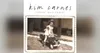
Dualtone Music Group · Released May 2011
Produced by Matraca Berg · "South of Heaven" produced by Doug Lancio
Recorded at Sound Emporium, Sound Kitchen, Scruggs Sound Studio, and Universal Studios, Nashville · Mastered by Jim DeMain at Yes Master
Begin at a funeral, because she did. In 2002 Nashville buried Harlan Howard, the man who defined the whole enterprise as three chords and the truth, and after the memorial his children kept sending tequila shots down to Matraca Berg's table at Tootsie's — all night, in his honor, because Harlan was the man who had bought her her first shot of the stuff when she was eighteen and just starting to write hits. By her own math it took two days to get over. And two days after the memorial, she and Deana Carter — the voice of "Strawberry Wine," the other half of her most famous song — wrote "You and Tequila," a song about the kind of love you know will level you and reach for anyway. It took nine years to find its way onto an album of her own. When it finally did, the town did to her exactly what it had done in 1997, almost to the season, and we will get to that. But hold the image of the funeral, because this whole album is a wake — for a farm, for a river, for a face in the mirror, for the Nashville that raised her — and like the best wakes, it is somehow the warmest room she ever built.
Now the prophecy. In the spring of 1998, at the going-away party for the corpse of Rising Tide Records, Harlan Howard put a hand on her head like a blessing and said the thing nobody else in the room had the standing to say: Darlin', you're not a country star. You've always been more like Nanci Griffith or Lyle Lovett. Go make a cool record like that and forget about this country stuff. She heard it for what it was. The Dreaming Fields is the Harlan record — self-produced, on an independent label, with no radio target and nobody's chair between her and the tape. Eleven songs kept close to their demos because the demos were already true. He wasn't consoling her that night. He was assigning homework, and it took fourteen years to turn in.
What happened in between is the part everyone knows and nobody thinks about. The label folded — in the middle of her second single, by her own count — and she went home and wrote, which is what she was born to do. When Gretchen Wilson carried "I Don't Feel Like Loving You Today" to a Grammy nomination, Berg described the song as picking up where Harlan Howard left off, and she would know: Harlan and Red Lane were around her house when she was growing up, writers who felt like family because they practically were. The Nashville Songwriters Hall of Fame took her in 2008, the youngest-ever inductee. And all along she kept doing what songwriters do, which is demo the songs — and this time something unusual started happening. After the sessions, the players began emailing her for copies of the bare recordings. Richard Bennett. Greg Morrow. Men who play on everything and are moved by almost nothing, asking to take the work tapes home. Her friends heard what the players heard and started leaning. Gretchen Peters finally said it plainly: "I'm gonna get your skinny butt on the road if it's the last thing I do." Berg knew the stakes in her own body — the ones I'm most scared to play are the ones people want to hear the most, she admitted that spring to the late Peter Cooper of The Tennessean, a fellow singer-songwriter who would end his days as a historian at the Country Music Hall of Fame — and when she couldn't find some cool young artist to produce the songs, she produced them herself. In 1997 it took a brand-new label and a big advance to get Berg back in front of a microphone. In 2011 it took her own kitchen circle refusing to drop the subject. And the receipt survives: two years before Dualtone signed on, she pressed the album herself under the title South of Heaven — twelve tracks, no label — and sold it on tour in Britain in 2009. She was going to make it with or without an industry. The industry caught up two years later.
She has named the records she kept close while she made it — Pieces of the Sky, Harvest, Blue, some Bobbie Gentry, a little Loretta — and called that list the sound of her childhood. What's missing from it is the tell: nothing from the format that made her rich. Her stated model for the whole aesthetic was Emmylou's "Boulder to Birmingham" — essential and bare, the kind of arrangement you get lost in — and that is precisely the sound she built: close-miked and unhurried, strings held at the edges, the tempos settling into the gait of a person walking land they know. She knew exactly what she was making and for whom. These songs were deeper and darker than the market wanted, she said, and she was probably the only person who would ever record them. And it is, yes, a contemplative record — nothing on it hurries. That was a choice, made on purpose and then made again: she pulled songs off the final sequence because there was too much stuff, and found the less there was, the bigger it sounded. The pace isn't a limitation; it's the subject. She was frank about the season the album came from — a stretch heavy with grief, aging parents, family needing care while a lot went wrong at once, years when, as she put it, time hits the accelerator — and the record moves the way that season moves. Her own materials said it plainly: not fast or loud or shiny, but "the drift and tides that lives actually move through."
There is one more frame around the record, and it's the one that binds it to everything Berg had written before. Her people describe the album as an elegy for the wildly creative community that was once the silent cornerstone of Music Row — the Lost Storytellers, the Harlan-and-Tootsie's world she was literally raised inside — set against a modern industry of co-writes arranged by managers, clocking in and clocking out. If that grief sounds familiar, it should: it is "The Resurrection," the closer of her 1997 album, grown from a song into a worldview. She spent three minutes mourning that Nashville in 1997. In 2011 she gave it the whole record, and this time she didn't have to imagine the bypassed artist whose phone stopped ringing. She had been one.
The band is the old faith, kept. Bennett on guitar, as he was on the 1997 record, still building rooms around her voice. Dan Dugmore's steel is back. Glenn Worf and Greg Morrow and John Gardner hold the floor. Randy Scruggs turns up on acoustic. And at the Hammond B3 sits Reese Wynans — the same Reese Wynans whose piano held its breath under "Back When We Were Beautiful" all those years ago, returned to the story like a witness recalled to the stand. Whatever else changed in fourteen years, the musicians never wavered. They had heard the demos. For them the only question was ever when.
It opens with "If I Had Wings," written with Jessi Alexander — originally for Alexander's own record, MCA she thought, one great underheard Tennessee voice writing for another before Berg took it home — and Alexander sings on it here, nine years later, on the record it was always headed for — credited in the booklet under her married name, Jessi Alexander Stewart, with Jon Randall's acoustic guitar turning up on the very next track. The whole family is in the fine print. It is a battered wife's story, and it follows her all the way to where such stories sometimes end — Momma said call the preacher, I just called the law — and the coldest detail is the chorus, which never stops being conditional: the wings stay wished-for, even then. Berg noted wryly that not many people record murder songs anymore — killin' songs, in Gillian Welch's coinage — but the song's deepest root isn't genre at all. Berg had been working with Magdalene, the Nashville residential community for women surviving trafficking, addiction, and violence, and she has said the stories she heard there put a whole other spin on what she thought she knew. It wasn't about her, she allowed — obviously — and then she said the thing that explains the whole album: there are very few women she doesn't see some part of herself in, whatever they do, whatever their station — a recognition on a cellular level, she called it, the glue that holds women together.
The sequencing was a decision she made out loud, telling Cooper she wanted everybody to know what this album was going to be: Don't just come into it. Open up with the killing song. So the opener is a statement of terms. This album will be about women reckoning with what their lives became, it will extend them total empathy and zero pity, and some of them will not be saved so much as believed.
Then "You and Tequila," and here is where 2011 starts rhyming with 1997 so hard it hurts. Kenny Chesney and Grace Potter released their version to radio two weeks after Berg's album hit stores. Theirs went Top 3 and eventually multi-platinum, stood at the CMAs that fall for Song of the Year — the very award "Strawberry Wine" had brought her — and took home Video of the Year; in November the Grammy nominations followed, Best Country Song with Berg and Carter named as writers, Best Country Duo/Group Performance for the Chesney record. Fourteen years earlier she had stood on the CMA stage collecting Song of the Year for "Strawberry Wine" the same season her own album died on a collapsing label. Now the biggest song she'd written in a decade was blanketing the airwaves in other voices while her own version sat on an album Chet Flippo — who loved it — called brave and groundbreaking in his Nashville Skyline column while declaring it had absolutely no chance of commercial success. The difference, and it is the whole difference, is that in 1997 the wound was inflicted on her. In 2011 she saw the pattern coming and made the record anyway, and even broke her own oldest rule to do it: the writer who had always insisted on cutting her songs first deliberately reclaimed three that had lived elsewhere — Chesney's hit, Trisha Yearwood's ballad, the Dirt Band's river song — because this time the point wasn't being first. It was being the one it happened to. The booklet quietly confirms it: the copyright lines on the reclaimed songs run back nearly a decade — songs that waited until she could sing them herself. The hit, for the record, reached Chesney as a demo; his cut changed the arrangement and the tempo. Her own version stays where the song started: slower and closer, sung by the woman who wrote it at a funeral, and the danger in the lyric sounds less like a party and more like a habit she has already survived — the song even keeps count, thirty days and thirty nights, been putting up a real good fight, sobriety math nobody puts in a party song.
"Racing the Angels," written with Gretchen Peters and Suzy Bogguss, grieves straight upward — it's only grace and gravity, she sings, keeping her earthbound, and when her time comes she means to race the angels all the way home to arms she's already lost. Its birth story is the whole album's method in miniature: the three of them off at their own little writing camp in Sewanee, two days of nothing working while Suzy made soup, until Matraca picked up the guitar on the couch and the song finally walked in. They recorded it first right there in the living room, for their trio; the studio version here keeps the living room's temperature. The three voices together sound like what they are — Wine, Women & Song, the touring act that played Glastonbury that very summer, harmonies of three women who no longer have to look at each other to nail them. "Clouds," with Gary Nicholson, drifts where the rest of the record digs — Jim Hoke's accordion in the breeze, Berg blowing her own harmonica — and earns the drift.
And then "Silver and Glass," and if you know the 1997 album, brace yourself.
In 1997, at thirty-three, Berg wrote "Back When We Were Beautiful" in the voice of an old widow enraged by her own reflection — a character study, built from her grandmother and her mother-in-law, sung from outside the glass looking in. That same season she was telling any reporter who asked that her fifties couldn't come fast enough. "Silver and Glass" — the only song here she wrote alone, and this from a woman who says she's very self-critical and hates writing by herself; she wrote the widow alone too — is the mirror song's dark twin, and it is another character study: a Texas girl who looked like an angel in school, a body built for trouble before she was out of her teens, who went out to Hollywood and handed herself to the surgeons of the movie stars until the paper doll got cut one time too many. Heard they finally did you in — pills, in the end, the kind that town prescribes. The widow of 1997 hated her mirror for telling the truth; this girl died trying to make hers lie. You put all your hope in something so cold and easily broken — there is the whole sermon, and the fairy-tale flick underneath it, mirrors cracking and shattering even for the fairest of them all, tells you Berg knew exactly which old story she was retelling. She put Jaime Hanna — family — on the harmony. Fourteen years apart, alone both times, she wrote the widow and the starlet, and the two songs answer each other like calls across a canyon. And they weren't even her first look in the glass — the aging beautician of "Alice in the Looking Glass" was studying hers years before either. Some writers have a subject. Berg has a mirror, and she checks it about once an era.
The title track is the album's deed of grief, and first, a correction to the record collector's atlas: the farm is in Wisconsin. Her father was a farm boy from up north, and every summer Matraca went to stay with her grandparents, Inga and Elmer Berg, on their dairy farm outside the little town of Luck — and it was there, one of those summers, that she met the boy who became "Strawberry Wine." The most beloved Southern song of its decade grew out of Wisconsin dirt, which is somehow perfect for a writer who has never once been what the filing system said. "The Dreaming Fields," written with Gary Harrison — the co-writer of "Strawberry Wine," of "If I Were an Angel," the pen that appears whenever Berg is writing closest to the bone — mourns that same farm, sold off for building lots after her grandfather died. The arrangement strips to nothing — Berg at the piano, John Catchings' cello, a parlor hymn for a place that no longer exists. The two songs are one place at both ends of a life: first love in the strawberry rows, then surveyors' stakes where the rows used to be — every tear that falls on a memory feels like rain on the rusted plow. Trisha Yearwood recorded it first, in 2007, a stately reading with its own devoted partisans — and say this plainly: Yearwood is the master interpreter of the Berg catalog, the voice that carried "Wrong Side of Memphis" and "XXX's and OOO's" up the charts, and no singer of her generation serves a lyric more faithfully. Don Henley told a BBC interviewer years later that Trisha's version brings tears every time, calling up his own father and grandfather, farmers both. That's how strong the song is: it turns legends into grieving grandsons in any voice that carries it. But Berg took it back for a reason that ends the argument, and you can hear the difference in one listen. Yearwood sings the farm from outside the fence, giving the grief its full ceremony. Berg sings it from inside the fence line, where the plow is actually rusting — and it is the most beautiful singing on the album. Berg is no belter; that power is Yearwood's gift, and she wears it like it weighs nothing. But the difference becomes the treasure here: when the melody climbs, Berg's voice doesn't rise to meet it so much as reach for it, and those high notes arrive as a cry — tender, truly beautiful, the sound of composure giving way exactly where the song needs it to. It was played at her own grandfather's funeral. Some songs are not transferable. And listeners understood: readers wrote in to say they'd played it at their grandfathers' funerals too, with home videos of their own lost farms — a song about one family's fields doing what her best songs have always done, becoming everybody's.
"Oh Cumberland" pines for the river from the far side of the country — it began in Los Angeles homesickness, written with Harrison, partly for a Tennessee friend stranded out west, missing brown water the way other people miss faces. Jeff Hanna is all through it — singing and playing acoustic beside her, a husband accompanying his wife's homesickness in both senses of the word — while Richard Bennett is credited, in the booklet's own deadpan, on an "autoharp sounding thingy." And there's a lovely piece of family history under it: the Nitty Gritty Dirt Band cut the song first, on Will the Circle Be Unbroken, Vol. 3 — Jeff's band carried it before she did, the way they would later carry "The Resurrection." Even the publishing line keeps the marriage: the songs run through Hannaberg Music, his name and hers fused on the copyright line. She reclaims it here the way she reclaims everything on this album: not by singing it better, necessarily, but by being the one who was homesick.
"Your Husband's Cheating on Us" swings the album's one sly grin, and its pedigree is half Music Row, half bookstore: written with Marshall Chapman and the novelist Jill McCorkle — built on a McCorkle short story — it comes straight out of the Good Ol' Girls workshop, the stage musical Berg and Chapman made from the fiction of McCorkle and Lee Smith. It is Gentry-grade Southern mischief, two wronged women comparing notes and deciding the man is the redundant party, with Randy Scruggs winking underneath. The waitress from "Good Ol' Girl" would love it, and in a sense she commissioned it — the same circle of women, still writing each other's revenge. "Fall Again," written with Mary Steenburgen — yes, the actress, and on this evidence a real writer — floats on what the liner notes credit, straight-faced, as Reid Scelza's "Awesome Drum Program," and keeps the album's promise that falling is never the hard part. Wanna build a fire that could burn this bed — that's Berg's heat, plain as a match, and it earns its place between the grief songs.
"South of Heaven" is the one Berg handed to another set of hands — Doug Lancio produced it, with Peters and Bogguss singing harmony at graveside volume — and it may be the bravest thing here. She has said exactly where it came from: the patriotic-anthem years, everybody writing about kicking somebody's ass, and Berg sitting in a writing appointment thinking about the people who aren't about that at all — the ones scared to death for the people they love. So she and Sharon Vaughn and Troy Verges wrote the mother: terrified for a child sent overseas into a war he wasn't really equipped for, now in the middle of it, her helplessness and her bravery the same muscle. The song sets her down in a landscape of other people's funerals — twenty-one guns and cathedral bells, prayers for the too soon dead — and lets her wait there, south of heaven and north of hell, not knowing whether the next bells are hers. It refuses the genre's whole uniform: no flag and no sermon. Berg said plainly what she was after — I wanted those mothers to be seen — and the seeing is the whole song. The mother is not against the war or for it; she is in it, the way mothers are. And the lyric's hardest couplet takes the ledger straight to the top: God you gave your only son / Well, you are not the only one. It is "Back When We Were Beautiful" logic applied to dread instead of grief — the character given her full weight, and not one word of comfort she didn't ask for.
The closer, "A Cold, Rainy Morning in London in June," is Harrison again — of course it is — Berg at the piano with David Henry's cello and Chris Carmichael's strings for a sky, and it ends the album the way her albums end: not resolved, just true, the weather doing the talking.
There's a scene from that fall worth keeping. The afternoon after the 2011 CMA Awards, a Cleveland reporter reached Berg and Jeff at home, both a little bleary, and what came down the phone line behind her voice was coffee — being made, poured, sweetened, drunk. In 1997, CMA week meant Pepto-Bismol backstage and a whole career riding on the next night. In 2011 it meant her own kitchen the morning after, nothing left to prove to anyone. The distance between her two albums is audible in one phone call.
Here is the ledger, then, and this time it reads like a vindication. The reviews came in without one dissent, and when the year-end tallies were done the album made the best-of lists while the title track sat at the top of the song lists outright. The album became her highest-charting country record, outperforming both major-label releases with all their machinery. And then came the endorsement that settles it. Kris Kristofferson — who had quit keeping up with new records years ago and said so without apology — heard this one anyway and called her, by name, one of the best singer-songwriters now. Not of her generation or of Nashville. Now. The old lion counted her among the tradition, which is the only chart position that was ever going to matter to the girl raised at Harlan Howard's knee.
Time keeps agreeing. Flippo, praising the record in his Nashville Skyline column, had compared its commercial prospects to selling a book of poetry — country radio, he wrote, doesn't listen to poetry anymore. In 2018 the format's own academy handed Berg its Poet's Award, which reads like the industry conceding his metaphor. Dualtone pressed the album to vinyl for the first time in 2021, in colored editions bought by a generation that wasn't listening in 2011. At the BMI Icon ceremony in 2023, Kenny Chesney and Grace Potter stood on the stage and sang "You and Tequila" back to the woman who wrote it at a funeral; the song that spent 2011 belonging to them spent that night belonging to her, in front of everybody. A year later Universal signed her catalog in a global deal. The industry that had no lane for this record now presses it in pink.
She did not make The Dreaming Fields to reverse 1997, and it didn't. It did something rarer. It proved the old man right. Harlan told her at a funeral for a record label who she actually was and what to go make, and fourteen years later she turned in exactly the cool record he assigned — no label politics, no diluting, nobody's idea of her but her own. He never got to hear it. His tequila is in it anyway.
VERDICT: The comeback that refuses the word — fourteen years after Nashville buried her masterpiece, Matraca Berg produced herself, kept the songs at demo-truth, and delivered a middle-age song cycle about lost farms, lost faces, and lost boys that earned acclaim without a single dissenting voice and a blessing from Kristofferson himself. It is the record Harlan Howard prophesied at Rising Tide's wake, and the rare sequel that deepens the original: where Sunday Morning to Saturday Night was a town, The Dreaming Fields is the land under it — some of it, wonderfully, in Wisconsin.
Essential tracks: "The Dreaming Fields," "Silver and Glass," "You and Tequila," "South of Heaven," "Oh Cumberland." Then play "Silver and Glass" and "Back When We Were Beautiful" back to back, in either order, and understand you are hearing one song written from both sides of the mirror.
RECOMMENDED LISTENING
"The Dreaming Fields"
"Silver and Glass"
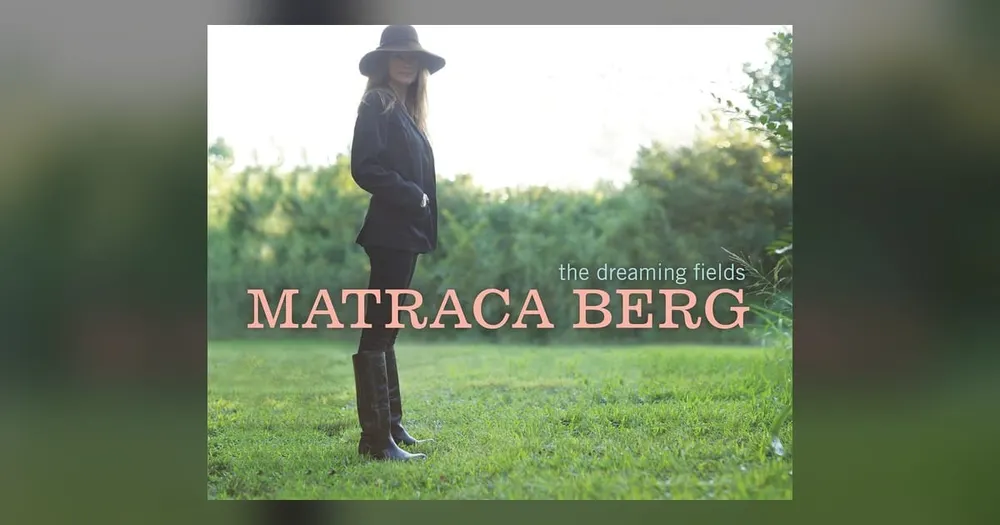
Matraca Berg · The Dreaming Fields · Dualtone Music Group · 2011
Produced by Matraca Berg · "South of Heaven" produced by Doug Lancio
Recorded at Sound Emporium, Sound Kitchen, Scruggs Sound Studio, and Universal Studios, Nashville · Mastered by Jim DeMain at Yes Master
Sources: album booklet and credits; The Tennessean, May 2011 (Peter Cooper); Chet Flippo's Nashville Skyline column, CMT.com, September and December 2011; American Songwriter; The Plain Dealer, November 18, 2011; Country Music News International; MTSU's Soul of the Songwriter oral-history interview; BBC radio (Don Henley, on "The Dreaming Fields"); BMI Icon award announcement, 2023; period interviews, 2011.