Arista Nashville · Released May 2, 2000
Written by Kelly Garrett and Tim Owens · Produced by Michael Clute and Diamond Rio
The album was going to be called Stuff. That was the plan in the spring of 2000: lead with the title track, a wry, quick-stepping little song about the one appetite nobody in America ever fills - the hunger for more of everything, the catalogs breeding in the mailbox, the shopping channel humming at midnight, the closet with no room left in it. Arista Nashville believed in it enough to name the whole record after it. Then the year happened, and by the time the album reached stores it wore a different title and a different heart, because somewhere between May and February the band traded a song about wanting more things for a song about wanting more time. What it became instead is the road not taken on the record that turned into One More Day.
To understand why it stung to lose, you have to know what kind of band was singing it. Diamond Rio started in 1982 as a theme-park act - the Grizzly River Boys, then the Tennessee River Boys, cranking out several shows a day for tourists at Opryland before a note of it counted in the Nashville that mattered. They spent most of the decade proving they were more than a park attraction, mowing lawns and driving tour buses between gigs and cycling through members until the lineup locked into place: Marty Roe out front, Jimmy Olander on lead guitar and banjo, Gene Johnson on mandolin, Dan Truman at the keys, Brian Prout on drums, and Dana Williams - a nephew of the Osborne Brothers - on bass. They took the name off the side of a truck, the Diamond Reo, with a blessing from Marty Raybon of Shenandoah, who had once eyed it himself.
What set them apart was stubborn and, on Music Row, close to heretical: they played their own records. In a town where the producer hands the instrumental tracks to a rotating bench of session aces, Diamond Rio walked in and cut everything themselves - every guitar, every harmony, no hired hands - and labels turned them down for the insistence before Tim DuBois signed them to the brand-new Arista Nashville. When "Meet in the Middle" went to No. 1 in 1991, they became the first country group ever to send a debut single to the top of the chart. They found "Mirror, Mirror" - a Mark D. Sanders co-write - on a Bluebird Cafe stage that same year and took it into the Top 10, banked four CMA Vocal Group of the Year trophies and their share of the ACM's, and joined the Grand Ole Opry in 1998. By 2000 they were what the format reached for when it wanted to use the word quality: consistent, unshowy, impossible to fake.
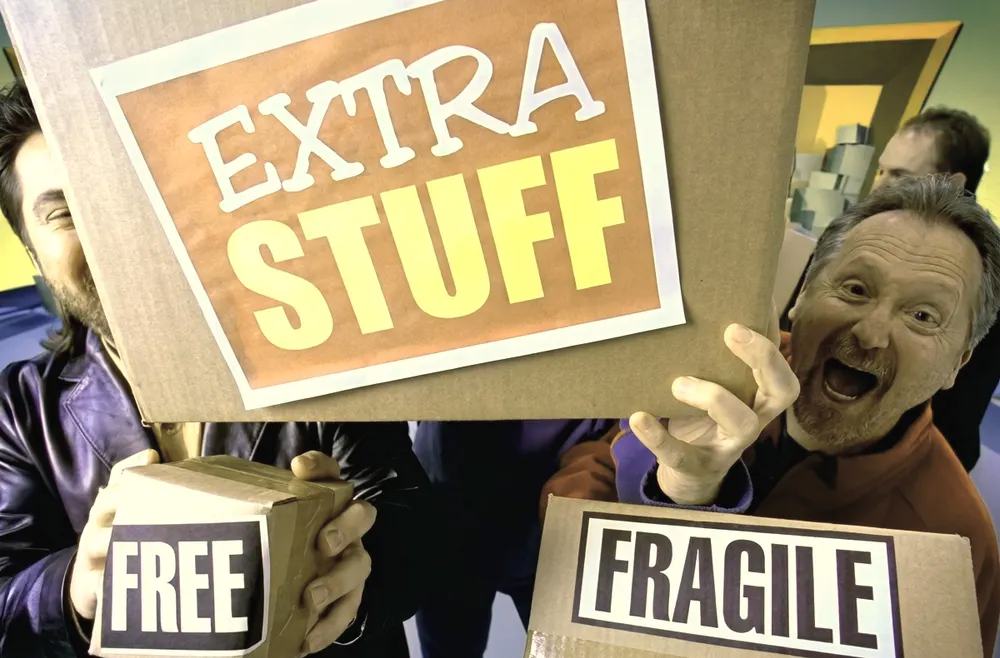
"Stuff" fit them because it was smart without being smug. George Carlin had worked this ground first - the routine where a house is just "a place to keep your stuff" while you go out and hunt for more of it - but Carlin's sermon came with a parental advisory. Kelly Garrett and Tim Owens wrote the country version: a grin with a point, a catalog of American acquisition that lets you laugh at yourself a beat before you notice the preacher, delivered by the cleanest-cut band in Nashville with nothing to bleep. Somewhere, Carlin was probably annoyed it worked. AllMusic's Rick Cohoon pegged it as "a fun yet insightful tune about how we tend to measure our success in life by how many material things we accumulate." It moved, it swung, it had the harmonies stacked the way only that band stacked them. The video played it just as broad - a candy-colored, fish-eye suburbia where a housewife signs giddily for an endless parade of cartons stamped CHEAP STUFF and HEAVY STUFF, deliverymen wobble under box towers, and the band mugs through the middle of it all, until the final delivery turns out to be a palm-sized package she cradles like a ring box. Even the punchline was on message: the smallest box gets the most love. Arista lined the song up as the flagship - the title of the sixth album, penciled in for August 22, 2000.
Then the ground moved. That July, BMG folded Arista Nashville into the RCA Label Group, and Tim DuBois - the man who had signed the band and run the label from its first day - walked out the door while Joe Galante gathered half of Nashville's biggest acts under one roof. A single needs a champion and a clear lane, and "Stuff" had neither the week the org chart got redrawn. Radio, for reasons the band never got a straight answer on, didn't warm to it. "Certain radio stations, for some reason, didn't want to play 'Stuff,'" Dan Truman said. It stalled at No. 36, got pulled, and the album - its title suddenly homeless - slid off the calendar while everyone waited to see where the pieces settled.
What the band had in the chamber changed the whole story. "One More Day," written by Steven Dale Jones and Bobby Tomberlin, was cut as a love song - a man bargaining for a single extra day with someone he can't get back. Released late in 2000, it climbed to No. 1 in the new year for two non-consecutive weeks, crossed to No. 29 on the Hot 100, and gave the band its first Top 10 on the adult-contemporary chart. Then the calendar turned cruel and the song grew to meet it. In January of 2001 a plane carrying members of the Oklahoma State basketball program went down; in February the racing world lost Dale Earnhardt at Daytona; in September the towers fell. A ballad written for one grieving man became a whole country's shared prayer. "Every event of that year, the song took on a different meaning to different people," Brian Prout said. "To know that you had that impact on someone's life, and helped in a tough time of healing and hope - pretty darn special." The record arrived on February 6, 2001, no longer Stuff but One More Day. "Stuff" was still on it - first track, first single - but the album now belonged to the ballad.
That is the small, perfect irony sitting inside this record. A band cut a sharp, funny song about the bottomless human want for more - and the business nudged it to No. 36 and moved on. Then the same album turned around and found the one want the song had left off the list: not more things, but more time. "Stuff" should have been a hit. Instead it became the setup - the wry, overlooked verse before the chorus the whole country would end up needing - on the record that traded the entire catalog for one more day.
Diamond Rio · "Stuff" · Arista Nashville · 2000
Written by Kelly Garrett and Tim Owens · Produced by Michael Clute and Diamond Rio · from the album One More Day