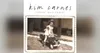
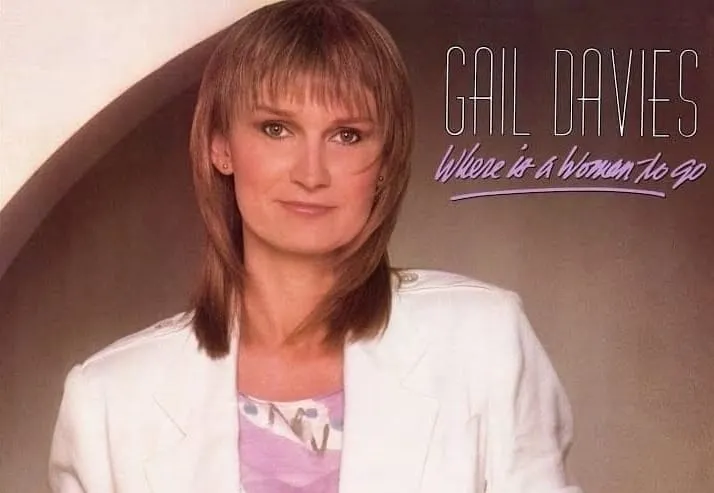
RCA Records · Released November 1984
Produced by Gail Davies and Leland Sklar for Little Chickadee Productions
Recorded by Bill Schnee at Emerald Studios, Nashville · Additional recordings by Bob Bullock at Woodland Sound Studios · Mixed by Bill Schnee at Bill Schnee Studio, Hollywood · Mastered by Doug Sax at the Mastering Lab
Gail Davies co-produced this record with Leland Sklar — the man James Taylor and Jackson Browne and Phil Collins kept on retainer for two decades, one of the most recorded bass players alive, on his way to more than 2,000 album credits and a 2026 induction into the Musicians Hall of Fame in Nashville — and the two of them ran the sessions as a live band out of Emerald Studios. Then she carried the record to Hollywood herself: Bill Schnee, who'd mixed Steely Dan's Aja, handled the mix at his own studio with Davies in the room — she would never, she says, have let anyone mix her songs without her — and Doug Sax, whose Mastering Lab had cut The Wall and Sticky Fingers and the Eagles' debut, mastered it. A 1984 Nashville country record routed through the same audiophile pipeline as Pink Floyd. In 1984, the only woman producing her own records on Music Row had a California legend beside her in the control room, her infant son Christopher on her hip because she was nursing him and had nowhere else for him to be, and the best players from two coasts booked for the week. Across town, Reba McEntire was releasing My Kind of Country, the first set of songs she'd chosen herself. Of the country albums by women reaching review desks that year, almost none were self-produced. Davies was the only one in the building.
She was paying for the session herself and couldn't afford a wrong night, so she hired accordingly: Little Feat's Billy Payne on keyboards. Reggie Young — the Memphis Boy, American Sound Studio royalty — and Billy Walker Jr. splitting the guitar work. Mike Baird on drums, borrowed from Rick Springfield's road band because Davies asked him. Farrell Morris on percussion. Buddy Spicher on fiddle. Lloyd Green and Paul Franklin dividing the steel between them. Jerry Douglas on dobro — twenty-eight years old, already the most called-for resonator player in Nashville, fresh off the session that gave the Nitty Gritty Dirt Band their first No. 1 with "Long Hard Road." Fourteen Grammys later, he would anchor Alison Krauss & Union Station and become the most decorated instrumentalist in country and bluegrass history. Vince Gill, twenty-seven years old, not long out of Pure Prairie League and with his RCA solo debut EP just out, still years from the career the town would eventually let him have, playing mandolin and singing harmony because that's what twenty-seven-year-old Vince Gill did for rent. He'd go on to win twenty-two Grammys, enter the Country Music Hall of Fame, and take Glenn Frey's chair in the Eagles — but in 1984, on this record, he was a sideman. Pam Rose and Mary Ann Kennedy on background vocals — years before they became Kennedy Rose — alongside Walker Igleheart, who also co-wrote "Jagged Edge of a Broken Heart," and Julia and Maxine Waters. And on two tracks, singing harmony: Dolly Parton and J.D. Souther.
"Unwed Fathers" sits at the center. John Prine and Bobby Braddock wrote it — a mutual friend at Tree Publishing tricked each into thinking the other was dying to collaborate, and neither had said any such thing. Tammy Wynette had already cut it, watched it stall at No. 63, and when she ran into Davies over lunch she was direct: "If they won't play it for me, girl, they ain't gonna play it for you." Davies cut it anyway, as a duet with Dolly Parton — two women telling the story of the girl left holding the baby while the father walks. Newsweek called it the best country record of 1984 and noted that it would have been a hit "had there not been so many unwed fathers programming the country radio stations." It peaked at No. 56. Dolly's voice wrapped around acoustic country tracked live with no pop varnish — it's the sound Emmylou, Dolly, and Linda would chase three years later on Trio. Davies got there first, in a room she built herself — and Doug Sax, who mastered this album at The Mastering Lab in Hollywood, mastered Trio too — the album George Massenburg produced for Emmylou, Dolly, and Linda three years later. That same year, John Prine released his own version of "Unwed Fathers" on Aimless Love, the first album on his own Oh Boy Records, built from demo sessions after he walked away from the majors rather than sign another deal. Two artists on their own terms in 1984, connected by the same song.
The title track came from K.T. Oslin and Jerry Gillespie. Oslin had walked the stages of Hello, Dolly! and West Side Story on Broadway, moved to Nashville to write, and the record deal that finally took wouldn't come until she was 45 — "80's Ladies" was still three years away. "Where Is a Woman to Go" was one of them. Davies chose it as the album title and the closing single: ten songs about what it costs to be a woman doing this work, in this town, on her own terms.
"The Trouble With Love" was written by Pam Rose, Mary Ann Kennedy, and Candy Parton — so the background singers wrote the song they're singing on. Paul Kennerley and Bob McDill wrote "Nothing Can Hurt Me Now" — Kennerley, the Londoner who loved American music so much he wrote White Mansions, a Civil War concept album featuring Waylon Jennings and Jessi Colter, and The Legend of Jesse James with Johnny Cash and Levon Helm, before he ever moved to Nashville or married Emmylou Harris; and McDill, the man who wrote "Good Ole Boys Like Me" — collaborating on a song Davies chose because the lyrics matched something she was carrying after a relationship that fell apart.
Wayland Holyfield — the Hall of Fame writer behind "Could I Have This Dance," fourteen No. 1s to his name, who died in May 2024 — and Gary Nicholson open the album with "Break Away," which climbed to No. 15 and became the record's highest-charting single. Nicholson was Davies's own road-band guitarist at the time, writing at Tree Publishing alongside Harlan Howard and Bobby Braddock, and that same year his "That's the Thing About Love" gave Don Williams a No. 1. Holyfield's longtime writing partner was Bob McDill, the same McDill who co-wrote "Nothing Can Hurt Me Now" with Kennerley elsewhere on this album.
Hoyt Axton — whose mother Mae Boren Axton co-wrote "Heartbreak Hotel" for Elvis — wrote "Lion in the Winter." Axton had originally recorded the song as a duet with Linda Ronstadt; on this album, J.D. Souther takes the harmony, Ronstadt's former partner and the co-writer of "Best of My Love," "New Kid in Town," and "Heartache Tonight." Souther was already in Nashville that year recording Home by Dawn, his own attempt to cross from California to the Row — an album he later called "that unfortunate curiosity known as a critical success, meaning nobody bought it." He died in September 2024. His voice on "Lion in the Winter" catches him at the same crossroads Davies occupied: a Californian trying to make Nashville listen. And "Lovin' Me Too" was written by her brother Ron Davies — the Ron Davies who wrote "It Ain't Easy," which David Bowie recorded for Ziggy Stardust, and who died in 2003 with four hundred dollars in the bank. Gill sings beside her on that one. Family, labelmate, and a voice the whole town would eventually chase, all in one harmony part.
"Jagged Edge of a Broken Heart" went out as the first single and reached No. 20 — and by Davies's account, BMI's airplay logs had it performing like a top-5 record. In the years before electronic monitoring arrived in 1990, what stations played and what they reported didn't have to match. The record's ending was her call too: pull the band out entirely and let the voices — hers and Walker Igleheart's — finish it alone.
"Not a Day Goes By," her own composition, was never released as a single in the United States. BBC Radio played it in regular rotation anyway, and the response was strong enough that Joe Galante arranged for Davies and her band to travel to England for the Wembley Festival — making this the first Gail Davies album released in Europe. Britain heard it first.
Davies and Sklar tracked this record as a band — everybody in the room, no assembly line. Nowhere does the method pay off harder than "Different Train of Thought," the set's barreling rocker, written by Ted Hewitt, Will Shouse and Steve Nobles — Shouse and Nobles out of the Mel Tillis writing camp, Hewitt on his way to co-writing "Wine into Water" with T. Graham Brown — fast, electric solo blazing, Sklar's bass locked into Mike Baird's drums in a pocket that breathes and sweats instead of ticking, the same lane Juice Newton was running in those years. Forty years later, the arrangements on this album hold up. Credit her ears — the ears Henry Lewy, Joni Mitchell's engineer, told her were good enough to produce records, years before Nashville caught up.
The infant she nursed in the control room was Christopher — Chris Scruggs, son of Gary Scruggs, grandson of Earl. Davies and Gary never married — the same territory John Prine and Bobby Braddock wrote into "Unwed Fathers," lived in real life by the woman who cut it. Chris didn't meet his grandfather Earl until January 2010, when he was twenty-seven years old. By then he'd already played guitar and co-lead vocals in BR5-49, written and sung the title track of Tangled in the Pines, and launched a solo career. In 2015 he joined Marty Stuart's Fabulous Superlatives, where he plays bass on the Opry stage his grandfather helped build — Earl Scruggs's grandson, Gail Davies's son, carrying both lineages on the same instrument. He later co-produced his mother's albums.
Davies kept building after this record. She formed Wild Choir with guitarist Pete Pendras, and their single "Safe in the Arms of Love" — written by Mary Ann Kennedy and Pam Rose with Pat Bunch, the same Kennedy and Rose singing background on this album — became a top-five hit for Martina McBride a decade later. In 1990, Capitol Nashville hired her as the first female staff producer in the city's history — no longer just producing herself, but hired to develop new artists, among them a teenage Mandy Barnett. And K.T. Oslin, who wrote the title track of this album while nobody would give her a record deal, got hers from RCA three years later and won a Grammy with "80's Ladies."
Pam Tillis produced All of This Love by herself in 1995 — and when The Tennessean needed to explain how rare that was, Gail Davies was one of the names the paper reached for, the precedent cited while Tillis worked. Twelve years later Tillis started her own label, Stellar Cat. And in 2009 she married Matt Spicher — record producer, recording-degree in hand, son of legendary session fiddler Buddy Spicher, whose credits run from George Strait to Conway Twitty to Don Williams, and who played fiddle on this album.
Suzy Bogguss has said that the first time she heard Gail Davies' voice, it moved her to tears — the kind she cried, she says, only for singers she aspired to become: "Gail Davies received buckets of tears and was the inspiration for me to move to Nashville." The inheritance ran past inspiration into method. Bogguss co-produced her records through the platinum years and spent them hearing "Jimmy Bowen is your producer" — the credit vanishing into a man's name, the exact erasure Davies had refused by never letting anyone else's name near her board. It took Simpatico, her 1994 duets album with Chet Atkins, the first record without Bowen's name anywhere on it, before anyone noticed Bogguss had been producing all along. When she cut an album in her home studio decades later, funded by her own fans, the multi-instrumentalist in the room was Chris Scruggs.
A decade after Bogguss's platinum run, a Canadian kid named Terri Clark who'd busked on Tootsie's sidewalk for seven years got her deal at Mercury, wrote or co-wrote eleven of twelve tracks on her debut, and eventually started her own label when the majors stopped listening — the same move Gail made with Little Chickadee, the same refusal to let anyone else hold the keys. The room Gail Davies built in 1984 had more doors in it than RCA knew.
The album is out of print. It shouldn't be.
VERDICT: Ten songs written by John Prine, Bobby Braddock, Paul Kennerley, Bob McDill, Hoyt Axton, K.T. Oslin, and her own brother. Tracked live by players from two coasts who came because she called. The chart said No. 56. Newsweek and the BBC said otherwise. The room she built in 1984 is still standing.
Essential tracks: "Unwed Fathers," "Jagged Edge of a Broken Heart," "Lion in the Winter," "Not a Day Goes By."
Gail Davies · Where Is a Woman to Go · RCA Records · 1984
Produced by Gail Davies and Leland Sklar for Little Chickadee Productions