A jingle singer held the top. The record that saved country music sat one notch below her, a week from the summit. And down at the bottom of the survey, six new names came in the door — the same number that had gone out of it that week.
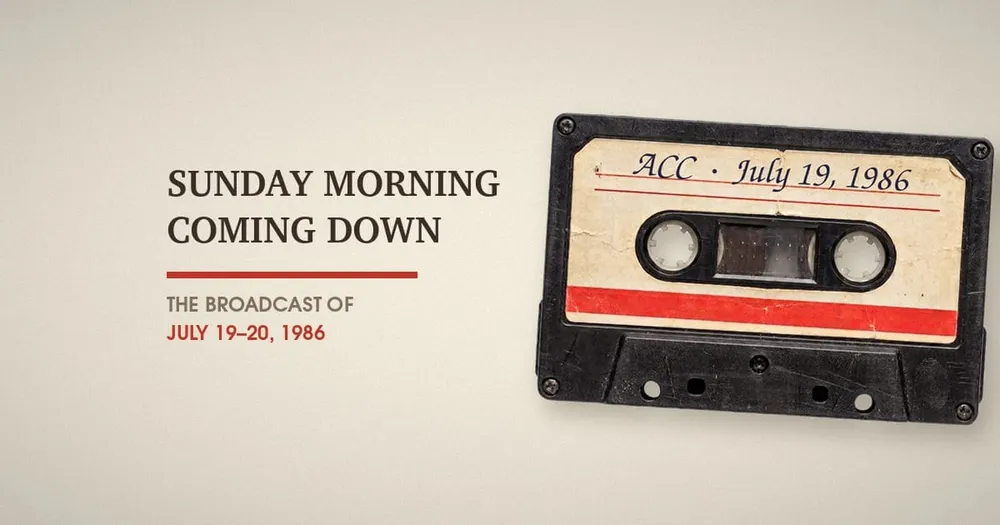
On the American Country Countdown broadcast of July 19–20, 1986, Bob Kingsley counted down a chart that would go on to decide the future of the format. Nobody listening that weekend could have called it. The top looked like business as usual — a polished ballad at No. 1, a hard-country climber right behind it — and the bottom looked like every other week's bottom, a cluster of new entries hoping to survive to August. But this particular survey had the whole changing of the guard on it at once: the session professionals who built the early eighties holding the summit, and the traditionalists who would own the rest of the decade lined up underneath them, waiting.
Start at the top, because the woman standing there had waited longer than anyone. Judy Rodman moved up one spot to No. 1 with "Until I Met You," a Hank Riddle ballad Loretta Lynn had recorded first, and the voice delivering it had already been heard by nearly every American alive — they just didn't know it. Rodman spent seven years as a staff singer at the William B. Tanner company in Memphis, singing lead and stacking harmonies on thousands of jingles: United Airlines, Chevrolet, Miller, McDonald's. She'd sung behind Dolly Parton and Ray Charles. The ACM had just named her its top new female vocalist over a class that included Patty Loveless. Now she had her own name on the top of the country chart, on MTM Records — Mary Tyler Moore's Nashville label, where a young receptionist named Trisha Yearwood was answering the phones. It was the summit week of Rodman's charting life. Her labelmate Holly Dunn had just fallen off the survey with "Two Too Many," and the song Dunn had waiting — "Daddy's Hands," written alone, about her father — would outlive the company that released it. The label was gone inside two years, and it took Rodman's finished third album down with it. But she wasn't finished writing her way into this story — hold that thought until the end.
The record she was holding off was "On the Other Hand." Randy Travis sat at No. 2, one notch and seven days from the top, and the single under him had already died once — twelve weeks and a stall at No. 67 the year before, a verdict that should have ended his career before it started. Warner Bros. sent the dead record back out that spring, a thing labels simply did not do, and by this broadcast the appeal was nearly won: one week later, on the chart dated July 26, it was the No. 1 country song in America. We told the whole improbable story — the catfish cook, the four polite phone calls from oblivion — in our fortieth-anniversary feature on Storms of Life. What the countdown adds is the tableau: the week before the turn, with the old format still standing at No. 1 and the new one right behind it, close enough to read the number over her shoulder.
The week's best rhyme was hiding at No. 39. Janie Fricke entered the countdown with "Always Have, Always Will" — and Fricke was Rodman's own story, told a few years earlier. An Indiana farm girl with an education degree she never used, she came to Nashville in 1975 and joined the Lea Jane Singers, the background group that worked up to three sessions a day, and became the era's great anonymous voice: United Airlines, Coca-Cola, 7-Up, Red Lobster, backgrounds on more than a thousand albums, harmony on Johnny Duncan's "Stranger" that got her noticed, two CMA Female Vocalist trophies once the town finally put her out front. Her press materials claim she was the first female singing voice heard on the moon, courtesy of an Apollo 12 wake-up jingle. Fricke's single kept climbing and reached the top on the fourth of October. It was the last time she'd get there.
Another one was sitting at No. 4. T. Graham Brown, up two with "I Wish That I Could Hurt That Way Again," had paid his Nashville rent singing for McDonald's and Budweiser before country radio learned his name. Two of the top four records that weekend belonged to people who'd spent years being heard without being identified.
Two spots below Fricke, at No. 37, sat the strangest situation on the entire chart. Keith Whitley entered with "Ten Feet Away," a Billy Sherrill, Troy Seals and Max D. Barnes barroom number from his album L.A. to Miami — and while Whitley himself was debuting down there, songs from that same album were sitting far above him in other men's voices. Travis's "On the Other Hand," at No. 2? Whitley had cut it first, on L.A. to Miami. George Strait's "Nobody in His Right Mind Would've Left Her," up two to No. 5? Also L.A. to Miami. Two of the top five records in country music that weekend came off Keith Whitley's album, and neither of them was Keith Whitley. The Kentucky kid who'd sung Stanley Brothers harmony with his boyhood friend Ricky Skaggs — himself at No. 15 this very week — was watching his own record collection colonize the top five while he entered at the bottom with the saxophone-glossed sound he already half-regretted. He'd asked to get back to traditional material, and when RCA let him, the result was three straight No. 1s in 1988. He was gone by May of 1989, thirty-four years old.
Inside the top ten, the family business. Pake McEntire — son of a three-time world-champion steer roper, older brother of Reba — climbed four spots to No. 9 with "Savin' My Love for You," on its way to No. 3 and the biggest hit he'd ever have. The McEntire kids had learned their three-part harmony in the back seat on long drives between rodeos, their mother's peacekeeping method, and for exactly this one summer, the arithmetic ran in Pake's favor: little sister Reba sat nineteen spots below him at No. 28 with "Little Rock," a sly Bob DiPiero co-write about a bored wife working her wedding ring loose. The standings didn't hold long: "Little Rock" became her sixth No. 1, the album it came from — Whoever's in New England, the first she co-produced — went platinum and won her a first Grammy, and that October the CMA named her Entertainer of the Year. Pake took his hit, went home to Oklahoma, and got back to roping.
At No. 12, up six, Waylon Jennings was singing Los Lobos. "Will the Wolf Survive," written by David Hidalgo and Louie Perez about a National Geographic headline and about their own band's odds, came to Waylon by way of Tony Joe White, who simply carried the record over to his house one day. Two years sober, newly signed to MCA after two decades at RCA, Waylon cut the East L.A. band's survival anthem and sang it like a man answering it about himself.
Carl Perkins wrote "Blue Suede Shoes," which gave him standing to lecture everybody else on this chart about where the noise had come from. He climbed three spots to No. 34 with "Birth of Rock and Roll," the centerpiece of Class of '55, the Chips Moman reunion that put Perkins, Jerry Lee Lewis, Johnny Cash and Roy Orbison (standing in for the friend they'd all outlived) back in Memphis. Moman paid Columbia a hundred thousand dollars just to keep Cash's voice on the record. "I watched Memphis give birth to rock and roll," Perkins sang, and the video put him in a white Cadillac rolling toward Sun Studio to prove it. Thirty years on from the big bang, its eyewitness was on a country countdown, telling the new kids where the noise started.
Six new songs entered the countdown that weekend — among them a young RCA sideman named Vince Gill at No. 33 singing "With You," still four years from the song that would change his life — but keep your eye on the last position on the survey. At No. 40, the lowest rung of the whole broadcast, came the title track of an album Nashville had flatly refused to sign: Dwight Yoakam, "Guitars, Cadillacs," his own composition, produced by his guitarist Pete Anderson. Music Row had told him no, so he'd gone west and built his following in Los Angeles clubs, playing Buck Owens' Bakersfield sound loud enough for the punk kids, and here it came anyway, at the bottom of the chart Music Row controlled.
THE SAME WEEKEND, DOWN THE YEARS
1990. (July 21, 1990)
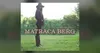
Four Julys later, the same doorway held a songwriter the town already knew by reputation. Matraca Berg spent her second week at No. 40 with "Baby, Walk On," the first single from Lying to the Moon — a daughter of Music Row session singers, a No. 1 co-write with Bobby Braddock already behind her at eighteen, now testing whether the voice belonged out front too. Radio never quite gave her an answer; in that decade she wrote "Strawberry Wine" and "Wild Angels" and settled the question a different way. Her whole story — the front-mic years and the songbook that followed — is in our songwriter spotlight and our Underheard on Sunday Morning to Saturday Night.
Higher up that same survey, Ricky Van Shelton entered at No. 30 with "I Meant Every Word He Said," bound for the runner-up spot. Four years earlier the traditionalist bet had been a gamble made at the bottom of the chart. By 1990 it was where a debut started. And T. Graham Brown was back, out of the top five now and paired with Tanya Tucker, the two of them jumping eight spots to No. 26 with a Radney Foster and Bill Lloyd flirtation called "Don't Go Out."
1994. (July 23, 1994)
The last position on the survey went to Dwight Yoakam, new, with "Pocket of a Clown," a tilted Lefty-haunted shuffle off This Time, the triple-platinum peak of his career. A Grammy nomination was waiting, and the countdown filed him at No. 40.
Just above him, at No. 36, John Berry entered with "What's in It for Me," written by Gary Burr with John Jarrard — the same John Jarrard whose "Lonely Alone" had come in the door on this very weekend's countdown in 1986, at No. 38, in the Forester Sisters' harmonies. Berry had spent that May on an operating table at Emory University Hospital, five and a half hours of brain surgery while "Your Love Amazes Me" coasted to No. 1 without him. "I'm not in so much of a hurry anymore," he said when he came out of it. Thirty years later he's still touring — his 30th annual Christmas tour was just announced.
And at No. 11, climbing five, John Michael Montgomery's "Be My Baby Tonight" was three weeks of gravity away from No. 1 — mid-nineties country at full commercial throttle, a story for another installment.
Line up the last position across the three broadcasts. 1986, the town's freshest reject, in a secondhand rhinestone jacket, enters at No. 40 singing the name of the album Music Row wouldn't sign. 1990, the best songwriter of her generation stands in the same spot, waiting to find out which of her gifts the town will accept. 1994, the same man from '86 co"mes back through the identical door, platinum now, and the chart treats him like any other new arrival.
As for the woman who was standing at the very top while Yoakam first came in: when MTM collapsed, Judy Rodman went where the session pros go — back to the work. She became a writer, and in 1996 she co-wrote "One Way Ticket (Because I Can)," the record that gave a Texas teenager named LeAnn Rimes her first No. 1 — the very summer of "Blue," whose story we told a few weeks back. Ten years after her own name came off the top of the chart, she put somebody else's there.
Next week, another weekend, another year. We'll leave the radio on.
Sources: American Country Countdown program documentation restored and published by Charis Music Group; the American Country Countdown fan archive (american-country-countdown.fandom.com); Billboard chart archives; period label, press, and artist materials, including Billboard reporting on John Berry (Peter Cronin) and Keith Whitley (Kip Kirby); Los Lobos interviews via Rolling Stone and Songfacts; Country Music Hall of Fame and Museum; artist official biographies.
Sunday Morning Coming Down is an independent journalism feature about historical radio broadcasts. It is not affiliated with or authorized by Billboard, the producers or distributors of American Country Countdown, or the estate of Bob Kingsley; program and chart names appear only to identify the broadcasts discussed.