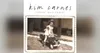
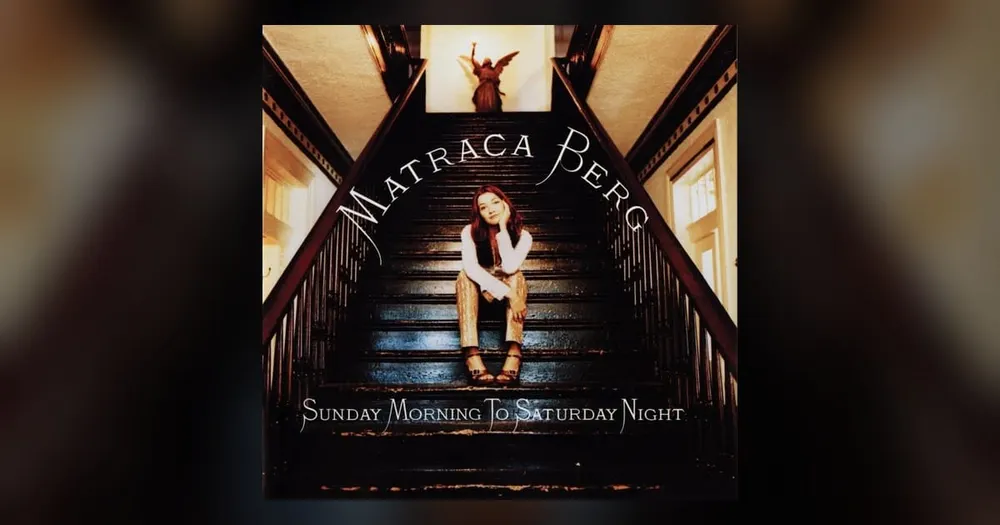
Matraca Berg — Sunday Morning to Saturday Night
Rising Tide Records (RTD-53047) · Released September 23, 1997
Produced by Emory Gordy Jr. · "Some People Fall, Some People Fly" co-produced by Randy Scruggs
Recorded at The Tracking Room, Nashville, Tennessee
The night after the album reached stores, Matraca Berg sat backstage at the CMA Awards drinking Pepto-Bismol like it was going to save her life. She was about to walk out and sing a song no one in America had heard, in a room full of George Strait and LeAnn Rimes and Sting, and the dialogue running through her head, by her own account, was some version of I wonder what Sting is thinking. She leaned over to her husband with a big smile and asked whether there was any more Pepto backstage. Then Vince Gill, hosting, introduced her as "a poet... one of our very best," and the woman who had spent fifteen years writing other people's hits walked into the light and sang "Back When We Were Beautiful" — an old widow's reckoning with her own aging face — and a hall of the most famous singers in the format went quiet, and then it stood.
Earlier that same evening she had collected Song of the Year for "Strawberry Wine," a song the whole country had heard in Deana Carter's mouth and almost no one had heard in hers. Two trips to the stage, and the distance between them is the entire story of her career: the writer who had made half the building rich, finally made to be looked at as the artist. She felt, she said, like the oddball. She was the best writer in the room. And there was a ghost in the seat beside her: she used to watch this same broadcast on television with her mother, the two of them dreaming out loud about winning one. Her mother had been gone thirteen years.
Berg did not come to this album the way Nashville's hopefuls come to a debut, because she was never a hopeful and this was never a debut. She is that rarest Music Row creature, a native — "half physicist, half hillbilly," as she put it. Her mother, Icie, came down out of Harlan County, Kentucky, and sang backup on Nashville sessions; her aunts, the Callaways, did the same; her uncle played steel for Mel Tillis. Her adoptive father was a Vanderbilt physicist who, when his four-year-old composed her first song, wrote it down on computer paper and carried it home to Icie with a verdict any A&R man would envy: "I think she's got something." She fell asleep as a baby on the Naugahyde couches in front of the control board, the low end lulling her under. The future Hall of Famers who would write the next decade's standards sat at her family's kitchen table trying out songs that weren't hits yet. She wanted, more than anything, to be Bobbie Gentry — the woman who fit an entire film into the three minutes of "Ode to Billie Joe." This is not someone who moved to Nashville. This is someone Nashville happened inside of.
By the time she made Sunday Morning to Saturday Night she had already learned the secret that made her unkillable as a writer. She found it while she was building "Wild Angels" for Martina McBride: you can be as fearless as you want in the verses as long as you hand people a chorus to sing. Give them the gravy, she said, and the verses stay yours. That is the engine of this entire record — eleven songs that smuggle hard, strange, grown-up truth inside melodies you are humming before you have understood what you just agreed to feel. She wrote them at night, in a messy dark back room she and Jeff called the cowboy room, full of memorabilia, a guitar and a notebook of loose verse — plunking around, waiting for songs that sometimes channel straight through you and sometimes come, in her words, like pulling teeth with no anesthesia. Her arithmetic on the craft is brutal and exact: you write twenty to get two that are any good.
She made it for Rising Tide, a brand-new label that handed her the one thing RCA never had: the room to make exactly the record she wanted — what she called an undiluted representation of herself. By the time the deal came, her cupboard was bare; she had given everything away, watched every song she'd saved for her own comeback become someone else's hit. So she holed up in the cowboy room and wrote eleven new ones over nine months, and this time she held them. She sequenced the record by a single law, stated to Billboard that summer: "The tone of the album is set by a couple of songs — 'The Resurrection' and 'Back When We Were Beautiful' — and if the other songs didn't hang with those, they weren't allowed."
Nobody ever talks about the nerve that took. Instead of restocking the shelf — writing safe, banking hits for Martina or Trisha or whoever knocked next — she wrote the most unguarded songs of her life and refused to hand over a single one. The woman who used to get physically ill before walking onstage decided these were hers to sing. That is not a career decision. That is a woman deciding to stop being afraid, and doing it alone, at night, in a room nobody saw.
She made it with Emory Gordy Jr., a bassist-turned-producer who had played on Elvis's last sessions, anchored Emmylou Harris's Hot Band, and built Patty Loveless's best work — he was also Loveless's husband, which meant Berg was handing her record to a man who already understood what it meant to be married to the music and to the musician at the same time. He let Berg keep her own rhythm-guitar parts so the songs would hold the groove of her demos, and he understood that her voice — smoky, patient, closer to Rickie Lee Jones than to anyone on 1997 country radio — did not need to be pushed toward something bigger. She has said she never felt him condescend to her, never once heard look, kid, I know what to do. He played bass on most of the record under his own name — Gary Lunn and Craig Nelson took the chair on the rest — and reserved a single alias, "Fantom of the Opry," for additional keyboards on the closer.
The writing casts such a shadow that nobody thinks to look underneath it, so say it plainly: Matraca Berg has one of the most gorgeous voices Nashville has ever had. Low and warm and in no hurry at all, with smoke drifting through every phrase, the kind of voice that makes a room lean forward and shut up. She can be tender enough to stop your breathing, feisty enough to swagger, warm enough to make you believe a marriage is worth fighting for, and then turn around and growl through a verse like she's daring you to cross her. Whatever is living in the bottom of that voice, she was born with it, and no amount of craft explains it. Even her label president said it plainly while announcing the record: "Matraca has been the voice of the country female artist in Nashville through her songs. Now people can hear her great vocal ability." Nashville spent fifteen years calling her a songwriter. That was never the whole truth.
Consider who Gordy put in that room. Eddie Bayers on drums, the most-recorded in town. Richard Bennett on guitar and bouzouki — Neil Diamond's right hand for a decade, and the man who built the menace into Steve Earle's Guitar Town. Dan Dugmore on steel, the player Linda Ronstadt's heartbreak kept on retainer. Stuart Duncan on fiddle, on more great Nashville records than anyone has ever managed to count. Reese Wynans — Stevie Ray Vaughan's keyboard player, the blues muscle of Double Trouble — at the piano for the most fragile ballad on the album. Randy Scruggs, Earl's son. Raul Malo of the Mavericks. And in the songwriting credit on "Back in the Saddle," Stan Lynch, who drummed for Tom Petty, keeping one of Berg's boots planted in rock and roll.
The harmony singers settle the question of who knew. Trisha Yearwood, Faith Hill, Patty Loveless, Martina McBride, Suzy Bogguss — the women her songs had made, lining up to sing behind her. Kim Carnes brought the husk of "Bette Davis Eyes." And on the title track and the closer, the backups belong to the Callaways: her own aunts, the session singers who raised her, a literal family chorus on the record that grieves the world they all came from. While she cut it, Rising Tide's president joked that female stars were circling the building hoping to grab whatever songs she let fall. She made sure almost nothing fell.
The album opens with "Along for the Ride," and it lies to you a little, which is the point. It sounds like an easy afternoon. It is actually a love song to Jeff Hanna — the two of them bogged down in daily life, and Berg wanting to grab him and just drive somewhere, anywhere, out of the rut. It has the cruising confidence of Rosanne Cash's King's Record Shop — a woman who knows exactly where she's pointed — except the warmth grew up out of Tennessee dirt instead of California asphalt.
"That Train Don't Run" is the swaggering single, and the joke inside it is pure middle-aged grace. Berg and Jeff had bought a house near a train track, and for a month a freight woke them every night, and she lay there amused that at this stage of life it's a train that gets you up at two in the morning instead of all the trouble that used to. The song turns that into a kiss-off to her own younger wildness, rattling the shutters of a comfy suburban bedroom. It struts the way Carlene Carter's records strut — a woman grinning at the wild girl she used to be, with no wish to go back.
"Back in the Saddle" is the co-write with Stan Lynch, and it is Berg watching a phenomenon and finding it hilarious: the rush of women throwing on cowboy boots and screaming for young country hunks like girls at a rock show. So she flips the camera. Every other song of that moment was sung by the bowlegged rodeo guy; Berg writes what's in it for the woman who comes out of a New Age health spa and falls for him anyway. Tanya Tucker's grit meets Stevie Nicks's strut. The single only reached the low fifties and became, absurdly, the last chart entry of her performing life — but the video survived, those same five stars mugging together behind bars, the most powerful women in the format singing harmony for the writer none of them outranked. And the story under it: Berg had crippling stage fright, called herself an imposter. The friends who used to book little shows just to drag her back onstage were Kim Carnes and Marshall Chapman, and the women crowded into that jailhouse were the same circle, doing it one more time where the whole country could watch.
The song has a coda nobody could have scripted. After Rising Tide folded and Berg was at her lowest, Trisha Yearwood called to cheer her up, telling her she'd just been talking with Maya Angelou, who turned out to be a fan — a story Berg shared with Country America that fall. She assumed the great poet's favorite would be the widow's lament. It wasn't. Maya, as the magazine put it, was digging on the lusty "Back in the Saddle."
"Here You Come Raining on Me" pulls toward the mountains — Jeff's National guitar, Bennett's bouzouki, Cox Family harmonies thinning the air — and it opens on an image that tells you everything: a blackbird shivering on an old clothes line. Berg has said it's mostly Sharon Rice's story, written while Rice was going through a divorce — and Rice is not just an inspiration but a presence, singing backup on these very sessions — but Berg knew it from the inside: the marriage that explodes, and the ex who keeps resurfacing exactly when you've started to feel like yourself again, sneaking up on your heart's blind side. Jeff supplied the funky melody. It is the prettiest thing on the first half and the most quietly furious.
Her voice buries a growl low in the phrasing here, deliberate, never raised — purred.
"Some People Fall, Some People Fly" lifts off where the record has mostly been digging in. Berg wrote it for herself and Jeff at the point where infatuation thins out — not as a warning but as reassurance, because that thinning is where it starts getting good. Anybody can fall in love, she figured; staying is the hard miracle. Stuart Duncan's fiddle saws it skyward. The warmth in it is Kathy Mattea's kind — the plainspoken hope of "Where've You Been," uplift that sounds witnessed instead of sold.
And then comes "Back When We Were Beautiful."
This is the one that stops the album, and her career, in its tracks. She wrote it alone — she almost never writes alone — because it came from somewhere too personal to share. It is built from two conversations: one with her grandmother, one with Jeff's mother. Both women still felt like girls inside, and both struggled each morning with the elderly stranger waiting in the mirror. So she wrote in that voice — not her own, someone else's entirely, with the total empathy and zero self-consciousness she admires in Randy Newman, a writer she has named as one of her threads. A widow showing a younger listener a yellowed photograph, hating it when they tell her she's aging gracefully because she fights it every day and they never see. Almost no one in country music would dare hand a song to an old woman and let her be this angry. Wynans's piano, Craig Nelson's upright bass, a viola from Tammy Rogers and Kris Wilkinson holding back at the edge — and Berg singing against all that restraint as if pushing harder would crack the character and show the actor. Emmylou Harris and Rodney Crowell finally cut it years later, two masters giving it a wide and careful stage, and theirs is gorgeous and a half-step behind hers — the difference between performing the widow beautifully and having sat across the table from both women she's made of. The grandmother who inspired the song lived to be a hundred. A week after she died, in the summer of 2015, Berg stood on a Nashville stage and sang it for her one more time.
To feel the whole weight of it, you need one image from her life. The first time Matraca and her mother heard a Berg song on the radio together — "Faking Love," the one she'd written at eighteen — Icie pulled the pickup onto a bridge in Gallatin and stopped. When it ended she turned with that big toothy grin and asked her daughter how it felt. There was, Matraca has said, a tinge of sadness in her eyes that haunts her still. Icie had wanted to write a hit herself. She was dead of lymphoma inside two years, barely forty, and Berg was twenty, left to help raise her siblings. "Back When We Were Beautiful" is a song about a woman watching her own beauty and her own time slip past in a photograph — written by a daughter who inherited a dream and a grief in the same breath. She was thirty-three when she recorded it. In interviews that very season she kept telling reporters she couldn't wait for her fifties, couldn't wait to get older and come into her own. The woman who wrote the great song about dreading the mirror could not wait to age. Sit with that.
The title track opens the back half with a whole town spilling out of it — a Sunday-to-Saturday tapestry of the saved and the sinning crowded into one set of pews. This is her "Ode to Billie Joe" — a community's worth of scandal and grace packed into a single song, the sinners named, the congregation shuffling nervously, nobody innocent. Its seed was small and sharp: friends of hers were divorcing, and what struck Berg was how righteous each of them felt about their own side, and how hypocritical all of us get the second we're sure we're right. From that she built the congregation that prays for forgiveness on Sunday and gossips about the strayer by Monday — a small-town panorama with the populist sweep of Mellencamp's Scarecrow, drawn with affection and zero illusions. The Callaways singing behind their niece turn the church from a backdrop into a real room with real people in it.
"Good Ol' Girl" is a truck-stop waitress with a picture of Elvis on her wall, who piles her hair up high because it makes her feel closer to God and goes to church with her mother because it's right and dances with a trucker now and then because she's alive. She has never had children, but she has taken in strays, and she has been known to pay the long-distance bill for a scared runaway — and that is the line where the character sketch turns into something with moral weight, a woman whose goodness costs her actual money. Berg has said the character is every strong woman she grew up around, from her aunts to the waitresses at the Pancake Pantry — her favorite kind of people, because they're proud and honest and unbreakable. The character stayed with her long after the album: years later, Berg and Marshall Chapman built a stage musical around her, Good Ol' Girls, with a book by novelists Lee Smith and Jill McCorkle. You write a waitress that well, she walks off the record and into a theater.
"Give Me Tonight" is, in Berg's own one-word note on the song, another one for Jeff — ditto. But the lyric earns more than that. It starts with a wedding photo still hanging on the wall and a couple waking up half alive, driving faster in the carpool lane, paying bills without complaining — all the quiet ways a marriage can go numb without anyone meaning it to. The ask is simple: give me tonight, light up the stars, blow out the sun. Raul Malo opens the door and the temperature changes — Berg has said the song simply picked him, that Raul was practically family, the two households forever hanging out together — and his voice winding around hers turns a domestic plea into something that sounds like a border station drifting up the dial after midnight. Half the album is about staying instead of leaving, which was not what 1997 country radio was selling. Berg was writing the part nobody thought was dramatic enough to sing about — the keeping.
"If I Were an Angel" is where the album reaches all the way back into the wound. At eighteen, dizzy from her first hit, Berg took off for Louisiana with a musician, playing in his band, and found out fast that neither the boy nor the band was what she'd left home for. Her mother knew. In the song, momma cries on the phone and begs her angel girl to come home. In life, it is, she has said, the worst she ever broke Icie's heart, and the worst she ever missed her before she died. Co-written with Kim Carnes and Gary Harrison — the same Harrison who wrote "Strawberry Wine" with her, the through-line of her most personal songs running straight through him — the song carries the husky regret of a woman who walked away from home and only later did the arithmetic on what she'd traded. Bonnie Raitt was making this exact grown-woman peace on Nick of Time in those years. But there is no peace under this one — only a girl, a borrowed sin, and a mother who is gone before the apology can reach her.
The album ends with "The Resurrection," and everything the record has been carrying comes due. Berg wrote it with the novelist Alice Randall — the first Black woman to co-write a No. 1 country song, a Vanderbilt professor — and the two of them set out to write about the changing of the guard in country music without ever naming it. It became a song about Nashville itself. Berg has been blunt about what it's really about: musicians whose phones stop ringing, great artists who can't get a deal, the way the hope just leaves their eyes — and, she admits, herself. She was a native watching the town that raised her turn into something she hardly recognized, the kitchen-table craft replaced by clocking in and out. There is John Prine's "Hello in There" in its marrow, the elegy for the bypassed, sung with not one ounce of condescension. The Callaways come back for the last harmonies, and Jeff with them, and the last thing you hear Berg promise is that the heart and the soul prevail — like the wildflowers that grow between the rails. The Nitty Gritty Dirt Band would re-cut the song years later. The good ones always get a second life. It was the album that didn't.
Because here is the cruelty. In 1997, Berg became the first woman ever to chart five No. 1 country hits in a single year — and in that very window she made the album of her life — and it made nearly every Top Ten Album of the Year list there was, and then, in March of 1998, Rising Tide's money dried up and the label simply closed, folding mid-campaign even as "Back in the Saddle" was gaining at radio, after they'd mailed wooden train whistles to record stores to announce her single. The most successful songwriter in town could not get her own masterpiece heard. The two facts have nothing to do with each other, and that is the whole tragedy. Her co-writer Gary Harrison put the consolation plainly: there have only ever been thirty-some Songs of the Year, and "Strawberry Wine" is one of them; those songs, he said, will live on long after the shiny penny of fame comes and goes.
So she did what Nashville trains its writers to do when the door shuts on the artist: she went home and wrote. But not before Harlan Howard — her mentor, the dean of Nashville songwriting, the man who'd bought her her first shot of tequila — showed up at Rising Tide's going-away party, sat her down, patted her on the head, and told her the truth she'd spend fourteen years acting on: she was never a country star, and she was something better. She took it as encouragement. He was telling her who she actually was, and he was right. What that stretch produced was the rest of one of the great American songbooks, assembled three minutes at a time — more hits handed to other singers, "You and Tequila" for Kenny Chesney and Grace Potter a decade on, a Grammy nomination, a generation of careers built on her writing. The Nashville Songwriters Hall of Fame took her in 2008. The ACM gave her the Poet's Award in 2018. She finally made another album of her own, The Dreaming Fields, fourteen years after the one that was supposed to launch her vanished out from under her.
Icie never heard this album. She would have pulled over.
The album never went gold, but its songs refused to die quietly, and the truest measure of them was never the charts — it was whose voices reached back for them. Emmylou Harris and Rodney Crowell recorded the widow's song. The Nitty Gritty Dirt Band cut the closer. The rowdy one, improbably, belonged to Maya Angelou. Kris Kristofferson called her one of the best singer-songwriters going. Patty Loveless, who carried two of Berg's songs up the charts, says she is quick and clever with a line and puts plain words to what a lot of women only feel. Songwriter Erin Enderlin learned what the craft even was by noticing the same name beside every song that moved her. "Matraca is the first songwriter that I realized, 'oh, what are these names under songs,'" she says. "She is my fav, my queen" — and this album, she adds, is one of her desert-island records. Gail Davies met her young in a studio and remembers thinking "how gracious and beautiful she was" — but the conversion came from her brother Ron, the songwriter David Bowie covered, who handed his sister a mix tape with "Back When We Were Beautiful" on it and told her it was one of his favorites. "That's high praise coming from a man I believe is one of the greatest songwriters of all time," Davies says. "Matraca deserves it." And when BMI made Berg an Icon in 2023, the proof walked onstage: a younger Nashville she'd never had to ask sang her own catalog back to her, Lainey Wilson taking up "Strawberry Wine," Ashley McBryde taking "Wrong Side of Memphis," women who learned to want this life from songs Berg wrote before they were old enough to drive. McBryde told the room why she was there: when she first decided to move to Nashville, a good friend sent her off with his most prized possession — a record called Sunday Morning to Saturday Night. "Matraca, thank you for setting the bar."
She called herself, that season, the Artist Formerly Known as Songwriter, and laughed her big laugh when she said it. She wasn't bitter, even then — more worthy people than me have gone through this, she said, I'm very lucky to have had the success I've had, and, like the Cinderella one of her own hits made famous, she figured her prince of a town would come around: I'm still hoping for a happy ending. She kept the best ones for herself. For a while, the world just wasn't listening to her sing them. It is not too late to be the one who does.
VERDICT: A lost classic in the truest sense — Sunday Morning to Saturday Night is the album where one of the greatest songwriters Nashville ever produced finally sang her own best work, in total creative freedom, and watched a dying label bury it the same season she swept the awards. It is a song cycle of strong Southern women toying with desperation and coming home to make peace with family and failure — the small-town lives Eudora Welty gave whole novels to, handed here three minutes apiece and a chorus you can't shake. Decades on, it still sounds like those two trips to the stage on one September night: the town's best writer and the artist the town never made room for, revealed as the same woman.
Essential tracks: All eleven. She wrote twenty to get two that were any good; this album is what the arithmetic was for. If you only have time for one, "Back When We Were Beautiful." Then the title track. Then start over and let "If I Were an Angel" break your heart on purpose.
Sources: album liner notes and credits (Rising Tide RTD-53047); Billboard, summer 1997 (Chet Flippo); The Tennessean, September–October 1997; Country America, "Hey Cinderella," by Bob Ehlert, September 1998; CMA Close Up, January 1998; the Oxford American, "The Daughter of Music Row," by Holly Gleason, Winter 2013; MusicRow, July 27, 2015; BMI Icon award announcement, 2023; period interviews, 1997–98; new quotes from Erin Enderlin and Gail Davies to Generation Country, July 2026.
Matraca Berg · Sunday Morning to Saturday Night · Rising Tide Records RTD-53047 · 1997
Produced by Emory Gordy Jr. · "Some People Fall, Some People Fly" co-produced by Randy Scruggs
Recorded at The Tracking Room, Nashville · Overdubs at Emerald Sound and Masterfonics Tracking Room · Mixed and mastered at Masterfonics, Nashville
RECOMMENDED LISTENING
"That Train Don't Run"
"Back in the Saddle"