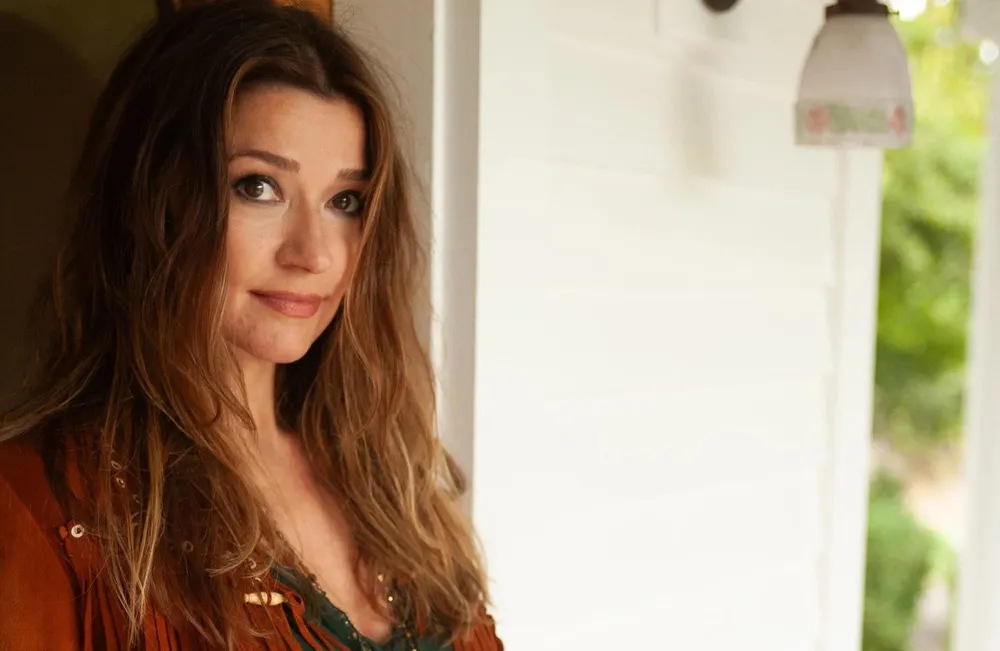
On a Sunday night in October of 2008, in a carpeted hallway of the Renaissance Nashville Hotel, Matraca Berg stood thinking about names. Harlan Howard. Loretta Lynn. Kris Kristofferson. Dolly Parton. Bobby Braddock. The Nashville Songwriters Hall of Fame had just made her its ninth female member in a roll of 167 names, and the writer whose "specificity of language" the novelist Lee Smith had praised from the stage that evening suddenly couldn't find much of her own. "It's a surreal thing," she told The Tennessean. Then: "This is ... you know."
She'd spent the night calling herself "a chorus girl," her term for a writer whose specialty is the part of a country song that stays lodged in a listener's head. It may be the least accurate scouting report ever filed on Music Row, and the catalog objects: "Strawberry Wine." "Wild Angels." "The Last One to Know." "XXX's and OOO's (An American Girl)." "Wrong Side of Memphis." "You Can Feel Bad." "We Danced Anyway." "You and Tequila." Those aren't choruses. They're whole lives run through a three-minute frame, and most of them belong to women country radio had not been in the habit of hearing from until Matraca Berg wrote them down.
"UH, HILLBILLY"
Reporters spent years trying to place the name. Italian, maybe? Israeli? "Uh, hillbilly," she told the Chicago Tribune in 1997, laughing. "They made it up. In extreme rural places, there are really unusual names, you know." A second cousin carried the original version; her mother embellished it into Matraca.
That mother came out of Harlan County, Kentucky, with a name of her own worth keeping: Icie, handed down from a great-grandmother. The family trade was harmony. Matraca's aunts, the Callaway sisters, sang backup on records by Mel Tillis, Red Lane and Larry Henley, and taught her parlor singing at home. An uncle played steel guitar in Tillis' band and ran his publishing company. The Kentucky relatives sang at the Renfro Valley Barn Dance. Her stepfather, Dave Kirby, wrote for Tree. In that family, songwriting wasn't a dream. It was the trade the grown-ups practiced between shifts.
Berg was born in Nashville on February 3, 1964, and was raised, functionally, inside the town's studios. "I'd go with my mom or Aunt Sudie when they'd be singing on a session and literally fall asleep in front of the recording console when I was still in diapers," she said in 1997. "Nashville was a lot smaller. Music Row was two streets, and the songwriters, it seemed, were much more intense. They wrote less formulaic songs and more from the heart. You could write books from those songs. And I was right in the middle of the music."
For a stretch of her childhood, the middle of the music was rural Wilson County, where the neighbors were Tree tunesmiths Sonny Throckmorton and Curly Putman, with song-plugger Dan Wilson a stone's throw off. "I grew up around these great songwriters," she said. "Sonny Throckmorton gave me my first puppy."
Her earliest vivid impression of what a life could look like was Dolly Parton: "a woman writing a song and playing a guitar and singing it beautifully." The ambition it hardened into was even more specific. She wanted, as she put it, to BE Bobbie Gentry. "Country music had so much glamour then!" she said in 1997. "Look at Bobbie Gentry standing in a miniskirt with all that hair, playing the (stuffings) out of an acoustic guitar and singing this sultry song she'd written! That's glamour! People had identities and points of view. They weren't trying to look like people on a TV series."
Her parents separated when she was 8, and she bounced between Nashville and Indianapolis, changing schools as often as addresses — "a transient life," as she has called it. Her father, Ron Berg, was a physicist who taught her "Moonlight Sonata" on the piano her Aunt Sudie brought home. When an early record-label bio garbled the family story, she went out of her way to set the record straight with an Indianapolis paper: "I just want everybody to know my dad's real cool, and I love him. He's the stuff."
ICIE'S GIRL
Ask Matraca Berg where the songs come from and every road runs back to her mother. Icie Berg had chased the music herself, writing for Four Star Music, booking concerts, singing with the Harden Trio. Then life narrowed the options. "My mother was a single mother of three children and when my parents split up, she moved back down to Nashville," Berg recalled this year. "She pretty much had to give up her dreams of being in the business and go back to school. She got her nursing degree and the hours that she worked and went to school were — I don't know how she did it."
What Icie gave up for herself she poured into her daughter. Matraca was picking out melodies on the piano at 4 and writing songs at 15, in her own words, "like crazy. I couldn't stop." At 16 she brought her mother a handful of them, braced for anything. Icie listened and said, "Well kid, I was afraid you would come to me and say this." From that day forward, Icie was her first co-writer and her toughest coach.
"If I have anyone to thank or credit, it's my Mom," Berg said in 1991. "When I was a teenager, she used to take me down to all the publishing companies and make me play my songs for people. She really believed in me and the songs I was writing and people could sense that, so they'd listen to me."
"My mother coached me and drug me over to Tree when she thought I was ready," she said later. "That's where I met Bobby Braddock."
Braddock was already the man who had co-written "He Stopped Loving Her Today." He took the teenager seriously as a writing partner, and the first song she ever had cut, their co-write "Faking Love," went to No. 1 in February 1983 for T.G. Sheppard and Karen Brooks. Berg was 18 and singing in a rock band down in Louisiana when it happened. "I wrote it with Bobby Braddock, so I was still in 'songwriter school' at that point," she said years afterward. "Actually, we never really leave songwriter school." The curriculum stuck: "The greatest thing I learned from Bobby is that there are no rules."
The best account of that first No. 1 has nothing to do with charts. Matraca and her mother were driving over a bridge when the song came on the radio. They pulled over. Icie looked at her daughter and said, "Tell me what it is like." Berg, telling the story a decade later, went to the heart of it: "I just wanted to give it to her so badly."
Icie died of cancer in September 1984, with her daughter barely out of her teens. Matraca raised her younger brother and kept writing, but she went quiet as a singer. "I didn't sing. I was really shy," she admitted. "I didn't want the stigma of being a 'chick singer.' I wanted to be a songwriter. I wanted respect." She hated her own voice, she claimed, and hired other women to sing her demos. Josh Leo, who would produce her debut with Wendy Waldman, heard her in the booth and filed a different report — not polish, but the thing polish can't manufacture. "I heard a vulnerability. She had an angst in her voice," he tells Generation Country. "She felt every one of these songs that she wrote." Nashville would spend the next decade proving her wrong about the voice. She got the respect anyway. By early 1988 Reba McEntire had taken "The Last One to Know" to No. 1 and carried it to a Grammy nomination — the nod was Reba's, for the vocal, but everyone on the Row could read the name in the writer's credit.
THE ARTIST THE FORMAT COULDN'T HOLD
RCA chief Joe Galante heard her voice on a demo she was pitching to the Judds' camp and wanted the singer, not the song. Her response belongs in a textbook. "He offered me a record deal and I told him, I'll think about it," she remembered. "He couldn't believe I said that to him ... After that he was determined to sign me. I guess if you want something too badly you don't get it. For me it was just the opposite."
The album Galante got, 1990's "Lying to the Moon," produced by Wendy Waldman and Josh Leo, announced a writer who had no interest in country music's house rules. The Associated Press called her a "feisty and defiant newcomer who slays the country music axiom 'stand by your man.'" The title track was written on the porch of a mountaintop cabin, watching the moon rise through the mist. "Appalachian Rain" told the story of her mother's abandonment by Matraca's biological father and let the family shoot him for it, an ending Berg cheerfully labeled "wishful thinking." Emmylou Harris sang backup. "She contributed to making my year," Berg said. "She's a hero of mine."
Leo, who produced the record with Waldman, remembers the sessions as a series of doors nobody bothered to close. "There were no limits with Matraca," he tells Generation Country. "We used oboe and cello on a country record, alongside banjos and mandolins and mandola and fiddles." The songs made the risk feel safe: "It's really hard to go wrong with Matraca Berg, because the songs are so freaking great that all you gotta do is not mess it up — put the right clothes on them and they do all the work themselves. She's an unbelievable writer." He knew what they were courting at the time: "I remember thinking, people are either gonna love this record or it's never gonna be heard, because it was so different." The Emmylou session he remembers as mutual capture: "All of us were hypnotized by Emmylou's presence. And Emmy was really taken by Matraca and her songs — so it was a love fest." And the sessions ran on family time — Leo brought his year-old son to the studio constantly, and Berg turned up with matching red footsie pajamas for the baby, Leo's wife, and Leo himself. "One of my closest buddies," he says.
Her working method, as she described it then, reads like a mission statement she never had to revise: "I'm a reporter as a songwriter. I observe what other people go through and what I go through and I report it in the best way possible with the most empathy I can feel in the most undiluted fashion I can."
The reporter had one problem: the byline came with a stage. In bar bands she'd been fearless, but singing her own songs was another matter. "I was petrified," she said. "I'd get physically ill before I'd go on stage ... with people almost physically pushing me on stage." The cure was total immersion. In 1991 she went out on her first real tour, opening arenas for Clint Black alongside the Nitty Gritty Dirt Band. "They're all old friends of mine," she said at the time, two years before she married the Dirt Band's Jeff Hanna. "You're there in front of thousands and thousands of people and you just get over it."
What she never got over was the machinery. RCA released five singles and let them die on the vine; radio wouldn't make room. Josh Leo saw two reasons from the producer's chair, and only one of them was hers. "Matraca had pretty bad stage fright when the first album came out, so she didn't play live as much as she should have," he says. The other he lays at the industry's feet: "She was a strong, smart woman, and the radio DJs used to hit on her. She didn't play those games." For the follow-up she cut a record with Mark Knopfler guesting on guitar. "He said, 'I put that "Money For Nothing" stuff on there ... I thought maybe it'd help it out a bit!'" she recounted, delighted. Radio's verdict came back and the label blinked. "RCA heard from radio how appalled they were at how far over the edge I'd gone," she said. "What was that after we released the most country song on the album as the first single!" The album was shelved outright. The label's solution was to reclassify her as pop and ship her to the New York division, where, in her words, she was "even more of a square peg."
She made the best of exile. "The Speed of Grace," released in 1994, was produced by Stewart Levine, who told her: "You know, girl, you sing with a twang, and that's just how it is." So, she said, "we didn't try to make it a smooth pop record. We took it basically as Southern as we could get away with." The record included a dark, spellbound reworking of "Jolene." Of Dolly's original she said: "It was so far ahead of its time. It was almost alternative." The Boston Globe called her a "self-confessed Nashville bohemian," which was accurate on both counts.
Robert K. Oermann — who with Mary Bufwack literally wrote the book on women in country music, Finding Her Voice — sized up her situation in The Tennessean that spring and put the injustice in a single breath: "The best voices in Nashville sing her songs; she's newly wed to a country star; she's beautiful and talented — What more could a gal ask for? A hit record, that's what."
Because here is the part the format missed while it was busy deciding what she wasn't: the songs never stopped hitting. Trisha Yearwood took "Wrong Side of Memphis" up the charts in 1992, a song born in the break room at Patrick Joseph Music when co-writer Gary Harrison mentioned where he was from and the remark, as Harrison told it, "caused a light to go off in Matraca's head."
Then there is the morning Alice Randall came banging on Berg's front door. Randall had climbed out of the shower with a chorus in her head: a picture of your mama in heels and pearls, a girl trying to make it in her daddy's world. She drove straight over. "Alice had a pretty big chunk of it when she showed up," Berg said this year, deflecting credit the way she always does. "It was easy after that. She had the bones." The song came together on Berg's porch. "XXX's and OOO's (An American Girl)" was cut first by Wynonna; when health trouble kept Wynonna from finishing the vocal against a deadline, Randall walked uninvited into Trisha Yearwood's session and Yearwood sang it in Wynonna's key on the existing tracks. Two weeks at No. 1 in 1994, and an anthem for every woman keeping the balance up between love and money. The Aretha Franklin and Patsy Cline line was no accident. "We very consciously put that in," Randall has said. "I'm Black and Matraca is white."
Berg spent those same years married to her best audience. She and Hanna wed in December 1993, and she credited him with widening her whole musical world. "He's also my biggest fan," she said. "There's nothing like somebody havin' a lot of confidence in you to inspire you."
FIVE NUMBER ONES AND A TENT
By the mid-'90s Nashville had done something close to unforgivable: it had decided the woman writing its best songs was a pariah for the sin of having made records the label mislabeled. "It was difficult to find anybody here who would deal with me because I had left (the format)," she said. The songs re-argued the case one hit at a time, and the verdict arrived all at once.
"Wild Angels" went to No. 1 for Martina McBride, a song that started as nothing but two words Berg liked the sound of. "You Can Feel Bad" went to No. 1 for Patty Loveless, Berg's gleeful dismissal of every self-pitying man who ever tried to make his baggage a woman's problem. Yearwood's "Everybody Knows" and Suzy Bogguss' "Give Me Some Wheels" kept the streak alive. And then came the one that made her permanent.
"Strawberry Wine" grew out of summers on her grandparents' dairy farm in Wisconsin, where there was not much to do but play hide-and-seek in the hay bales, meet at the gravel pit, and liberate cans of Old Milwaukee from the old refrigerator her grandfather kept in the milk house. There was a first love. There was, she has confessed, Boone's Farm. She carried the title and a couple of lines for a long while before she and Harrison finished it, and neither writer imagined it as a single. Harrison figured it for an album cut someday. Publisher Pat Higdon had a pitching event under a tent, and exactly one artist showed up that day: Deana Carter, a former high school classmate of Berg's, about to make her first record. "She put that little song in her back pocket," Berg said, "and when it shook loose, she went into the studio and she killed it. And she was the perfect voice."
Plenty of Nashville had passed on it first. "A lot of people shied away from it because it was too trippy," Berg said. "But Deana just loved it the way it was." When word came that Carter meant to release it as a single, Berg picked up the phone and called her: "Are you crazy? That's a waltz." It became Carter's debut single in August 1996, a No. 1 record, and the CMA Song of the Year, making Berg only the third woman ever to win country music's biggest songwriting prize.
Count those twelve months: five No. 1 songs inside a single year, a feat no woman had ever managed. The CMA handed her its Triple Play Award. NSAI named "Strawberry Wine" its Song of the Year and named her Songwriter of the Year. "We Danced Anyway" promptly went to No. 1 for Carter in early 1997 for good measure, a song sparked when co-writer Randy Scruggs heard Matraca and Jeff laughing about a vacation so far from home the stars seemed to hang upside down.
At the NSAI ceremony, she heard a medley of every Song of the Year winner going back a quarter century. "There was 'For The Good Times' and a lot of Kris Kristofferson songs and some great Bob McDill songs," she said. "I was just overwhelmed that 15 years from now mine would be in that medley of songs. It was just awesome and awe-inspiring, and I was so humbled by that." When asked to name the song she wishes she'd written, Berg's answer has long been McDill's "Good Ole Boys Like Me."
Gary Harrison, her longtime co-writer, saw exactly what the moment meant. "Even if for some reason she does not attain the fame she deserves as a recording artist," he said, "she's already got a place in history."
THE BUSINESS FAILS; THE SONGS DON'T
She banked the momentum into "Sunday Morning to Saturday Night," the 1997 album that finally let her sing her own testimony. It was the only country record that year to land in the year-end Top 10 lists of both Time and People. The critics reached for superlatives; the Lincoln Journal Star flatly called it "the comeback record of the year, and as strong and focused a collection of original material to come out of Nashville this decade." What happened next was not her failure, and it needs to be said plainly: it was the industry's. Rising Tide let its head of promotion go just as the record shipped. Within months the label itself was dissolved by corporate order, and an album made with a decade of accumulated craft went down with the ship.
The measure of what was lost came from inside the business. An executive at a sister label called Berg to apologize, saying the fan mail about the album was the most articulate he'd seen. Her response gave the compliment away to the audience: "Country fans are more articulate than people give them credit for."
She allowed herself no wallowing on the record. "It gets me down ... but I can't wallow in it," she said in the spring of 1998. "I've been writing furiously the last couple of weeks and it helps me a lot. I'm going to keep making records. I'm not going to roll over." Hanna, asked about his wife's future, was even more matter-of-fact: "She loves making records, so sooner or later you'll see something else by her. She's not quitting the record business."
The next turn of the wheel started, of all places, at a dinner table. By 1999 her debut had become a collector's item. "One person told me they saw 'Lying to the Moon' in a used-record shop for $60," she told USA Today. "That just did it for me. I was ready to do something about it." At dinner with Joe Galante, his wife Phran, and RCA A&R executive Renee Bell, the fourth guest turned out to be a young Kenny Chesney, and the conversation kept circling back to that first record, which Chesney and Phran Galante both loved. RCA reissued it that summer as "Lying to the Moon & Other Stories," expanded with newer treasures. Friends chipped in to help finance the artwork and a video. Berg braced herself to hear a younger, greener singer and heard something else instead. "I was afraid there were gonna be many cringeworthy moments," she said. "But there weren't any. I felt like, this work was not in vain."
That dinner guest comes back into the story.
THE LONG GAME
The decade that followed was the quietest stretch of her career only if the radio was off. The Dixie Chicks opened their multi-platinum album "Fly" with her "If I Fall You're Going Down with Me," written with Annie Roboff. Gretchen Wilson took "I Don't Feel Like Loving You Today" up the charts. Berg co-wrote songs for "Good Ol' Girls," a musical built from the fiction of novelists Lee Smith and Jill McCorkle, the kind of company her writing had always kept whether Nashville noticed or not. When she played a Girls With Guitars benefit with Yearwood and Carter in Ohio in 2007, the house was sold out, and the local critic reached past the usual vocabulary: what these writers make "isn't so much a song as it is poetry in 4-4 time."
Asked around then whether she could still spot a hit, she offered the assessment of a woman at peace with the mystery. "I think I have my elbow on the pulse of America," she deadpanned. "I never thought 'Strawberry Wine' was going to be a hit. I was surprised it even got cut." Writing, she said, remained "work. Hard work," redeemed by the occasional song that falls out whole. "When you write a good one, it's definitely an upper. That has not changed." And the teenager who co-wrote an adult hit at 18? "Actually at that age, I'd had a lot of life experiences. I was more like 30 when I was 18," she said. "But now I'm regressing. I'm cultivating my immaturity."
Which brings the story back to that hotel hallway in October 2008. The man who inducted her into the Nashville Songwriters Hall of Fame was Bobby Braddock, closing a circle that had opened at Tree a quarter century before, when a mother decided her daughter was ready. Braddock told the room what he had seen in the teenager all those years ago: "I didn't think of her as a diamond in the rough at all. I thought of her as a diamond, period." Martina McBride, Kim Carnes, Randy Scruggs, Jon Randall and Jessi Alexander sang her songs to her. The Tennessean's photographer caught her at the podium in tears.
Even then, she half-suspected the honor was a gold watch. She admitted later she'd feared she was "being put out to pasture." The answer came in 2011, and it came from the dinner guest. Years earlier, Berg and Deana Carter had written a smoky, aching thing called "You and Tequila," and Carter had recorded it without much notice. Holly Gleason, the publicist and writer who once called Berg the "cartographer of the hills and valleys of women's souls," passed the demo to Chesney. "Kenny made it truly his song," Berg said. "It sounded like a Kenny Chesney song, but a very cool one." His duet with Grace Potter became one of the biggest records of his career, won the CMA's Music Video of the Year, and put Berg right back in the Song of the Year race. "It was pretty stunning to get a nomination," she said on the red carpet, and then told the truth underneath it: "I just kind of wondered if my time was over. It's so good to be appreciated."
That same spring she released "The Dreaming Fields," her first album in 14 years, produced herself when she couldn't find anyone else to trust with the songs. Her co-writers by then included McCorkle and Mary Steenburgen; her sequencing instincts remained fearless. Braddock, surveying his old pupil's work that year, offered the finest description of her writing anyone has managed: "It's an attitude both lyrically and melodically that I can't consciously define. Though Matraca is basically shy, her music is both intelligent and self-assured."
POET
In August 2018, at the Ryman, the Academy of Country Music gave Berg its Poet's Award. Lauren Alaina sang "You and Tequila." Ashley McBryde tore through "Wrong Side of Memphis." Deana Carter sang "Strawberry Wine," as only she can. McBryde spoke for a generation of writers when she said: "Hearing her material changed the way I write songs and if it happened for me, it happened for countless others." Chesney, on video, went further: "There are few people who inspire me in songwriting, who show us how to take an emotion and build off of it."
Berg accepted with her voice breaking. "Girls rule," she said. "I'm a little verklempt. I was born and raised in Nashville in a music business family ... to get one along with the great Norro Wilson is so special. Thank you so much. This means the world."
In 2023, BMI named her an Icon, only the third woman in country music to receive the award, after Dolly Parton and Loretta Lynn. Lainey Wilson sang "Strawberry Wine" at the ceremony. Accepting through tears, Berg said all she had ever wanted to be was a songwriter, and thanked Gary Harrison from the stage: "There would be no me standing up here without him." And the dinner guest from 1999 returned the favor in full: Chesney, with Grace Potter beside him, sang "You and Tequila" to her one more time. The work has kept pace with the honors. In October 2024 she signed a global publishing deal with Universal Music Publishing Group Nashville, and these days she shares stages with Gretchen Peters and Suzy Bogguss in the trio Wine, Women & Song, including a night at the Ryman in late 2024. In late February 2026, she sat down with Alice Randall to tell the story of "XXX's and OOO's" one more time, more than 30 years on, and got to the real reason the song refuses to age. "I didn't realize quite the impact that it had on young women," she said. "To this day, I can play the Bluebird and most of the women and girls in the room sing every word ... their eyes just light up." It still means something, she said, to be seen in a song. Then she summed up four decades of work in one line: "You know, we did our job that day."
The regard runs through the Row's own ranks, unprompted. "I think of Matraca as one of the women who were pioneers on Music Row," says Dan Tyler, the hit songwriter of "Bobbie Sue" and "Modern Day Romance," "and set the stage for all the female songwriters who came after her." Carl Jackson — Glen Campbell's longtime musical partner, hit songwriter, and Grammy-winning producer — goes further: "Matraca is a brilliant songwriter. I've only been around her a few times, but she is one of the best. I've always thought that maybe we should have penned one together — who knows, maybe that could still happen!" And Leo, who heard it all first from the producer's chair, wants the larger world to catch up too: "I would like more of the world to know how great a songwriter and interpreter of her songs Matraca Berg is." And the verdict that carries the most history comes from Gail Davies — who broke the Row's trail herself as the first woman in Nashville to produce her own records, years before Berg arrived at Tree: "I have been a huge fan of Matraca Berg since the beginning of her career."
A chorus girl, she still insists. Ask the room at the Bluebird, singing every word back to her. Choruses fade. Being seen lasts. Matraca Berg has spent a lifetime making sure the women in her songs, and the women listening to them, got both.
Sources: The Tennessean, 1983–2008, including Peter Cooper's Hall of Fame induction coverage, October 27, 2008, and the Alice Randall conversation, February 2026; the Chicago Tribune, October 12, 1997; the Associated Press, October 1990; The Indianapolis News, September 26, 1991; Country America, September 1998; CMA Close Up, January 1998; the Saint John Times Globe, April 1, 1998; USA Today, August 11, 1999; the Oxford American, "The Daughter of Music Row," by Holly Gleason, Winter 2013; MTSU's Soul of the Songwriter oral-history interview; ACM Poet's Award and BMI Icon ceremony coverage, 2018 and 2023; new quotes from Dan Tyler, Carl Jackson, Josh Leo, and Gail Davies to Generation Country, June–July 2026.
ALBUM REVIEWS
 Jared Ingersol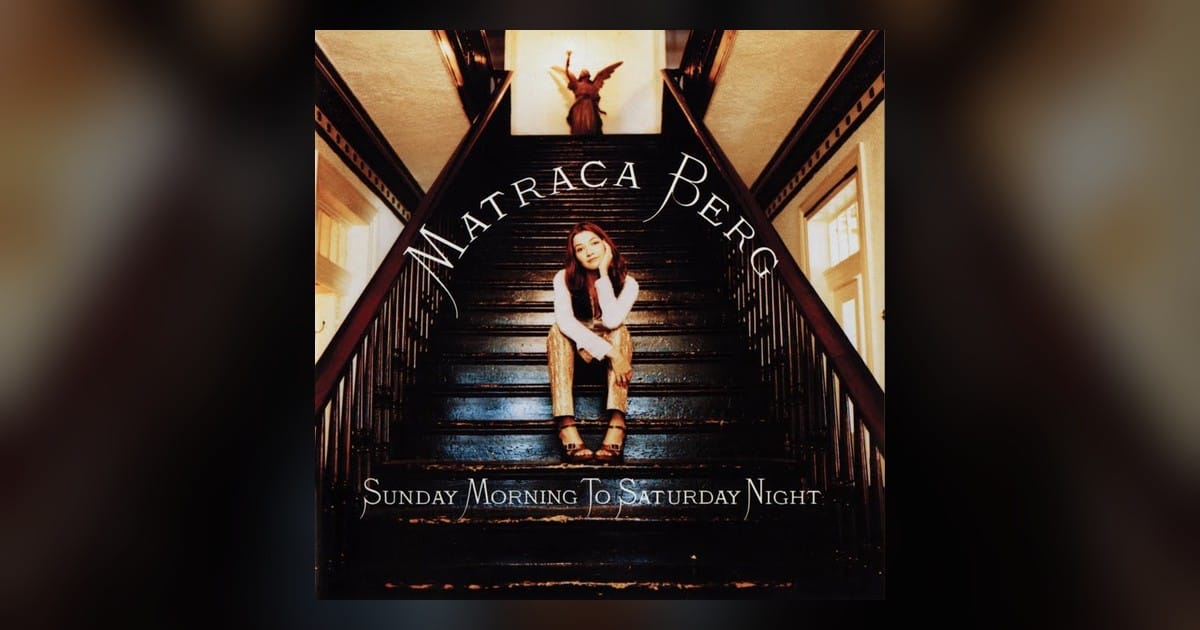
 Jared Ingersol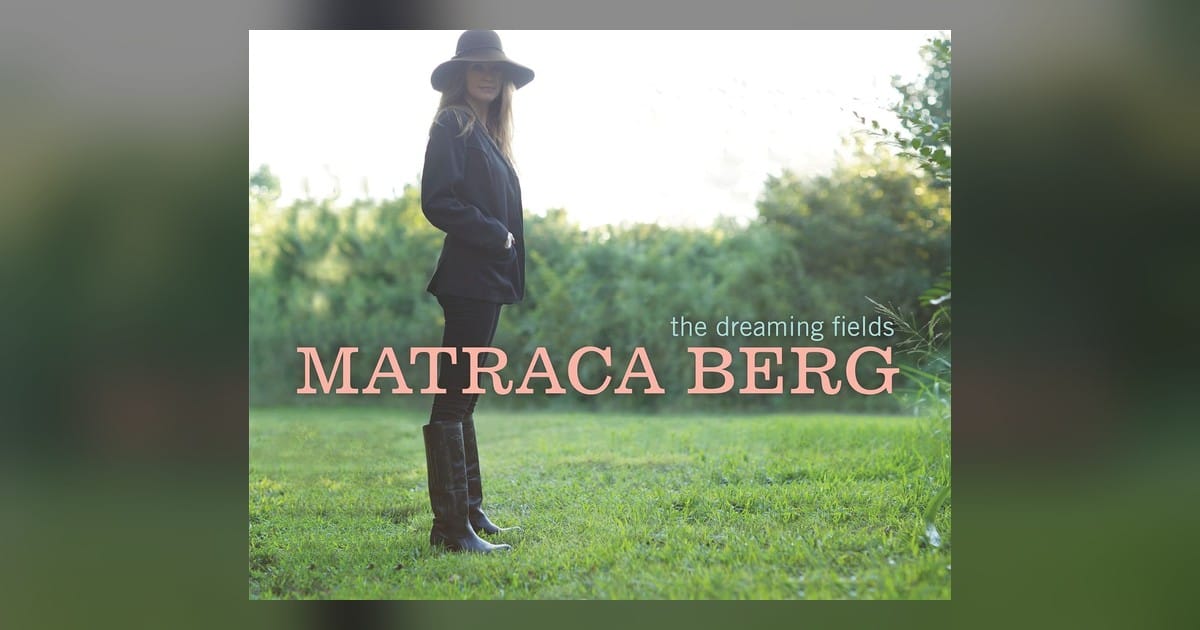
RECOMMENDED LISTENING & VIEWING
"Wrong Side of Memphis" with Trisha Yearwood
"I Got It Bad"
"The Last One To Know" performed by Reba McEntire
"You And Tequila" with Kenny Chesney, Grace Potter & Matraca Berg
Terri Clark, Trisha Yearwood, Suzy Bogguss, Kathy Mattea, Reba McEntire performing "Hey Cinderella"
"I'm That Kind of Girl" performed by Patty Loveless
"XXXs and OOOs" performed by Trisha Yearwood
"Bittersweet Surrender" with J.D. Souther
"Strawberry Wine" performed by Deana Carter
Tommy Hunter Show - Eddie Rabbitt, Matraca Berg, Little Jimmy Dickens
"Walk On" performed by Linda Ronstadt
Nashville Now with Ralph Emery - Clint Black, Matraca Berg
"Wild Angels" performed by Martina McBride
"You Can Feel Bad" performed by Patty Loveless
"We Danced Anyway" - Matraca Berg, Kim Carnes, Greg Barnhill
"Back When We Were Beautiful" performed by Emmylou Harris and Rodney Crowell
"Faking Love" - T.G. Sheppard and Karen Brooks
"If I Fall You're Going Down With Me" performed by The Chicks
"I Don't Feel Like Loving You Today" performed by Gretchen Wilson
"Lying to the Moon"