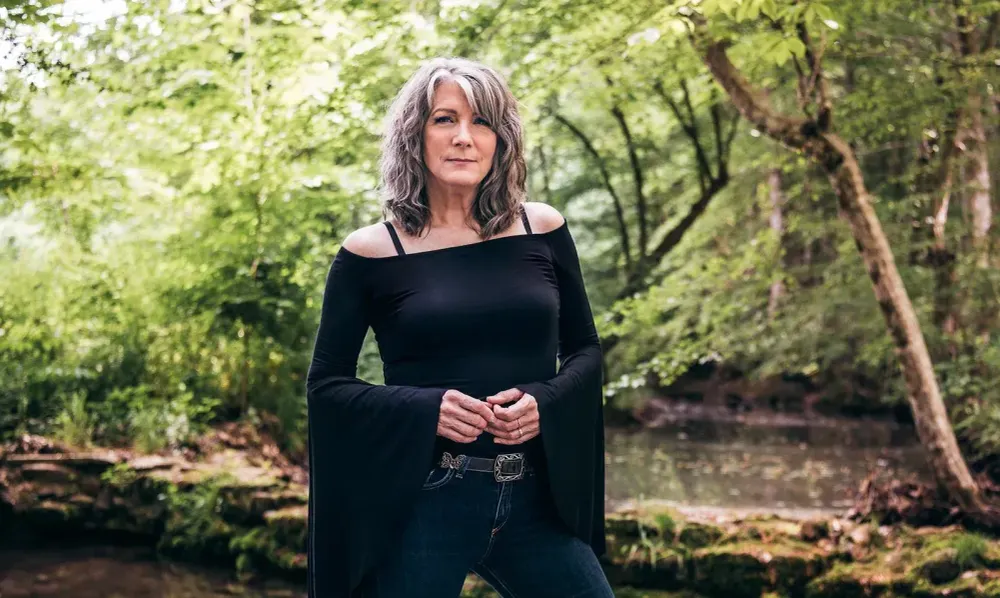
Kathy Mattea used to give the tour. Before she had a record of her own, she worked as a guide at the Country Music Hall of Fame in Nashville, walking visitors through the exhibits and picking up the history room by room as she went. She has said that the day she learned about Bob Wills and the Texas Playboys, she went home a changed person. The museum was the day job. The education was free. Decades later, in October 2025, the Grand Ole Opry made her a member, which is one way of saying the woman who used to walk visitors through country music's history ended up written into it.
She was born in 1959 in South Charleston, West Virginia, and raised in Cross Lanes, in Kanawha County, the daughter of a chemical-plant worker and a homemaker. The coal was a generation back. Both grandfathers were miners, both parents grew up in coal camps, her mother worked for the local union, and her father got out only because an uncle paid his way through college. She sang in church and at school, took classical voice lessons starting in junior high, picked up a guitar in her teens, and fell into bluegrass, which she later said formed her roots. She enrolled at West Virginia University in 1976 to study the sciences, joined a campus bluegrass band called Pennsboro, and in the fall of 1978, at nineteen, walked away from her sophomore year and drove to Nashville. A songwriter friend had talked her into it, then promptly left for medical school. She stayed.
The climb was unglamorous and took a while. She sang demos, sang backup, gave the museum tours, and waited tables, and a songwriter named Byron Hill eventually steered her to a deal with Mercury. Her self-titled debut came out in 1984; she has told the story of not being able to afford a seventy-five-dollar makeup session and wearing a Kmart jacket on the cover. The first records sold modestly. It was 1986's "Love at the Five and Dime," a Nanci Griffith song she carried to number three with Don Williams singing behind her, that finally announced her, and the run that followed made her one of the defining women of late-eighties country radio. "Goin' Gone" went to number one. So did "Eighteen Wheels and a Dozen Roses," a truck-driver's love song that held the top spot for two weeks in 1988 and was the first multi-week number one by a woman in country in nine years. "Come from the Heart" and "Burnin' Old Memories" followed it up the chart. She won the CMA's Female Vocalist of the Year in 1989 and again in 1990, back to back, the kind of consecutive win that marks the center of a career.
The song that outlasted all of them she almost didn't record. "Where've You Been" was written by her husband, the songwriter Jon Vezner, with Don Henry, and it told the true story of Vezner's grandparents — an elderly couple hospitalized in separate wings, the wife unresponsive until her husband was wheeled in beside her, when she looked at him and asked the question that became the title. Mattea had a rule against cutting her husband's songs; she didn't want to look like she was using her career to push his. She made an exception for this one. It won her the 1990 Grammy for best female country vocal, and it won Vezner and Henry the writing awards, and it remains the record people reach for first when they say her name. She had married Vezner on Valentine's Day in 1988, after he jump-started her dead car battery outside the Music Row house where she lived upstairs from his publisher. She has called him the biggest gift of her life.
At the height of her fame she used the platform, characteristically, for things that cost her something. After losing three friends to AIDS, she became Nashville's most visible conscience on the subject at a moment when the town would rather not have discussed it. At a CMA Awards ceremony where organizers handed out green environmental ribbons instead of red ones, she wore three red ribbons anyway and named her three dead friends from the stage. It was not what the room wanted. She is generally credited as the first country artist to wear the red ribbon at the awards, and she kept at the work long after it stopped being novel.
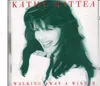
Then her voice nearly went. In June 1992 a blood vessel burst on her vocal cords, the result of years of overuse, and she needed surgery and silence to repair it. She came back, but something in her had already begun drifting away from the chart. She had started making annual trips to Scotland, chasing the thread between country music and the older Celtic traditions it came from, and her records turned quieter and folkier and harder to format. "Walking Away a Winner" gave her a number-three single in 1994, and a few years later "455 Rocket," off 1997's Love Travels, charted and won her the CMA's Music Video of the Year, its clip in heavy rotation. But she had largely stopped chasing the radio, which her chart numbers reflected and which she seemed to regard as a fair trade. The Christmas album she cut in 1993, "Good News," won her a second Grammy and carried an early recording of "Mary, Did You Know?" out into a world that would eventually wear the song out.
The reinvention that mattered most came in 2008, and it took her back down into the ground her family had climbed out of. "Coal," produced by Marty Stuart and released on her own label, was a collection of mining songs — Merle Travis, Jean Ritchie, Hazel Dickens, Darrell Scott — and she made it because the Sago mine explosion in 2006, which killed twelve West Virginia men, had reached back and grabbed her by the collar. It reminded her of the Farmington mine disaster from when she was nine. She worried she hadn't earned the songs, being a miner's granddaughter rather than a miner's daughter, and made the record anyway; she described it as picking up a missing piece of a puzzle she hadn't known was incomplete. The hardest cut was Hazel Dickens's "Black Lung," which she sang unaccompanied and which took her six months to learn. She kept the first studio take, the one that made the engineer cry — his own father had died of the disease — and Stuart told her she had it. "Coal" topped the bluegrass chart and brought a Grammy nomination, and she followed it in 2012 with "Calling Me Home," cut from the same Appalachian seam. By then she was speaking out against mountaintop-removal mining and touring with Al Gore's climate slideshow, which is not the obvious second act for a woman who once owned country radio, and which she pursued anyway.
The voice came for her a second time, and this time it was age. Somewhere in her fifties she would stand onstage knowing exactly which note she wanted and find that it would not come out. She traced it partly to menopause; whatever the cause, the instrument had moved. Her longtime vocal coach had fallen ill and could no longer teach, so Mattea found a new one — a jazz singer in Minnesota who works with Bobby McFerrin — and took lessons by Skype, hunting for where her voice had gone. She called the stretch her dark night of the soul and admitted it had nearly silenced her for good. What she found was that the sweet spot had dropped into a lower, duskier register, and that she would have to unlearn and relearn how to sing. The album that came out of it, 2018's "Pretty Bird," produced by her old friend Tim O'Brien in John Prine's studio, is the sound of a singer who went down to the bottom of the well and came back up with a different and arguably better bucket.
These days she runs the room she used to play. In 2021 she took over as host of "Mountain Stage," the long-running public-radio music program out of West Virginia, succeeding the co-founder who had hosted it for thirty-eight years. She had first appeared on the show in 1985 and turned up on it more than any other woman in its history, so the handoff had the feel of a relay rather than a hiring. She described the job as stewarding a container for other people's music, which is roughly what she'd been doing since the museum. She still tours, sometimes fronting a symphony, and there is talk of a new record.
The Opry took its time. When the call finally came, in the summer of 2025, it came as an ambush: she was singing "Eighteen Wheels and a Dozen Roses" at the Ryman when Charlie McCoy, a fellow West Virginian, cut her microphone and asked her to join. She said yes about five times in a row. The formal induction landed that October, during the Opry's hundredth-anniversary year, with Trisha Yearwood introducing her and Terri Clark doing the honors, and Mattea promptly turned around and invited Suzy Bogguss into the family too. Plenty of people called it overdue. She didn't seem inclined to argue, but she didn't seem to have spent the wait bitter about it either.
What she built, in the end, isn't a hit catalog so much as a body of work, which is a different and rarer thing. She had four number ones and a fistful of trophies in the years when that was the measure, and then she spent the next three decades proving she'd never really been in it for the measure — a coal miner's granddaughter with a scientist's curiosity who treated singing as a craft to keep learning rather than a gift to coast on. She gave the tour, then she became part of what it covered. That was always the point of her, and at this stage she has stopped having to explain it.