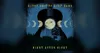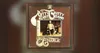

In August 1991, Doug Stone faced the classic sophomore dilemma: how to follow a platinum debut without repeating himself. His answer, "I Thought It Was You," didn't reinvent him so much as dig deeper into what he already was. Where his debut announced a major talent, this follow-up confirmed it. Following four straight Top 10 hits, the last of them his first #1, Stone could have played it safe. Instead, he doubled down on what made him dangerous: that ability to transform heartbreak into something approaching revelation.
The album opens with its title track and finds its emotional precision within seconds. Stone's baritone doesn't merely sing about mistaking strangers for lost love. It inhabits that moment when memory becomes haunting. Written by Tim Mensy and Gary Harrison, the song reached #4, and Stone sang the routine regret in it like it cost him something to admit. Like Keith Whitley before him, Stone understands that vulnerability becomes power when delivered without calculation. Paul Franklin's pedal steel doesn't weep so much as confess, and the arrangement gives Stone's voice room to work.
But Stone knows heartbreak isn't monotone. Just as you're settling into comfortable misery, "A Jukebox with a Country Song" crashes the party with honky-tonk swagger. Written by Gene Nelson and Ronnie Samoset, it became the only multi-week number one of Stone's career, two weeks at the top in February 1992. It was also his first up-tempo chart-topper, after a run of ballads had built his name. When Stone rails against the gentrification of his old stomping grounds, finding suits and ties where sawdust floors once lived, he's channeling the same defiant traditionalism that powered Hank Williams Jr.'s "A Country Boy Can Survive." This isn't nostalgia so much as manifesto disguised as personal lament. It plants a flag and dares Nashville to come take it.
The album's conceptual masterpiece arrives with "The Right to Remain Silent," written by Kim Williams. Williams had survived a 1974 explosion at the glass plant where he worked, which left him with burns over sixty percent of his body; he took up songwriting during the years of reconstructive surgery that followed and became one of Nashville's most decorated writers. On this song he turns legal language into romantic metaphor, a single conceit ridden all the way through, and it lands for anyone who's ever been "arrested" by a memory. Stone's vocal channels George Jones's ability to make heartbreak feel like a spiritual condition, carrying the full weight of self-imposed emotional imprisonment and underplaying every line of it. He's been tried by his own heart, sentenced to life without parole from love. This positions Stone as country's answer to Peter Cetera: adult-contemporary vulnerability sung in a country voice, no apology for the comparison.
"Come In Out of the Pain," written by Frank J. Myers and Don Pfrimmer, is the album's emotional sanctuary. Released as the third single, it reached #3 on both US and Canadian charts while offering something rarer than heartbreak songs: genuine healing. Piano and pedal steel underpin a powerful, comforting chorus built for Stone's warm delivery. It isn't false optimism but hard-earned wisdom—a heartbreak record that bothers to show a way out.
The album closes with "They Don't Make Years Like They Used To," written by Freddy Weller, who two decades earlier had played guitar in Paul Revere and the Raiders and co-wrote the 1969 pop number one "Dizzy." It's a meditation on time's passage that avoids both sentimentality and cynicism. Stone sings about time's cruel acceleration, how childhood summers stretched forever while adult years blur past in responsibility and regret. His vocal has the intimacy of a friend who's been there, carrying the weight of someone who understands that nostalgia isn't about the past being better but about paying closer attention to what we're losing.
The album's sound, courtesy of producer Doug Johnson, is built on restraint. Stone wrote none of the singles; he has always been less a writer than a finder of songs, and the record is in large part Johnson's act of curation, choosing the material and building the arrangements around the voice. Recording at Nightingale Recording Studio, Johnson surrounded Stone with Nashville's finest: Paul Franklin on steel and dobro, Willie Weeks on bass, Brent Rowan on electric guitar, Steve Nathan on keyboards. The approach is the spare, voice-first one the neotraditionalists made their signature: the singer pushed to the front, the band and the steel arranged around him rather than over him. Stone's voice needs room, not effects to hide behind. Franklin's pedal steel is the album's connective tissue, answering every heartbreak line with a comment of its own.
What makes the album essential is the voice: an instrument that works like a seismograph, catching tremors most singers would miss. By 1991, Stone had established himself as country music's premier balladeer, offering an alternative to Garth Brooks's arena-rock energy or Alan Jackson's honky-tonk swagger. His gift wasn't volume but precision: vulnerability without melodrama, the exact frequency and not a decibel more.
"I Thought It Was You" succeeds because it captures country music at a pivotal moment. Released at the height of the neotraditionalist movement, it went platinum and proved that deeply felt, traditional country could still sell big. The record peaked at #12 on the country charts, generated three consecutive Top 5 singles, and confirmed Stone's arrival as a major force. In an industry chasing demographics and crossover math, Stone offered something close to radical: he just meant it.
Within a year, his heart nearly gave out. In the spring of 1992 Stone underwent quadruple bypass surgery at thirty-five, one artery about ninety-nine percent blocked, the blockages all but undiscovered until they nearly killed him. The balladeer who sang heartbreak for a living had a heart quietly failing him. He was back onstage in four weeks. "It was a good thing I only had a thirty-minute show," he said, "because that was about all I had." Thirty years on, the album still does what the best heartbreak records do. It keeps you company in yours.
VERDICT: A sophomore album that deepens the debut instead of reprinting it. Stone refuses to pick between heartbreak and hope, and the record is better for keeping both on the table. Thirty-plus years later, "I Thought It Was You" holds up as the work of a balladeer who knew exactly what his voice was for and didn't oversell it.
Essential tracks: "I Thought It Was You," "A Jukebox with a Country Song," "The Right to Remain Silent," "Come In Out of the Pain," "They Don't Make Years Like They Used To"