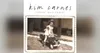
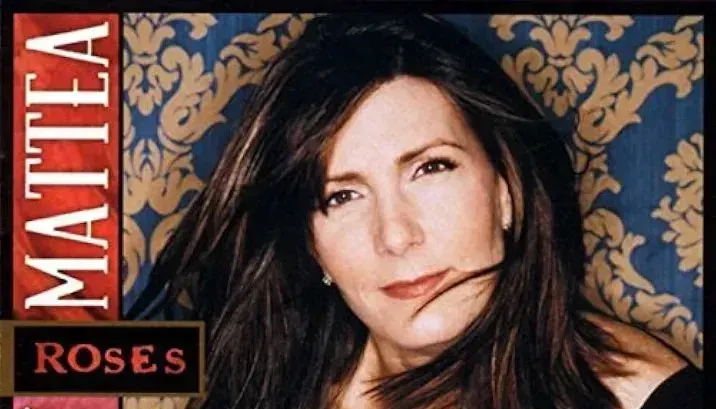
Kathy Mattea didn't leave Mercury Nashville because the label dropped her. She left because she had, as she told the Charlotte Observer, "records in my head that I've wanted to do for a long time": a bluegrass album, a second Christmas record, a Celtic gospel project. After sixteen years, this was her chance to make them.
By the summer of 2002, she had earned every credential the format hands out: four #1 singles, two Grammy Awards, two CMA Female Vocalist of the Year trophies, a platinum greatest-hits package. She was forty-three, had survived vocal cord surgery, and had spent recent years caring for aging parents through serious illness. But the restlessness had been audible well before the departure. On Love Travels in 1997, Mattea had already begun reaching past Nashville's borders — blending country with Celtic and Caribbean textures, recording Gillian Welch songs alongside a Celtic-tinged title track written by Bob and Linda Halligan, and bringing in engineer Mick Conley, fiddler Chris Carmichael, and accordionist Tim Lauer, all of whom would follow her to Roses. Kim Richey sang backing vocals on that record; "I'm Alright," which she co-wrote, would become a centerpiece of this one. Love Travels peaked at No. 15 on the country chart and earned a B+ from Entertainment Weekly — Mattea was not fleeing failure.
The Innocent Years in 2000 went deeper still: a tribute to her ailing father, partly recorded in her own basement, with the production education Allen Reynolds had given her on her earliest records finally put to full use. Reynolds, best known as the producer behind Garth Brooks, had taught Mattea the entire process of making a record, and on The Innocent Years she ran with it, co-producing with Ben Wisch and taking responsibility from the writing through the mastering. By the time it was finished, she knew how to run a session, she knew where the music needed to go, and Mercury was behind her. The industry expected another major-label deal, another producer with radio instincts, another pass at the format. She signed instead with Narada Productions, a world-music label in Milwaukee with no country radio infrastructure and no intention of building one, and called Ed Cash, a young Charlotte native who had made his name on Christian and folk-pop records rather than country ones, and who would become one of the defining producers of modern worship music — Chris Tomlin's Arriving, the co-write on "How Great Is Our God."
Roses is the record that came out of that bet. It peaked at No. 38, spent six weeks on the country albums chart, produced one single — "They Are the Roses," a hopeful anthem casting children as the promise that everything might still be alright — that went to Americana radio and never charted. The single is lifted by a standout background vocal from Dave Barnes, a singer-songwriter out of Cash's acoustic-Christian circle who would go on to write "God Gave Me You," a Grammy-nominated number one for Blake Shelton. It won nothing. And it made everything Mattea did afterward possible.
The first thing to understand is what this album is not. It is not an Irish record. The writers are American to a one: Jon Vezner, Beth Nielsen Chapman, Allen Shamblin, Kim Richey, Bob and Linda Halligan, Gary Nicholson, Marcus Hummon, and others besides. Nashville and American folk-roots writers working in their native idiom of character-driven narrative and emotional directness. What Cash and Mattea did was take those American stories and dress them in Celtic instrumentation — tin whistles, concertina, accordion, fiddle played in an Irish register — overlaying personal, modern struggles with an Old World atmosphere that made them feel ancient without losing their intimacy. Mattea did not try to sound Irish. She used Irish sonic architecture to illuminate what was already inside the songs, tracing the Scotch-Irish musical lineage she had studied firsthand on trips to Scotland a decade earlier back to its Appalachian destination.
It opens with "That's All the Lumber You Sent," a cover from Bob Halligan Jr.'s Celtic-rock band Ceili Rain, and the choice is a declaration — Halligan had written the title track of Love Travels five years earlier, and Mattea's return to his catalog signals continuation, not reinvention. Chris Carmichael's fiddle sets the album's identity before Mattea sings a word, then the arrangement breaks into a tin-whistle jig while she delivers a pulpit-joke parable: a man dies, meets St. Peter, gets walked past the mansions to a shack — that's all the lumber you sent ahead with your good deeds. The recording carries the story through to its turn, the man pleading for a second chance and getting one, resolved to go back and live with generosity. Mattea plays the whole arc through phrasing alone — confusion, shame, closing resolve — without ever pushing her voice past conversational warmth. It is a gospel-morality tale dressed in Irish celebration, and it announces exactly what this record intends to be.
Much of what makes Roses sound like Roses comes down to a handful of players. John Mock, Nashville's most trusted Celtic session hand, provides the melodic signature on whistle, concertina, and harmonium. He is the bridge between Music Row and Dublin, and his playing threads through every track that matters here. Joanie Madden, leader of Cherish the Ladies and one of the most prominent Irish-American traditional musicians alive, plays the whistle on "Ashes in the Wind" and the closing "Slender Threads That Bind Us Here," and her tone is the album's grief made audible — a low keening that never hurries. Byron House, who spent years anchoring Sam Bush's band, plays upright bass here with the grounding instinct he would later bring to Robert Plant's Band of Joy, the Nashville roots album Plant made in the wake of Raising Sand.
And then there is Bill Cooley. Mattea's longtime touring guitarist contributed the two-part instrumental "Isle of Inishmore" — a slow air that opens into a rolling jig — and its placement at the center of the tracklist is structural, not incidental. It grounds the album's sonic identity in traditional Celtic forms before the final act returns to contemporary folk-pop. Even these strictly Celtic compositions are American-written, by an American guitarist. The Irish element on Roses is native language, not borrowed costume.
"Ashes in the Wind" is the album's emotional center, and it earns that position completely. Written by Mattea's husband Jon Vezner, it traces a man named Davey from a chance meeting through the slow accumulation of feeling to a funeral that arrives far too soon. Carl Marsh's string arrangement builds beneath the vocal without overwhelming it, and Madden's whistle enters with the weight of something that can no longer be said aloud. Mattea delivers it with the restraint that has always been her greatest interpretive strength: the grief sits in her chest voice, steady and grounded, and the control is what makes the emotion land.
"Till I Turn to You" arrives as the album's most quietly devastating surrender, and it carries the record's best piece of talent-scouting. Gary Nicholson — a Nashville Songwriters Hall of Fame member whose pen has reached from the Opry stage to the blues clubs, the blues side winning him two Grammys — wrote it with Jessi Alexander, then so early in her career she had barely started. What she would go on to do is the part worth sitting with: this is the writer who gave country "I Drive Your Truck" and Miley Cyrus "The Climb," who spent the next two decades becoming one of the most quietly important songwriters in Nashville, and here she is in 2002, already able to build a song that lives entirely in the space between exhaustion and faith — a prayer so unguarded it barely functions as a song and operates instead as a confession. Mattea heard it that early. Bebo Norman, a Christian-folk singer whose own albums Cash produced, adds the harmony at her shoulder while David Johnson's dobro aches beneath, and her contralto gives the lyric a weight that moves past performance into genuine need. Alexander cut the song herself on her 2005 debut Honeysuckle Sweet, where she retitled it "Canyon Prayer" — a writer quietly claiming the truest thing she'd made. Mattea's chest-voice reading has the gravity of someone who's already lived through what the song describes; the surrender lands not as declaration but as hard-won fact, the work of a master interpreter at the top of her craft. But a confession this private keeps something back for the one who wrote it, and Alexander sings it from inside the writing, in a younger and more nakedly open voice, with the faint, unbeatable advantage of being the one who made it. Mattea, of all singers, would understand the distinction — she built a career on knowing exactly whose song she was holding.
"I'm Alright," which Kim Richey wrote with Angelo Petraglia and Larry Gottlieb, provides the necessary counterweight: a survivor's report rather than an elegy. Mattea's reading leans into a slight natural rasp that emphasizes the "wounded" in the healing, her voice carrying the weariness of being ragged around the edges while celebrating the stubborn fact of still being upright. Cash opens the production here: a bluesy electric guitar and warm B3 organ push against the acoustic bed, and Mattea rides the groove with the smoky confidence Sheryl Crow brought to her mid-'90s roots-pop — the same sense of a woman who has survived something and is not interested in performing the recovery for anyone's benefit. The Washington Post's Geoffrey Himes called it the moment Mattea "soars," and the verb is right, but it's a grounded soaring — she never leaves the earth to do it.
The spiritual boundary gets drawn in "Junkyard," where Mattea insists her mind is not a dumping ground for gossip and noise — it's holy ground. Coming after the grief and the resilience, the song reads as a psychological perimeter, a line protecting the interior space the album has spent its first half building. Allen Shamblin and Beth Nielsen Chapman's "Who We Are" works the same emotional territory from the opposite direction, turning inward to the wreckage of a mother-daughter relationship and finding, beneath years of resentment, a quiet mutual grace that neither woman could offer while the wounds were fresh. "Guns of Love" pushes outward again, subverting its own militaristic imagery into an argument for love as a disarming, active force. It's the most rhythmically propulsive track on the record, driven by Cash's mandolin and Mark Stallings's B3 organ.
Cash's production throughout is a study in purposeful restraint. The arrangements stay uncluttered: fingerpicked acoustic guitars, organ, upright bass, dry percussion. Mick Conley's mix keeps the spatial profile tight and warm, rejecting the cold digital reverbs of mainstream country-pop and European Celtic-pop alike. The instruments feel close and immediate, built from the resonance of wood and strings, and the Celtic top-line sits above this Nashville acoustic foundation like weather moving across a landscape. The closest production parallel is the Amy Grant Lead Me On era, where inspirational folk-pop rode tight, contemporary rhythm beds and trusted the singer to hold the center of the room. Cash trusts Mattea that way, and she repays it on every track.
Her instrument on this album is a chest-resonant contralto that sits low and warm, rooted in a way that separates her entirely from the bright head-voice register that defined Celtic-pop crossover in this period. The comparison that captures what Mattea does here is Mary Black, the Irish folk singer whose bell-clear warmth set the standard for that sound. Black works the crystalline upper register with effortless precision; Mattea finds the same emotional territory from below, in chest voice, and the West Virginia groundedness in her delivery makes the Celtic framework feel discovered rather than inherited. The lilt on Roses lives in Mock's whistle and Madden's concertina. Mattea's vowels stay planted. She sounds less like a woman performing Irishness and more like someone who followed a melody upstream and found it had been waiting at the source.
The album closes with "The Slender Threads That Bind Us Here," a Mattea and Marcus Hummon co-write that came together the old way: Hummon had been carrying a chord progression and melody around for a while, Mattea brought the words, and the two halves met in the middle. It treats aging and the passage of time not as tragedy but as peaceful surrender. Madden's whistle returns, Cooley plays classical guitar, Tim Lauer's accordion warms the edges, and Dave Barnes, back from the single, lays a soft pub-scene murmur underneath — the sound of a room full of people you've known a long time. Mattea's contralto cushions the sadness with an acceptance that could only come from a singer who had spent an entire album earning the right to offer it. It is the gentlest landing on the record, and the most fully earned.
Roses did not chart a single. It did not win awards. It did not get Mattea back on country radio, and she never went back. What it did was prove that her voice — warm, grounded, incapable of dishonesty — had never been a vehicle for hits. It was an instrument of storytelling that outran any single format, and it had been waiting for a record spacious enough to let it breathe. Without Roses, there is no Coal, no Calling Me Home, no Grand Ole Opry induction. This is where Kathy Mattea stopped belonging to Nashville and started belonging to herself.
VERDICT: Kathy Mattea made the record Nashville would never have asked for — and proved that the most commercially reckless decision of her career was also its most artistically essential. Roses is a sanctuary built from American songs and Celtic air, sung by a voice that needed no radio to reach you.
Essential tracks: "That's All the Lumber You Sent," "Ashes in the Wind," "Till I Turn to You," "I'm Alright," "The Slender Threads That Bind Us Here," "Isle of Inishmore"