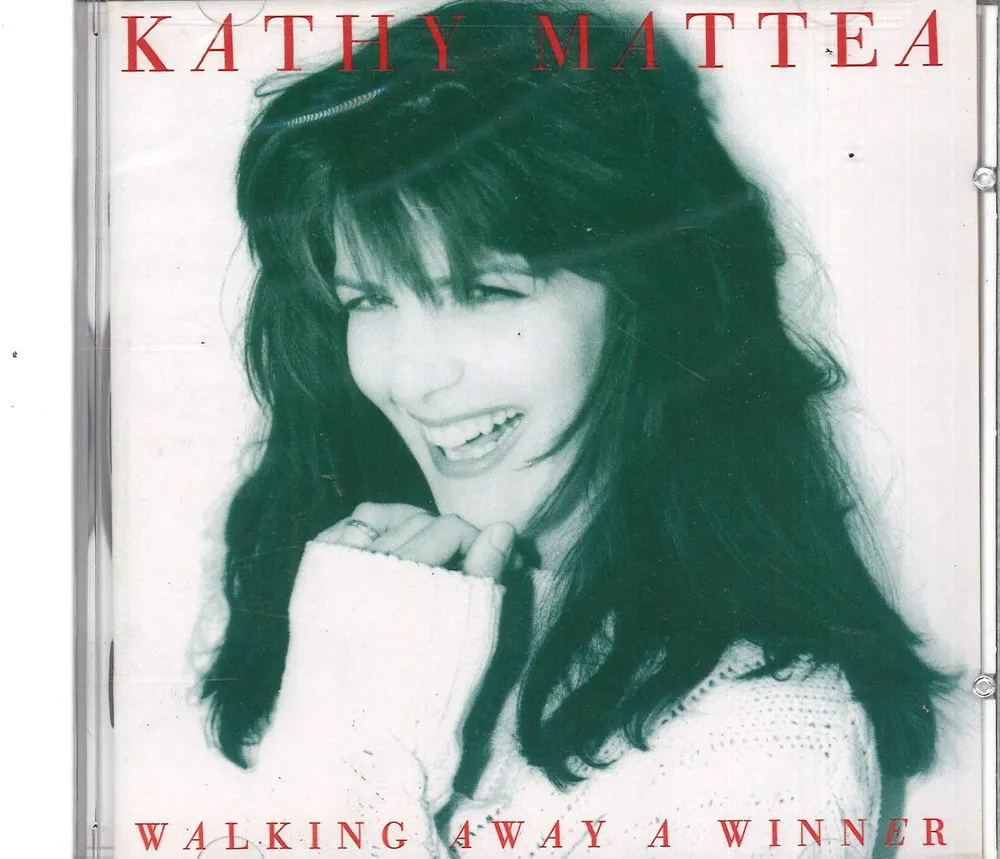
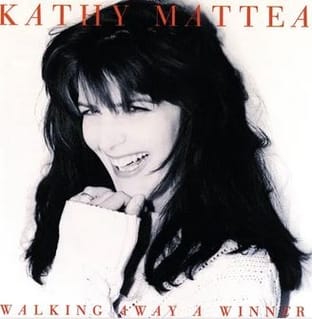
In May 1994, Nashville faced a crisis of authenticity disguised as commercial triumph. While hat acts dominated the charts with formulaic neotraditionalism, a quieter revolution was under way among female artists who understood that intelligence and emotion could coexist with commercial appeal. Into this landscape stepped Kathy Mattea with "Walking Away a Winner," an album that marked a deliberate departure from the acoustic folk-country that had defined her previous work. Where earlier albums had positioned her alongside traditional country storytellers, this release shifted her sound closer to the rock-inflected experimentation that Patty Loveless, Wynonna Judd, and Mary Chapin Carpenter were pioneering—artists who proved that country music could embrace bigger production and broader emotional palettes without sacrificing its essential character.
After vocal cord surgery and a string of diminishing returns, Mattea faced a commercial crossroads nine studio albums into her career. Instead of retreating into familiarity, she joined this emerging movement of women who were redefining what country music could sound like.
The album opens with its title track, a breakup anthem that's really a manifesto. Written by Nashville hitmakers Bob DiPiero and Tom Shapiro, "Walking Away a Winner" transforms romantic defeat into personal victory with the kind of emotional alchemy that Linda Ronstadt perfected in the '70s. But where Ronstadt leaned into rock's harder edges, Mattea finds her power in restraint. Producer Josh Leo's layers of guitars create a wall of sound that never overwhelms Mattea's warm alto, which carries the song's central revelation: sometimes winning means knowing when to quit. The production recalls Fleetwood Mac's ability to make heartbreak sound triumphant, but Mattea's delivery adds specifically country wisdom—that dignity lives in the leaving, head high.
Leo's production throughout is a study in calculated risk-taking. The Iowa-born producer brought the right credentials to this project—not just his track record with #1 albums for Alabama and Reba McEntire, but his background as a guitarist who'd toured with J.D. Souther, Glenn Frey, and Jimmy Buffett. That West Coast rock background is all over Mattea's crossover sound. Working with an A-team of session players including Dann Huff's versatile guitars, Sam Bush's fiddle, and Dan Dugmore's pedal steel, Leo creates a sonic palette that bridges country's traditional instrumentation with adult contemporary polish. His four years as VP of A&R at RCA Nashville—where he signed Martina McBride—gave him sharp instincts for what could work on both country and pop radio. Gone is the rootsy, acoustic-leaning sound that had defined Mattea's earlier work; in its place, something more ambitious: country music for grown-ups who'd discovered Bonnie Raitt and weren't going back.
"Clown in Your Rodeo," written by Wayne Kirkpatrick, is the album's emotional centerpiece—a devastating meditation on feeling disposable in love. The metaphor is pure country gold: being the entertainment rather than the main event, performing happiness while dying inside. Mattea inhabits this character with the same empathetic precision that made Emmylou Harris's interpretive work so powerful, but adds her own gift for finding humanity in heartbreak. Jerry Douglas's dobro solo is the sound of loneliness itself, crying out across the arena where love becomes performance.
The album's crossover ambitions crystallize on "Nobody's Gonna Rain on Our Parade," a piece of unapologetic optimism that could have been cloying in lesser hands. Co-written by Will Rambeaux and Brad Parker, the song finds Mattea and a partner declaring independence from their surroundings' gloom, choosing joy as rebellion. The lush background vocals from Karla Bonoff, Kenny Edwards, and Wendy Waldman create a California sound that recalls Laurel Canyon folk-rock of the early '70s, but Mattea's grounded delivery keeps it from floating away into pure pop fantasy. This is defiant happiness as practiced by someone who's earned the right to it.
"The Cape," written by Guy Clark with Susanna Clark and Jim Janosky, is folk storytelling at its most profound. The tale of a boy who believes he can fly becomes a meditation on faith, dreams, and the necessity of believing in impossible things. Clark's narrative genius lies in the song's structure—it's simultaneously a child's story and a life philosophy, whimsical and profound. Mattea's vocal captures both the innocence of childhood belief and the wisdom of someone who understands why such faith matters. The sparse arrangement, featuring Hal Ketchum's background vocals, creates space for the story to breathe, proving that sometimes the most powerful production choice is stepping back.
The album reaches spiritual heights with "Grand Canyon," Wayne Kirkpatrick's epic that uses America's most overwhelming natural wonder as a metaphor for the distance between humanity and the divine. Mattea approaches this material with the reverence it deserves, her voice conveying the awe of someone standing at the rim of something incomprehensibly vast. The arrangement builds to match the song's epic scope, with Josh Leo's backward guitar solo creating an otherworldly atmosphere that suggests both spiritual yearning and the possibility of transcendence.
"Walking Away a Winner" is essential because Mattea understood that artistic growth doesn't require artistic betrayal. Like Ronstadt's transition from folk-rock to new wave, or Raitt's evolution from blues purist to mainstream star, Mattea's reinvention feels organic rather than calculated. The album's success—reaching #12 on the country charts, achieving Gold certification, and spawning four chart singles—validated this approach, proving that audiences were hungry for sophisticated country music that treated them like adults capable of complex emotions.
The album also marks a turning point for Mattea. Its commercial standing bought her the room to chase something more personal next, and when she reunited with Leo to make that follow-up, she found herself creatively stuck, parted with him amicably, and brought in a new co-producer for the searching Love Travels. That she chose to walk away from a proven formula, despite industry pressure to repeat it, speaks to an artistic integrity that her subsequent chart performance would suggest came at considerable commercial cost—though the ground was shifting under every woman in country by then: the Shania Twain era was remaking the format in pop's image, and keeping pace with that change tested the whole generation of '90s female artists, whichever direction they turned. In this sense, the album works as both artistic statement and strategic maneuver.
Mattea's vocal performance throughout remains unassailable—that warm, empathetic alto finding new dimensions within Leo's expanded sonic framework. Her interpretive gifts, always her greatest strength, transform even the most commercially calculated material into something that feels like hers. "Walking Away a Winner" succeeds because it understood where country music was going in the mid-'90s: the genre's future lay in expanding its emotional and sonic palette, not in retreating into tradition. By embracing adult contemporary production while maintaining country's narrative focus, Mattea created a template for intelligent mainstream country music that influenced everyone from Alison Krauss to Patty Griffin. Thirty years later, it stands as proof that the best reinventions don't throw out what made you matter—they find a new way to use it.
VERDICT: Kathy Mattea has delivered an album that redefines what country music reinvention can look like. By refusing to choose between commercial appeal and artistic integrity, she's created something rare: a strategic career move that doubles as a creative breakthrough. This is adult contemporary country music at its finest—sophisticated without being pretentious, accessible without being simple.
Essential tracks: "Walking Away a Winner," "Clown in Your Rodeo," "Nobody's Gonna Rain on Our Parade," "The Cape," "Grand Canyon"