
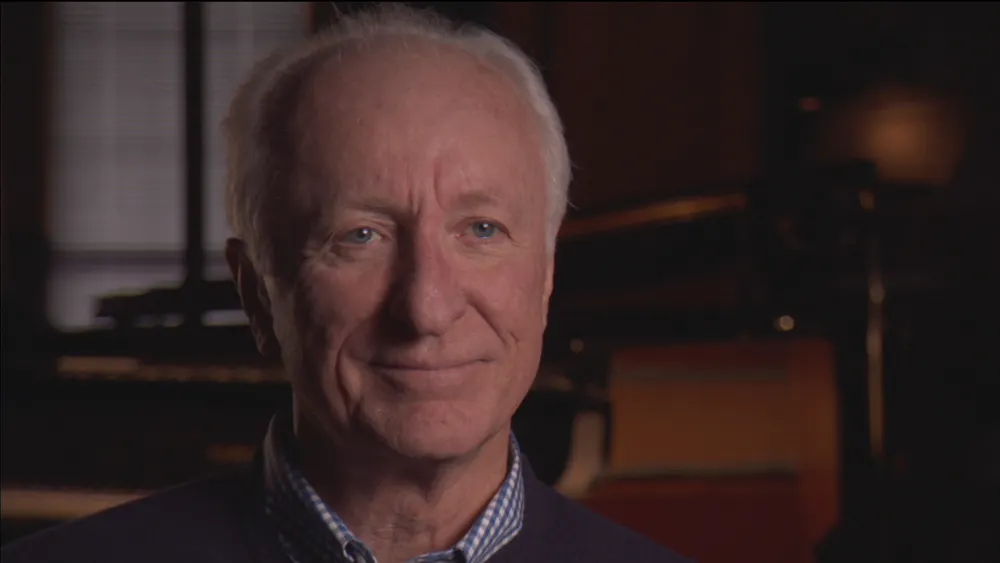
The Man Who Did Big Things With Little Words
Bob McDill wrote more than two hundred songs in thirty years, and he did it the way other people go to work at the plant: nine to five, five days a week, sitting at a piano on Music Row with a legal pad and a pencil. If a lyric stalled, he set the pad aside, picked up a fresh one, and started something else. He averaged a finished song a week for three decades. In 2017, nearly two decades after his retirement in 2000, he donated 217 legal pads — a four-foot stack of handwritten drafts, strikethroughs, and structural maps — to the Country Music Hall of Fame and Museum. It is the complete creative record of one of the most important songwriters in American music, preserved in pencil lead on yellow paper.
He was inducted into the Country Music Hall of Fame in October 2023. In a single week in February 1985, six of his songs charted at once, four of them in the Top 10. People on Music Row used to joke that BMI stood for Bob McDill, Incorporated.
The East Texas Education
McDill was born on April 4, 1944, in Beaumont, Texas, and raised in the nearby community of Walden. The Gulf Coast gave him Cajun music, German polka, and western swing before he was old enough to name any of them. On Sundays, his family gathered around the piano and sang hymns. On weeknights, he hid a transistor radio under his bedcovers and listened to rhythm and blues—soaking in WLAC out of Nashville, where disc jockey John R. spun soul music, and tuning into the wild, late-night howling of Wolfman Jack on the airwaves. A white kid in East Texas absorbing Black music in secret. That tension between what was permitted and what was felt would run through everything he wrote.
He studied English literature at Lamar University, where Faulkner, Robert Penn Warren, and the Southern Gothic writers taught him the South was never one thing. During the folk revival sweeping college campuses in the early sixties, he traded his Fender Stratocaster for a five-string banjo and formed a folk trio called The Newcomers. They played a taproom inside Beaumont's King Edward Hotel, and by a stroke of geographical luck, producer Jack Clement and publisher Bill Hall built their Gulf Coast Recording Studio directly behind it. A young producer named Allen Reynolds heard McDill's originals and recognized something rare: writing with intellectual weight in a world of lightweight pop. Reynolds signed him to a publishing deal, and a partnership that would last decades began in the back room of a Texas hotel bar.
The George Jones Moment
McDill arrived in Nashville in 1970 as a self-described folkie who modeled his writing on Joni Mitchell and Paul Simon. He didn't understand country music and wasn't sure he respected it.
That changed late one night, riding in a friend's Cadillac, when George Jones's "A Good Year for the Roses" came over the radio. The emotional directness of the song overwhelmed him. He realized country music's simplicity was a delivery system for feelings too big for anything fancier — complexity would only have diluted them. He stopped writing like a folk poet and started writing like a country craftsman. The songs got shorter, the words smaller. The feelings got bigger.
The Don Williams Years
His breakthrough came with "Catfish John," co-written with Allen Reynolds — a narrative inspired by a formerly enslaved man who had befriended McDill's father in Texas. Johnny Russell took it to number 12 in 1973. The Grateful Dead picked it up for their live sets, carrying McDill's writing into the counterculture without his permission or protest.
Then came Don Williams. The quiet Texan with the big hat and the whispery baritone recorded more than thirty McDill songs, and together they built the sound that defined Williams's career: spare, acoustic, unhurried, every syllable doing only what the feeling required. "(Turn Out the Light and) Love Me Tonight" gave McDill his first number one in 1975. "Say It Again," "It Must Be Love," and a string of others followed. Williams became known as the Gentle Giant. McDill was the architect behind the gentleness.
He wrote "Amanda" in thirty minutes. A middle-aged country musician apologizing to his wife for a hard life. Williams recorded it first; Waylon Jennings loved it and cut his own version. In 1979, RCA added overdubs to Jennings's vocal and released it as a single. It spent three weeks at number one and became one of the most recognizable songs in outlaw country.
"Good Ole Boys Like Me"
The song McDill considered his finest work began with a novel. Robert Penn Warren's A Place to Come To — about a man who spends his life running from the rural South and never escapes it — struck McDill as the truest thing he'd read about Southern identity. He set out to write a song that captured the real South of his childhood, not the caricature.
He paired Hank Williams with Tennessee Williams in the same lyric, collapsing the boundary between honky-tonk and high literature. He referenced Thomas Wolfe, the Uncle Remus stories, and John R. — the white DJ who broadcast Black R&B music into segregated living rooms. The mention of John R. was deliberate: "I wanted to mention race," McDill said, "but very lightly."
Everybody who heard it said the same thing: too literary. Don Williams thought it was too literary for him and pitched it to Kenny Rogers. Rogers agreed — too literary. Williams recorded it anyway. It peaked at number two in the spring of 1980 and became the song that defines his catalog and McDill's career.
It is also the song Matraca Berg has named as the one she wishes she'd written.
The Hits That Followed
Keith Whitley's "Don't Close Your Eyes" — inspired by a scene in the 1978 film California Suite where Maggie Smith realizes her husband dreams of someone else — spent five years in revision before McDill let it go. It became Whitley's first number one in 1988 and was later certified Platinum.
Alabama's "Song of the South" turned the Great Depression and rural electrification into a driving number one.
Alan Jackson's "Gone Country" skewered the Nashville gold rush of the nineties with a satirist's eye and a traditionalist's spine.
Mel McDaniel's "Baby's Got Her Blue Jeans On" earned a Grammy nomination. "Louisiana Saturday Night"—originally recorded by Don Williams in 1977 and later turned into an up-tempo hit by Mel McDaniel in 1980—became a country standard. Juice Newton took four McDill songs onto Gold and Platinum albums. Anne Murray, Crystal Gayle, Ronnie Milsap, Dan Seals, Jerry Lee Lewis — the list runs for pages because the man wrote for pages. Every day. Nine to five.
Big Things With Little Words
In the late 1980s, Nobel laureate V.S. Naipaul came to Nashville researching his book A Turn in the South and sat down with McDill to understand how country songwriting worked. McDill explained: "The vocabulary is very limited. You have to learn to do big things with little words. You write line by line... The couple of parts we have to deal with which serious poets don't have to deal with are tonality and also the singability. It has to fall out of the singer's mouth."
That's the discipline. Not poetry on a silent page — acoustic architecture built for a human voice moving through time. Every syllable has to land. Every word has to carry weight far beyond its size. McDill did that better than almost anyone who ever sat at a piano on Music Row.
He retired in 2000, walked away from the business entirely, and spent his time gardening, collecting books, and fly-fishing. In 2014, he published a genealogical history of his family, and in 2017 a collection of outdoor stories. That same year, in 2017, he donated his entire archive to the Country Music Hall of Fame — the legal pads, his 1967 Martin D-28-S guitar, 110 awards, and unreleased demo recordings. Bobby Bare, Jamey Johnson, Don Schlitz, and William Michael Morgan performed his songs at the ceremony. Allen Reynolds spoke about their decades of friendship. The governor of Tennessee was there.
Six years later, in October 2023, the Hall of Fame made it permanent. Bob McDill — the kid from Walden, Texas, who hid a radio under his covers and learned to do big things with little words — took his place alongside the artists who sang what he wrote.
Selected Songs
"Good Ole Boys Like Me" — Don Williams (1980)
"Amanda" — Waylon Jennings (1979)
"Don't Close Your Eyes" — Keith Whitley (1988)
"Song of the South" — Alabama (1988)
"Gone Country" — Alan Jackson (1994)
"Catfish John" — Johnny Russell (1973), Alison Krauss (2003)
"Baby's Got Her Blue Jeans On" — Mel McDaniel (1984)
"Louisiana Saturday Night" — Don Williams (1977) / Mel McDaniel (1980)
"Everything That Glitters (Is Not Gold)" — Dan Seals (1986)
"She Don't Know She's Beautiful" - Sammy Kershaw (1993)
"Standing Knee Deep In A River (Dying of Thirst)" - Kathy Mattea (1993)
"Why Didn't I Think Of That" - Doug Stone (1993)
"All The Good Ones Are Gone" - Pam Tillis (1997)