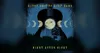
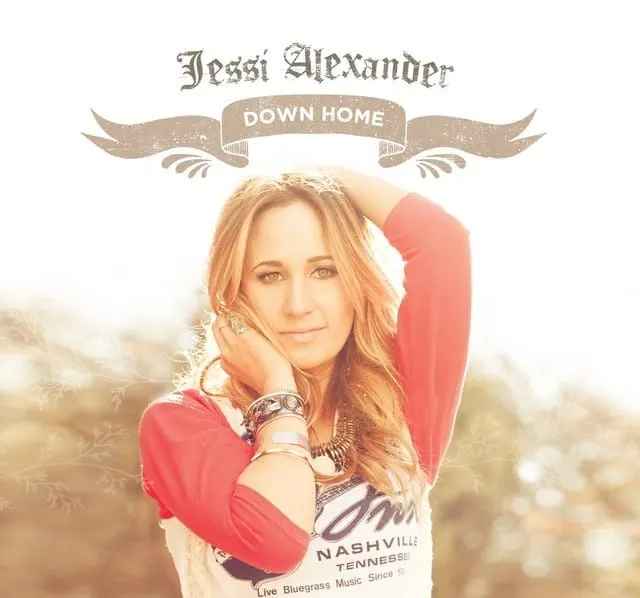
Lonesome Vinyl · Released April 1, 2014
Produced by Jessi Alexander, Jon Randall, and Gary Paczosa · Recorded at Genghis Khan Recording Palace and Minutia Studio, Nashville, Tennessee
With Dierks Bentley, Sheryl Crow, Chris and Morgane Stapleton, Brothers Osborne, Charlie Worsham, Will Hoge, and Jon Randall
Thank God for Sheryl Crow and Gary Paczosa. This record almost didn't happen — Jessi Alexander says so in her own liner notes, thanking them "for talking me into finally doing this." It's a good thing they did, because the first sound on Down Home is that voice, out ahead of the band for a beat. It's a smoky, lived-in alto with Memphis worked all the way through it, grit in the low end and a rasp at the edges that no one was foolish enough to sand off. She sits behind the beat the way the best blues singers do, unhurried, never once caught selling a line. She'll settle into a verse so low you lean in to find her, then open a chorus into something with real air and lift in it. There's some of Bonnie Raitt's grain in her, and the ache Lee Ann Womack was carrying that same year, but she sounds like what she is: a woman from West Tennessee who was raised on Beale Street soul and never had to fake a syllable of it.
That voice has spent fifteen years on the wrong side of a deal everyone in Nashville agrees to and nobody likes. The writer makes the song; the star takes it up the chart; the spotlight and the encore go to whoever held the microphone. Jessi Alexander wrote "The Climb" with Jon Mabe and heard a teenager carry it to the top of charts on three continents. She built "I Drive Your Truck" in a room with Connie Harrington and Jimmy Yeary and heard it sweep Song of the Year in another man's voice. Down Home is the record where she stops handing them out the door. She takes the songs back, sits them at her own table, and sings them in the voice that found the words. The stars are still here. They've come to sing harmony in her house this time.
It opens on "Kristofferson," and that's no accident. Written with Jon Randall and the Texas songwriter Ryan Beaver, it names the patron saint of the writer who sings his own — the man whose "Me and Bobby McGee" lived in the public ear as Janis's, whose "Sunday Mornin' Comin' Down" lived there as Cash's, and who sang every one of them himself anyway, gravel and all, and never once treated the singing as the lesser act. Opening her record with his name is Alexander telling you which tradition she belongs to. Some singers would be borrowing that name. She's citing a precedent.
"Mine Would Be You" comes in with Dierks Bentley beside her. Written with Harrington and Deric Ruttan, it went to number one for Blake Shelton. Alexander has called it the favorite of everything she's written — and stop on that a moment, because everything she's written includes a song half the planet can sing. The favorite is this one: an inventory of an ordinary good life, the small blessings counted one by one. She sings it like the woman who took the inventory — who knows what it costs to lose the things on it. Bentley settles in beside her, a guest on her song this time.
There's a story in the credit for "Daddy's Girl." She wrote it with Gary Nicholson, the man who produced her Memphis-soul debut back in 2005 — the same hands that shaped her first record now helping her write the song for her father, the painter who walked her down Beale Street when she was small and let the music do half the raising. Under three minutes, nothing between the feeling and the tape. She does not oversell it. She trusts it. So will you.
"Drink on It" brings the immensely talented Charlie Worsham in with his easy, grinning guitar tone and a song that's the closest thing here to a Saturday night — a slow lean toward somebody at a bar, one more round buying time for a decision neither of them wants to rush. Alexander and Worsham play it loose, almost conversational, and the casual heat in it earns its place between the heavier songs.
"I Drive Your Truck" is the center, and it ought to be. Connie Harrington heard a Gold Star father on the radio talking about his son's truck — how driving it was the nearest he could still get to the boy — and carried the story into a room with Alexander and Jimmy Yeary. The song never names the grief outright; it just walks the cab cataloguing what the boy left behind and lets the inventory do the crying. Lee Brice made it ache for a stadium. Here she sings it as a duet with Jon Randall — her husband, the Emmylou Harris alumnus who co-wrote "Whiskey Lullaby" — and the two of them singing a song about a life taken apart is a lot to sit with. She brings it down to one empty seat. No stadium. A kitchen, and two people who mean every word of it. Good luck keeping it together.
"See You Again," written with Randall, is the song that sits lowest in the album — missing someone who's still alive, still out there somewhere, and knowing the roads might not cross again. Sheryl Crow takes the high harmony and lifts the whole thing clean off the ground, and when their voices lock together on the chorus the ache doubles without either of them pushing. Crow has stood beside some of the great voices of her generation. She heard this one and refused to let it stay a secret. That's what this record is — Sheryl Crow being right.
And then "The Climb," the song that has traveled farther than anything else she's written, stripped back here to what it was before the world got it — a hand laid on a shoulder, one true thing said plainly to someone who can't say it to themselves. The turn that makes the moment is Chris Stapleton singing harmony behind her: the writer who became the star, who proved Nashville could hand a songwriter the microphone and let the room go silent for it, has come to sing backup on the song she wrote. It plays like a nod between two people who know exactly what the other gave up and got back.
"Guitar Man," a co-write with Erin Enderlin — the brilliant pen behind Alan Jackson's "Monday Morning Church," and one more writer who also sings, cut from the same cloth as the woman singing it — is all dust and motion, the highway habit that won't let go. Will Hoge and her old band 18 South lean into it loose, and Alexander lets her voice go rawer here than anywhere else on the record, closer to Memphis than anything around it on the radio dial.
The Brothers Osborne close it out on the title track, and the credit holds one more good surprise: John and TJ Osborne didn't just guest, they wrote "Down Home" with her. By the final chorus the record has stopped being about reclamation at all. It's just joy. It's a party, the kind that happens when the people who love you most are also the people who can sing.
The sound around the voice is the work of Gary Paczosa, who won his first Grammy turning Dolly Parton loose on bluegrass and has spent decades as the hands Alison Krauss and Nickel Creek and John Prine reach for. He cuts most of his records at a home studio that used to be Alison Krauss's house, and his whole craft is making a guitar sound like a guitar played by a person a few feet from your chair. On a record built to bring the songs close, that nearness is the point. The players are the kind a writer calls when she finally trusts herself to the room — Richard Bennett on guitar, back from the Knopfler and Steve Earle years and back from her own Columbia debut a decade before; Jedd Hughes and Robert Kearns; Jimmy Wallace at the keys. Nothing crowds her. The instruments leave the door open.
She opened the record with "Kristofferson" because she meant it. Kris wrote the songs, handed them out, and then sang them himself — gravel and all — because the writing and the singing were never separate acts for him. They weren't for Townes Van Zandt either, or for Billy Joe Shaver, or for Guy Clark. The tradition she claimed by putting his name on the first track is the tradition of people who write it, mean it, and sing it themselves, and Nashville has spent decades trying to break that into two careers because it's easier to sell that way. Down Home is Jessi Alexander refusing the split. It is the supper where all the children she sent away came home at once, and she sat at the head of the table and sang them herself, the famous voices gathered close to help her carry the harmony.
She gave these songs away, and the world loved them in other mouths. For the length of one record she gets to love them in her own. The song, in the end, belongs to whoever needs it most. This time that was the woman who wrote it.
VERDICT: A songwriter's homecoming — the writer of some of this century's biggest country hits gathering them back from the stars who made them famous and singing them herself, in a smoky, soul-fed alto that earns every one. It took Sheryl Crow and a Grammy-winning producer to talk her into it, and the coaxing was a gift to the rest of us. Down Home is the sound of Jessi Alexander keeping what was always hers.
Essential tracks: "Kristofferson," "I Drive Your Truck," "The Climb," "Mine Would Be You," "Down Home."
Jessi Alexander · Down Home · Lonesome Vinyl · 2014
Produced by Jessi Alexander, Jon Randall, and Gary Paczosa · Engineered by Gary Paczosa, Shani Gandhi, and Jon Randall · Mastered by Tommy Wiggins