For years, the rap on John Anderson was that he played too rock 'n' roll for country radio. Which is the small joke buried inside his comeback, because the song that finally pulled him back was the least rock 'n' roll thing he ever cut.
The idea found him on a trip home to Florida, a visit to his grandmother, then ninety-five. He'd grown up there before the theme parks — an avid hunter and fisherman who'd watched the state change every time he came back, who could remember when locals called Lake Apopka, polluted now, the bass fishing capital of the world. The wish to write something about Florida had been, in his words, boiling up for a while. It came to a head on that trip: a bit of an emotional time, some quiet hours outdoors, and then, as he was driving north out of the state and heading back to Tennessee, the words arrived — blow, blow, Seminole wind. He knew even then it was a risk. "The thought did occur," he said, "that 'John, you might spend your time on something that's a bit more commercial.'" He wrote it anyway.
He'd written it on guitar, with the same opening figure it carries now, but at the session they handed that opening to Gary Smith's grand piano and Joe Spivey's fiddle, bowed to sound like a violin, and the song turned mournful under their hands in a way that seems to have surprised even him. He said the record caught "the earthiness and soul" of the music he'd made ten years before, back when the format still had time for him.
By 1992 he had every reason to be finished. He'd scored big early in the eighties — "Wild and Blue," "Black Sheep," and "Swingin'," the CMA's Single of the Year, which he co-wrote and which sold past a million — then left Warner Bros. in 1987 and spent the back half of the decade sliding down the dial through smaller deals. He'd built his way into Nashville to begin with: he came up from Florida at seventeen, took a construction job, and ended up on the crew that roofed the new Grand Ole Opry House. He helped put the roof on the building before he ever got to sing under it.
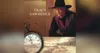
He signed to BNA, a new BMG label, made the record with producer James Stroud, and watched "Straight Tequila Night" go to No. 1 — so on paper the comeback was already won before anyone got down to the slow song further along the album. "Seminole Wind" opens alone on that piano, unhurried and a little funereal, and the fiddle that drifts in over it does the keening the words never quite do for themselves.
And the words are stranger than the song's reputation as an environmental anthem lets on. It opens nowhere in particular — "ever since the days of old, men would search for wealth untold" — a tall, near-biblical frame for plain human greed, men digging for silver and gold and leaving the holes behind. Then it drops onto named Florida ground: blackwater and sawgrass, eagles and otters, the Okeechobee and Micanopy, the alligators and the gar, every place set down the flat, familiar way you'd name your own county. Only at the very end does it shrink to a single person — the last time he walked the swamp, he sat on a cypress stump and heard Osceola's ghost. Myth, then map, then one man on a stump. And he came by that closing image honestly: he really had walked out into the glades and sat there until the quiet got to him. It isn't something he looked up. It's something that happened to him, which is why the song never hardens into a lecture.
None of it was a costume he put on for one record. By then Anderson — born in Apopka, raised around Orlando, gone from Florida since he was seventeen — was living on a 135-acre farm outside Smithville, Tennessee, where he hunted and fished and planted food plots and kept refuges so the wildlife would have a reason to stick around. "There is an awful lot of wildlife around here," he told a reporter that fall. "It just gives them something to eat." A man who plants for the deer on his own land has the standing to mourn a swamp, and that's about all he ever claimed the song was: a lament, he said, from an old Florida boy who'd been called away a long time.
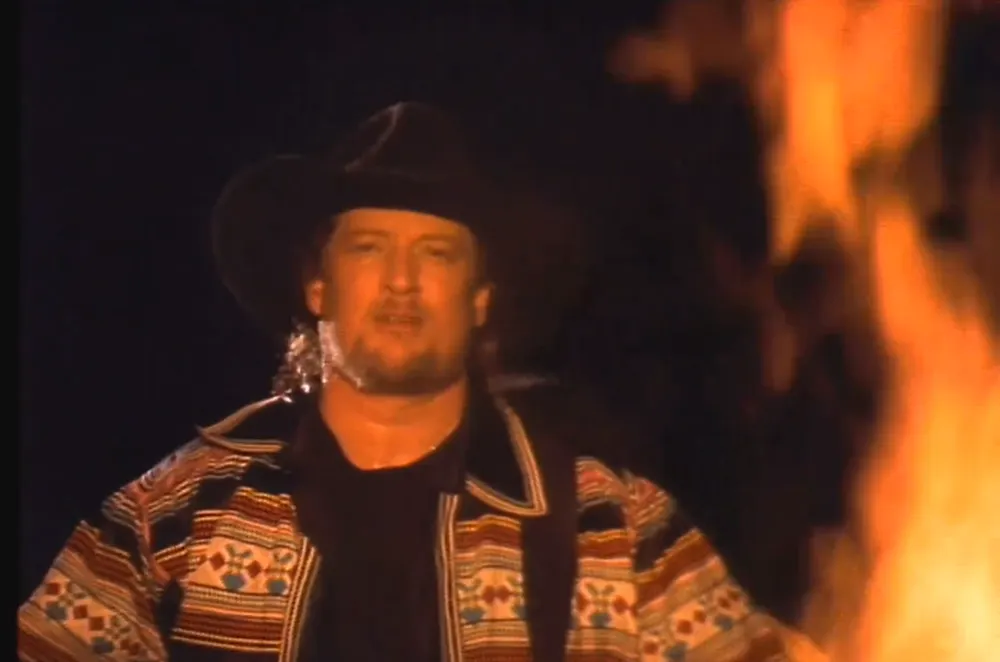
For the video, director Jim Shea carried the song back to where it started. He filmed in the Everglades — the Seminole Tribe gathered around a fire, Anderson steering an airboat across the sawgrass — and the footage of the tribe and their land needed the tribe's blessing to exist at all, which came in part through a Seminole medicine man named Bobby Henry. Anderson stayed close to them in the years after, and the song still turns up at the tribe's big gatherings, which is more than most country crossover hits can say for themselves.
It stalled at No. 2. Wynonna's "No One Else on Earth" had the top of Billboard's country chart locked down for those weeks and would not give it up, so "Seminole Wind" never got its turn at No. 1 at home, though it reached the top in Canada. The ranking undersells it badly. The album it anchored went double platinum, the best-selling of Anderson's life, and the title song is the one that turned a working comeback into a permanent one.
It also refused to stay where it was put. James Taylor recorded it; so did the Florida swamp-soul band JJ Grey & Mofro, whose singer says he's been doing it one way or another all his life. Luke Combs chose it himself for a tribute album and called it one of his favorite country songs ever written. It plays over the speakers at Florida State games, and every few years somebody floats the idea, only half-kidding, of making it the state song. When Anderson went into the Country Music Hall of Fame, it was the song they leaned on to make his case.
Not bad for a man everyone kept calling too rock 'n' roll. He spent years being told what he was. The song that proved them wrong is the one that pulled him back up out of the water.