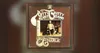
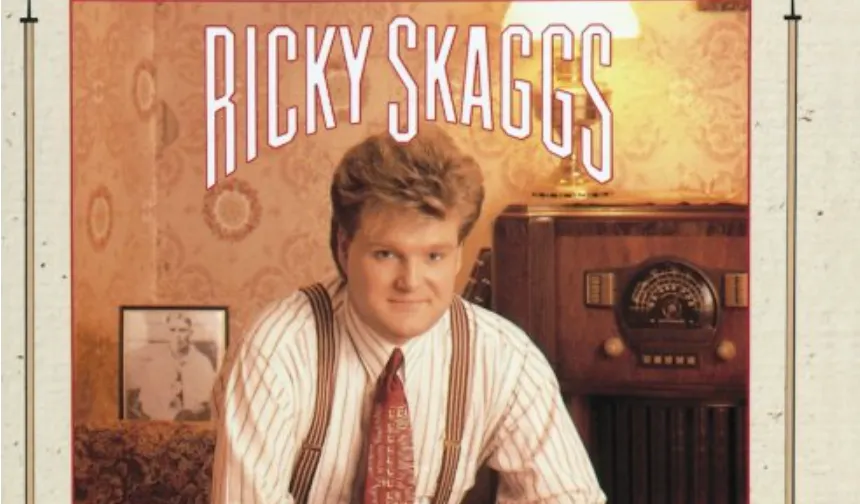
Epic Records · Released September 10, 1991
Produced by Ricky Skaggs and Mac McAnally
Recorded at Soundshop Studio "A" and Treasure Isle Recorders, Nashville · March 1991
A decade in, the music that made Ricky Skaggs had a sundown coming, and the fall of 1991 was where it caught up to him. He was the one who'd hauled the mandolin and the high lonesome fiddle back onto mainstream country radio at the start of the 1980s, when the format was leaning hard into string sections and crossover ambition, and for a while the industry paid him for the trouble. Opry membership at twenty-seven, then a run of singles that made traditional country sound like the future instead of the attic. Then Garth Brooks happened. The radio consultants went looking for listeners young enough to be Skaggs's kids, and the sound he'd just dragged back through the door got shown out of it. My Father's Son is the record he was making when that door swung. An album about what a man hands down to his children, cut the same season the music handed down to him was being written off.
The subject was his by blood. Skaggs grew up in Lawrence County, eastern Kentucky, son of Hobert Skaggs, a welder and pipe-fitter who put a mandolin in the boy's hands before he was big enough to hold it right. The origin story everybody tells is the true one: Bill Monroe, the man who built the whole form, pulled a small Ricky up onto a stage and let him play, and that was the laying-on of hands. By 1977 he was in Emmylou Harris's Hot Band, stepping into the seat Rodney Crowell had just left and sharing a bandstand with Albert Lee, carrying more lineage in his right hand than most Nashville lifers manage in a career. A concept album about fathers and sons wasn't a marketing turn for him. It was the thing he'd been singing under everything else the whole time.
He built it with Mac McAnally, and McAnally is the reason it holds together. By 1991 he'd already put a No. 1 in Alabama's hands and made his own records for Warner, and he'd go on to the Nashville Songwriters Hall of Fame and a long second act as Jimmy Buffett's right hand, eventually running the Coral Reefer Band himself. Here he wrote, played guitar, and kept a level hand on the board through a stretch of March sessions over at the old Soundshop on Division Street, with the overflow tracked down at Treasure Isle. His whole gift is that you never hear him working. He's a songwriter's producer, one who trusts a song and then gets out of its way, and that's exactly the temperament a concept record like this needs to keep from sliding into a sermon. The players around him had nothing left to prove and bore down anyway: Brent Mason and Steve Gibson on electric, Larrie Londin and Eddie Bayers splitting the drum stool, Bobby Hicks and Stuart Duncan on fiddle, Paul Franklin's steel laid over the top. Even the kid in the touring band placed a cut, Keith Sewell's "From the Word Love"; Sewell would put in seven years with Kentucky Thunder and then go picking for the Chicks and Sam Bush. And "Simple Life" was McAnally handing over one of his own, the title track off his 1990 Warner album, the record that gave him "Back Where I Come From." For it Skaggs phoned the people he'd come up alongside, Béla Fleck and Sam Bush and Jerry Douglas, and for a couple of minutes the record remembers it has bluegrass in its blood.
That blood runs thinnest here on purpose, and the title track is where what's left of it pools. "My Father's Son" is a coal-country portrait, a son taking his own measure against the mountain his father climbed out of, wondering if he'll be handed the same sentence the old man got — told he must be his father's son and nothing past it. None of it is literal. Hobert Skaggs swung a welding torch, not a pick, and Lawrence County sat off the big coal seams to begin with. Skaggs reached past his own biography for the larger Appalachian one, the inheritance every mountain kid carries whether the mine was on his road or the next holler over. He sings it plain, banjo and fiddle pulled in close, and it's the most rooted thing on the album. McAnally frames it so the mountain reads clean to a listener who's never been within a hundred miles of one.
The guests do the quietest heavy lifting. Waylon Jennings turns up to trade verses on "Only Daddy That'll Walk the Line," the song he'd made his own a generation before, and the duet runs the handoff backward, the younger man borrowing the elder's signature instead of the other way around. The whole theme of the album folds into three easy minutes, and nobody stops to point at it. On "Hold On Tight (Let It Go)," a Paul Overstreet and Don Schlitz number, Skaggs sings with his wife, Sharon White, Brian Ahern stepping in to co-produce that one track alone. Those two voices have been married a long time and it tells; the harmony sits where harmony sits when nobody's working at it. It's the best straight-country cut on the album and it isn't close, two married voices settling into a harmony nobody can manufacture in a booth, and the smartest thing anyone did on it was leave them alone.
Then there's the hit, and there's a shadow over it on the album. "Same Ol' Love" was written by Chris Austin with Greg Barnhill, and before Austin wrote hits he'd been a Skaggs man — he played guitar, fiddle, banjo, and mandolin and sang the high harmonies in Skaggs's own band before he ever placed a song. By 1991 he'd moved over to Reba McEntire's road band. Skaggs put "Same Ol' Love" to tape on March 15. Hours later, after that night's San Diego show, the plane flying Austin and seven others of McEntire's touring organization clipped Otay Mountain in the dark and went down with nobody left alive. Skaggs recorded the man's song, and before the next sunrise the man was gone. So the one real hit on a record about what the dead hand down to the living came from a former bandmate who never heard the finished cut, and Skaggs gave the proceeds of the single to Austin's family, which is the album's whole argument done instead of sung. It climbed to No. 12 the spring after, smooth and sure-footed and built for exactly the radio that was about to quit calling — and Austin had been a year in the ground before it got there. His co-writer, Greg Barnhill, came out the other side of that spring and kept climbing; a year on he'd put "Walkaway Joe" in Trisha Yearwood's mouth and never look back.
The sharpest twist on the record sits unnoticed at track nine. "You Can't Take It with You When You Go" came from Larry Cordle and Larry Shell. That's the same Cordle who'd handed Skaggs "Highway 40 Blues" back when the hits were still coming, and the same Cordle-and-Shell team that in 1999 would write "Murder on Music Row," the great lament for the traditional sound as country's tastes turned toward pop. George Strait and Alan Jackson would sing it on the CMA stage and it would take Song of the Year. Skaggs didn't need anyone to write it down for him. He'd already lived every line of it.
"Life's Too Long (To Live Like This)" reached No. 37 and "From the Word Love" No. 43, and the album settled at No. 68. Of all Skaggs's records this is the one that leans least on bluegrass, and the one where nearly every father in the songs is knotted up with God, the mountain faith running under the whole thing like a water table. It's also the best-made record he'd put his name to, warm and exact, finished to a high shine. That shine came by pedigree: "You Don't Count the Cost" was a Tom Shapiro song, and Shapiro was on his way to twenty-plus No. 1s and four BMI Songwriter of the Year wins, a Music Row craftsman of the first order whose grade of writing you can feel in the seams. McAnally built a frame sturdy enough to hold a dozen very different songs in one clean line, and he never once lets the machinery show. A record made this well, arriving the exact season the format's ear was turning elsewhere.
It doesn't end so much as kneel. "Somebody's Prayin'," the John Elliott song, rises on a swell of strings, a gospel plea that went on to a long second life on Christian radio, and in the liner notes Skaggs left a dedication to the God of Abraham, Isaac and Jacob and to the Father's Son, signed one of Your sons. He meant the title both ways from the start. Then Epic and Skaggs went their separate ways. He gave mainstream country one more try, a mid-'90s stretch at Atlantic that didn't take, and then he stopped chasing a moment that had already moved on. He started his own label, Skaggs Family Records, and walked the whole way home to bluegrass, and in 2004, on Brand New Strings, he cut "My Father's Son" over again with Kentucky Thunder, banjo out front this time, nothing left between the song and the mountain it came down from.
Country radio got the young crowd it went hunting for. Skaggs got to keep playing the only music his father ever put in his hands, which is the one inheritance this album swears up and down nobody can talk you out of.
VERDICT: A concept album about inheritance, cut in the very season country radio's tastes were turning away from the sound he'd built — Skaggs and McAnally set mountain marrow in a production clean enough to carry it into any room in the country, Waylon hands his own signature back across the generation gap, and the whole thing ends on its knees. The single that carried it was written by a former bandmate who died the day after Skaggs recorded it, and Skaggs handed the proceeds to the man's family — the album's argument made flesh. The format moved on and the charts never came, but that argument won: the man who made it spent the next decade proving that what a father puts in your hands doesn't chart, and doesn't have to.
Essential tracks: "My Father's Son," "Only Daddy That'll Walk the Line," "Simple Life," "Somebody's Prayin'." Then find the 2004 recut of the title track and hear what thirteen years of freedom did for it.
Ricky Skaggs · My Father's Son · Epic EK 47389 · 1991
Produced by Ricky Skaggs and Mac McAnally · co-production on "Hold On Tight (Let It Go)" by Brian Ahern
Recorded at Soundshop Studio "A" and Treasure Isle Recorders, Nashville · March 1991
Singles: "Life's Too Long (To Live Like This)" (No. 37) · "Same Ol' Love" (No. 12) · "From the Word Love" (No. 43) · Album peak: No. 68, Billboard Top Country Albums