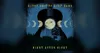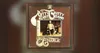
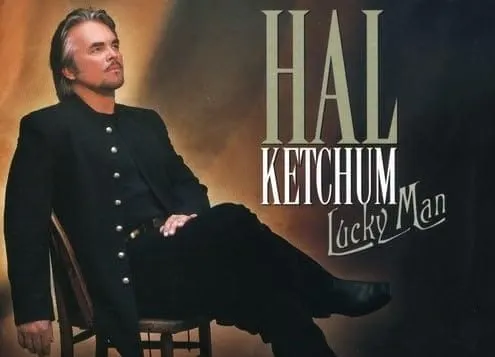
The warranty is printed right in the booklet, signed by Waylon Jennings: "When it comes to Hal Ketchum, if he sang the phone book to the right melody, I'd love it!" Country radio had a shorter attention span. The format that made Ketchum a star a decade earlier had quit returning his calls by the time this record arrived, and you can hear exactly what that did for him: Lucky Man is the sound of a singer who has stopped auditioning. The hits were behind him, and so was the illness that nearly took the guitar out of his hands. What remained was the voice, reedy and smoke-cured, and a producer, Rodney Crowell, who knew precisely what to build around it and, more to the point, what to leave off.
Crowell's whole method here is subtraction. He won't play a session player a demo; he hands the room a guitar and a melody and makes everyone start from the dirt floor, so nobody arrives with a finished idea of what the song already is. The record breathes because of it. Steel guitar, Jerry Douglas on dobro, a fiddle that knows when to sit down: the arrangements never crowd the singer, and Ketchum repays the room by underplaying. He is a soul singer who happened to get filed under country, and the evidence is right in the grooves. The lead single, "Don't Let Go," is a Jesse Stone R&B standard tucked in at track five, cut with the group Ricochet stacked up behind him; it doesn't quite top Jeff Lynne's version from Armchair Theatre (1990), but with that backing it holds its own. And Willie Weeks, Donny Hathaway's old bassist, walks underneath four of the songs. Crowell builds the whole frame to let that quality through.
The Al Anderson co-writes supply the pulse. "(She's Something) You're Everything" opens the record at a joyous midtempo stride, Anderson himself on acoustic, Paul Franklin's steel riding on top, and John Cowan, the great high tenor out of New Grass Revival, stacked up behind the vocal. "You Can't Go Back" snaps its fingers and hands the hook to the group harmonies, Jerry Douglas setting down the dobro for electric slide while Willie Weeks lays the floor the swing rides on. The last third belongs to shaka laka boom boom — doo-wop syllables turned loose on what is, underneath, a gratitude song, the whole room rolling out on pure joy-noise the way Sam Cooke used to once the message was preached. The vamp only pushes forward, never turning around to resolve: the same one-way track the lyric keeps swearing to. "Livin' Life Lovin' You" spends its two minutes and change on upbeat Texas country and gets out clean. And "She's Still in Dallas," Ketchum writing alone, is a Texas two-stepper to its boots, built for a dancehall floor.
The heart of the album beats slower, and it is terrific. "Dreams of Martina," a Crowell original, is the best thing here by a comfortable margin: a man laying blacktop on a two-lane road, hollowed out by a woman who turned his heart to stone, the melody drifting in on Steve Conn's concertina, which has no business being this affecting, and Andrew Gold, the man who built Linda Ronstadt's biggest records, tucked into the harmony. "Richest Man in Texas" is midtempo Americana, plainspoken without a wasted syllable, Ketchum's voice parked in the low, conversational register where the bruises show, Cowan and Vince Santoro singing behind him, baritone guitar underneath from Steuart Smith, who joined the Eagles that same year, and Stuart Duncan's fiddle turning up for the only time on the record. It knew which song to stand up for. And "She Is," the closer, is the kind of love song a grown man writes after he has stopped trying to impress anyone, Bekka Bramlett, Delaney and Bonnie's daughter, and Harry Stinson going full gospel behind him — shine a little light on me. It moves at its own pace and trusts you to come along.
The album has exactly one soft spot, and the production credits hand you the reason. Of the dozen tracks, Rodney Crowell produced eleven. The one he didn't, "Keep Mom and Dad in Love," a duet with Lisa Brokop cut under other hands, is also the one that goes slack: a sharp premise, a kid trying to glue a failing marriage back together, sanded down into something safe enough for a greeting card. It is the only moment where the album glances over its shoulder at the format that had already left the room, and it is the only moment Crowell stepped away from. The conclusion draws itself.
Which makes the other duet the proof of the case. "Two of the Lucky Ones" puts Ketchum next to Dolly Parton, tucks Timothy B. Schmit underneath, and stays warm and unhurried where a lesser board would have let it bloat. There is no known way to go wrong with Dolly, and Crowell declines to invent one. She walks in, the temperature climbs, and the song lands everything it was reaching for. The one time the record aims at radio and connects, her name is on it and Crowell is at the board. The one time it misses, neither of them is in the room.
One detail in the booklet is worth keeping. Ketchum describes himself there as "a sculptor of song," the sort of self-serious line that ought to sink a record. What saves him is that the music never once tries to prove it. The performances are humble where the liner notes are grand, and that gap is the most honest thing about him.
The bad luck was real and external. Lucky Man reached stores on September 4, 2001, at the top of Chet Flippo's new-release column, with "Don't Let Go" headed to radio as the first single. One week later the country had other things on its mind. It topped out at No. 72 on the country albums chart, its lone charting single stalled at No. 40, and Ketchum's name never visited the country Top 40 again. Those numbers read like a verdict only until you set aside the one borrowed-out track and do the listening instead of the chart math, because what's left is most of an excellent album: a working singer at the height of his interpretive powers, paired with a producer who refused to gild him, making the kind of record you only get once nobody is watching closely enough to ask for a single.
Which is the quiet joke of the title. By the radio's scorekeeping he was anything but lucky; as the document of a man who had survived enough to know exactly what he wanted to sound like, Lucky Man is a plain statement of fact.
VERDICT: A late-career keeper buried by its own release week — Hal Ketchum, freed from a format that had already moved on, quits auditioning and simply sings, while Rodney Crowell produces by subtraction and captures the most unguarded performances of Ketchum's career. One borrowed-out duet goes slack; the other one has Dolly Parton on it. September 2001 buried the launch, not the record.
Essential tracks: "Dreams of Martina," "You Can't Go Back," "Livin' Life Lovin' You", "She's Something (You're Everything)", "Don't Let Go".
Hal Ketchum · Lucky Man · Curb Records · 2001 Produced by Rodney Crowell · "Keep Mom and Dad in Love" produced by Lisa Brokop and Paul Leim