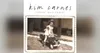
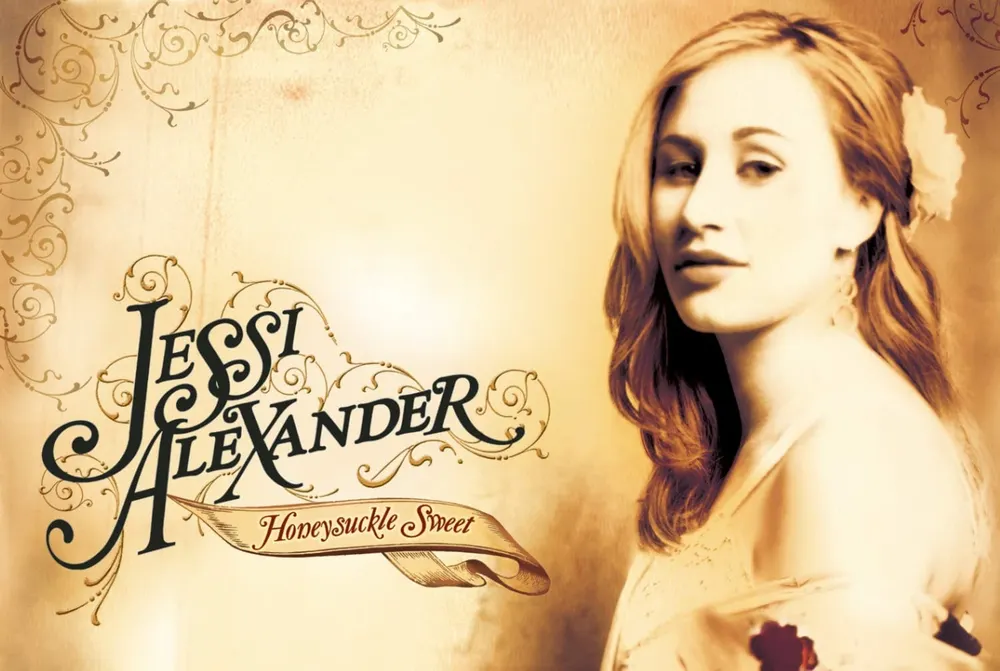
She Never Stopped Being That Voice
Columbia Records Nashville (CK 90849) · Released March 1, 2005
Produced by Gary Nicholson · Co-produced by Jessi Alexander · Executive Producer: Mark Wright
Recorded at Ardent Studios, Memphis, Tennessee
Jessi Alexander did not go to Music Row to make h her debut album. She went to Memphis — to Ardent Studios on Madison Avenue, the room where Big Star made #1 Record, where Led Zeppelin mixed III, where the overflow from Stax left the walls a residue of Southern soul no renovation has ever fully scrubbed. She was twenty-eight, signed to Columbia, and she'd spent her whole life absorbing music from both ends of Tennessee without picking a side. Choosing Ardent over the Row was a declaration before anyone hit record. This record was going to smell like the river, not the Row.
Alexander grew up halfway between Memphis and Nashville, a geography she has called the explanation for everything she does. Born in Jackson, Tennessee, in 1976, she was named after Jessi Colter; her father, a painter and musician, carried a devotion to the outlaw singer and handed the name down to his daughter. Her parents divorced when she was three. She split her childhood between her mother's house in Georgia and summers with her father in Memphis, close enough to Beale Street to feel B.B. King's amplifier in her chest. She taught herself "Love Me Tender" by ear at nine. At eleven she found the small print on sheet music and realized somebody wrote the songs. The compass set. She landed in Nashville in 1999, sang backup, wrote for a publishing house, and in 2001 won the NARAS Grammy Showcase after a friend submitted her demo without telling her. Sony Music Nashville's president, John Grady, signed her to Columbia, calling her "the future of country."
She brought in Gary Nicholson to produce and took the co-production chair beside him — a woman in her twenties sharing the glass on her own debut at Columbia. Nicholson — a Texan transplant, a two-time Grammy winner, a Nashville Songwriters Hall of Fame member whose pen had reached from Reba McEntire to B.B. King to Delbert McClinton — was the rare Nashville figure who spoke fluent country and fluent blues in the same sentence. He co-wrote six of the album's eleven tracks with her and built the sessions around her voice instead of a radio target. Mark Wright, whose credits ran from Clint Black's multi-platinum debut through Lee Ann Womack, executive produced.
The band Nicholson assembled tells the story in names. Richard Bennett on guitar, who'd spent decades in service of Mark Knopfler, Neil Diamond, and Steve Earle. Bryan Sutton on acoustic guitar, banjo, mandocello, mandolin. Colin Linden on electric guitar, carrying the blues authority he'd later bring to producing the Nashville TV series. Dan Dugmore on steel and acoustic guitar, whose steel runs deep into the Linda Ronstadt catalog — the same hands behind James Taylor and J.D. Souther records. Glenn Worf on upright and electric bass. Greg Morrow on drums. Stuart Duncan on fiddle, the first call in town when a part has to disappear into the song and still be the best thing in it.
Then the names that locate the album outside country's usual coordinates. Benmont Tench — Tom Petty's Heartbreakers pianist, whose organ and Wurlitzer and B-3 helped define American rock and roll for four decades — playing keys on a record by a country singer from Jackson, Tennessee, because she was an avowed Petty fan and Nicholson knew how to get the right hands in the room. Darrell Scott on background vocals, who wrote "It's a Great Day to Be Alive" and "You'll Never Leave Harlan Alive," whose own records are revered by everyone in Nashville and heard by almost nobody. Jon Randall on harmony — a former Emmylou Harris sideman and rising songwriter who would marry Alexander the following year. Kenny Edwards and Wendy Waldman, both veterans of the Ronstadt circle — Waldman produced Matraca Berg's gorgeous debut Lying to the Moon — on background vocals alongside Sonya Isaacs. Gary Louris of the Jayhawks, lending a co-write and his voice to "This World Is Crazy."
The Ronstadt connections in the session — Dugmore, Tench, Edwards, Waldman — were not incidental. Linda lives in the record because Linda's musicians are in the room, carrying the muscle memory of that sound in their fingers. But the comparison doesn't reach deep enough. A woman raised on Beale Street blues and Motown 45s who happened to grow up in country music's zip code chose to debut in the same Memphis studio where Isaac Hayes laid down soul. The reference point isn't Ronstadt in Malibu. It's Dusty Springfield in Memphis — Dusty in Memphis, the 1969 record where a white British pop singer walked into American Sound and came out so drenched in Southern soul it redefined what her voice could do. Dusty didn't grow up in Memphis; she found her instrument there, stepping into a studio that had no particular reason to give a British pop singer the sound of her life, and leaving changed. Alexander already had hers. Ardent just gave it a room big enough to breathe.
The album opens with its title track, co-written with Sally Barris. She grew up on albums with titles you could taste — Van Morrison's Tupelo Honey, Emmylou Harris's Roses in the Snow — and named her debut in that same tradition. The two words were the only ones she could find, she has said, for her childhood summers on the Tennessee River — catfish and sunburn and her daddy's records played loud enough to carry down the water. The first thing you notice is the contradiction Alexander herself flagged: the title sounds like a barefoot, sun-faded afternoon, warm enough to lull you. There's Karla Bonoff in its DNA, the same aching California warmth Bonoff brought to songs Ronstadt made famous, except Alexander's grows up out of Tennessee soil instead of Laurel Canyon sandstone. "I truly am a Southern girl," she said, "and most of my writing comes from that place. The title has a nice paradox because the rest of the record is really dark." She wasn't kidding. As a lead single it reached number 52 and earned her a spot on CMT.
"Make Me Stay or Make Me Go" follows with a snarl the opener's sweetness hid. Co-written with Al Anderson — the NRBQ frontman who remade himself as a Nashville hitmaker — and Nicholson, it rides Anderson's infectious groove, and Alexander has said she wrote it asking herself one question: how would Trisha Yearwood sing this? What came out pushes her voice closer to Wynonna Judd than to any of the soft-focus singers on 2005 country radio, and the confrontation in it is the sound of a woman who has something to say and no interest in saying it politely. The single reached number 57. Play it once and that groove lives in the house for a week.
"This World Is Crazy" is the song that shows what the album is actually about. Co-written with Louris and Nicholson the day after the Columbine shootings, the title phrase spoken aloud and the grief pouring out of all three writers at once, it is a song about the shelter you hope to find in one person when the world outside has gone sideways. Louris sings harmony, carrying the Jayhawks' damaged romanticism into a country arrangement, and the result sits somewhere between Pam Tillis singing "Maybe It Was Memphis" and a Laurel Canyon confessional that drifted south. The Jayhawks carried it into their live sets during the Rainy Day Music era, years before Alexander's own version reached tape. Born in a Nashville writing room, toured through Minneapolis alt-country, finished in Memphis roots — the whole album in one song.
"I'd Run Right Back to You" is the only track Alexander wrote entirely alone, and it needs nothing and no one else to hold it up. The vocal is plainspoken and regretful, a song about the gravitational pull of the wrong person delivered like a woman who's run the cycle enough times to narrate it without drama, and there's something of Rita Coolidge running through the whole performance — Memphis-raised, Delta-soul phrasing from a singer who could do rock or country or pop and chose all three at once.
And then comes "Unfulfilled."
This is the track that splits the album open. Co-written with Austin Cunningham, it drops into a swamp-blues groove so low and deliberate it sets Alexander apart from every other woman making country records in 2005. The vocal sits down in her basement register, unhurried, tracing a woman whose life has quietly calcified around her without anyone noticing, least of all her. The song does what Bobbie Gentry did on "Ode to Billie Joe": presents catastrophe in flat affect, lets the weight of a wasted life build through domestic detail instead of confession. The narrator isn't screaming. She's describing. And the gap between the calm surface and the desperation under it is where the song lives. Sammi Smith could have sung this — the same smoky alto, the same refusal to moralize about a woman whose circumstances are doing the moralizing for her. Alexander gets so low and gritty in the verses she could scrape gravel, then opens into something that shows the full reach of the voice. Alexander has said that most of her songs stem from the character in this one — a hardworking woman, a mother, a wife, doing the best she can with what life has given her, drawn from the women in her family "or possibly even a deep part of myself." Come back to this one.
"Holdin' Back Your Love," the second Sally Barris co-write, came off a writing trip to Gulf Shores — the title surfacing on a morning beach walk, the song finished long into the night, both writers aiming, by Alexander's own account, at Fleetwood Mac. It pulls back from the blues into something warmer and more polished, an infectious earworm built on the knack for wrapping complicated feeling inside a pop structure that made Andrew Gold one of the most undervalued arrangers in the Ronstadt orbit, with Nicolette Larson's bright, effortless warmth in the vocal line, the same pristine clarity Larson brought to "Lotta Love" before anyone thought to call it Americana. Jon Randall's harmony is the thing that lifts it — delicious, wrapping around Alexander's lead the way it would wrap around it for the next two decades of their life together. With Edwards and Waldman already on harmony, Bonoff's warmth running through the title track, and Gold and Larson surfacing here, Honeysuckle Sweet sits so close to the Laurel Canyon inner circle it's practically a Bryndle reunion with a Memphis address. "Can You Make It Feel Right," written with Nicholson and John Scott Sherrill, pushes into pop-rock with Tench's keyboards lending a Hard Promises-era feel that earns the Petty association Alexander claimed. Neither song is a footnote — she writes a hook as naturally as she writes a wound. Fair warning on both of these.
"Everywhere" is the Benmont Tench collaboration, and the barest thing on the album. A slow piano ballad from the first time the two ever sat down to write together, Tench finding the chords almost at once — it was, she said, "waiting there for us" — it puts the Heartbreakers keyboardist in service of a country singer's grief, and what came out doesn't sound like a Heartbreakers session or a country date — it sounds like two people who forgot anyone was listening. On Rumours, Christine McVie sang "Songbird" alone at a piano with this same unguarded stillness — the performance burned off, only the feeling left. That's the space this song inhabits, and it never tries to leave it; the song doesn't build or climax so much as it sustains, still there long after someone has walked out. Of everything here, this is the track that shows what Jessi Alexander already was as a recording artist — a singer who could take a room this quiet and hold it completely. She would go on to do extraordinary things. But the artist who made this was already fully formed. Twenty-eight years old.
"Reasons to Run" is the exhale before the descent, a late-night co-write Alexander and Nicholson grinned over like two kids with a new toy, laid back on an old J.J. Cale groove — by her own account the closest she has ever come to writing a happy love song. Then "The Long Way" turns for home. Co-written with Darrell Scott and Nicholson, it began as a single image that arrived one night out of nowhere: a girl on the tailgate of a '56 Chevy parked by a river bank, and the slow recognition that the girl was Alexander herself at 16, restless and bored. She has called it the sequel to "Honeysuckle Sweet," the album's geography folding back on itself — the river summers at the front door, the road that led away from them at the back. It carries Scott's fingerprints, that same fold of folk structure and emotional weight that runs through his own records, and the fact that he showed up for these sessions at all, even to sing in the background, tells you something about how the album was regarded by the people who actually heard it being made. The musicians knew.
The album closes with "Canyon Prayer," and it deserves to be taken slowly.
The song began on the rim of the Grand Canyon. Alexander was nineteen, driving cross-country with her best friend Marie; they split off to find their own overlooks, and she wrote "The Canyon Prayer" at the top of a journal page and poured everything under it. What came out was a prayer — not a hymn, not a praise song, but the kind a person offers after every other option is gone and surrender is all that's left. Years later she found the journal, remembered the prayer, and called Nicholson; they shaped the page into a song both writers felt was bigger than the two of them. Kathy Mattea heard it and cut it in 2002 as "Till I Turn to You," on Roses, three years before Alexander recorded her own. Nicholson's discography lists both titles, which confirms the song's double life. Mattea's reading is the work of a master interpreter, controlled and grounded, carrying the gravity of someone giving the song a careful, considered home. Alexander's is something else. It's the writer singing from inside the writing, holding nothing back between herself and what the song is saying. The struggle is lived, in real time, on tape — the sound of the person who wrote the prayer singing it like she means every word, because she does. The track builds from fingerpicked acoustic quiet into a soaring, cathedral-wide chorus — the architecture of Amy Grant's Lead Me On era, where intimate spiritual confession opens into something that takes up all the air, except Alexander isn't reaching for an audience. She's reaching for an answer.
This is where you hear the Jessi Colter in her name. Alexander's namesake built a career on piano songs that wrestled faith and desire without ever resolving the tension — outlaw country with a hymnal in the glove compartment. "Canyon Prayer" is where Alexander's name becomes her inheritance. The song asks to be broken open. An uncomfortable prayer, from a woman who knows she can’t save herself. It closes the album not with resolution but with the act of asking.
Country radio in 2005 had no room for Honeysuckle Sweet. Too much Memphis in it, too much blues and soul and unguarded feeling for a format consolidating around a narrower, shinier version of itself. Columbia let Alexander go in 2006, and she married Jon Randall, started a family, and for a while believed the writing was the career and the singing had been the detour — which is what Nashville does to people, splitting the writer from the artist as if the two were ever different things, and asking you to choose.
Alexander chose both. She kept writing, and what that stretch squeezed out of her, nobody saw coming. Driving to a session with Jon Mabe one afternoon, she started humming something she couldn't put down, and by day's end they had "The Climb." Miley Cyrus released it in March 2009, the same week Alexander's daughter was born, and the woman whose debut went unheard had written one of the most-heard songs on the planet.
Listen to what came after and you hear this record underneath all of it. Lee Brice's "I Drive Your Truck" — CMA and ACM Song of the Year. Blake Shelton's "Mine Would Be You." Megan Moroney's "No Caller ID." Luke Combs's "Ain't No Love in Oklahoma." Morgan Wallen's "Don't Think Jesus." When the nominees for the 2025 Grammy Awards were announced in late 2024, her name was among them — Songwriter of the Year, Non-Classical. The woman from Jackson, Tennessee, became one of the most important writers in Nashville — quietly, in the rooms where the songs get made and the credit goes to whoever sings them. All of that started here.
Most people would file the debut away — the record before the career happened. Listen to it again and you hear the real story already running. Every instinct the album shows — the refusal to be filed, the insistence on writing from emotional truth instead of radio expectation, the blues and soul and folk and country bleeding into each other because that's what the music demanded — is the same instinct that produced "I Drive Your Truck" and "The Climb." The record carried more Memphis in its bloodstream than 2005 country radio knew what to do with, and the people who heard it clearest were the ones in the room: the players and writers who knew exactly what they were listening to and couldn't figure out why radio didn't.
She never stopped being that voice. The town just spent the next twenty years hearing it secondhand.
There's a lineage of women in Nashville who had the voice and the pen both and watched their songs go famous in someone else's mouth — women who carried enough talent for two careers and were only ever allowed to have one of them recognized. Tracy Nelson, who wrote and sang "Down So Low," stood beside Janis Joplin at the Fillmore, and never got the glory. Beth Nielsen Chapman, who wrote "This Kiss" for Faith Hill and number ones for Willie Nelson and Tanya Tucker and never cracked the Hot 100 herself. Matraca Berg, who gave Nashville "Strawberry Wine" and "Wild Angels" and "Wrong Side of Memphis" while making albums of her own that the people who found them still guard like heirlooms. Jessi Alexander belongs in that company — the artist who never stopped being both.
Honeysuckle Sweet is the proof. Twenty-one years later, it still sounds like the future John Grady heard in it. Country radio just wasn't ready. She was.
VERDICT: The lost debut of one of Nashville's most important living songwriters, Honeysuckle Sweet is a Memphis-soul-drenched country record that was too good for the machine built to sell it. Twenty-one years and a catalog of number ones later, it still sounds like the album that explains everything Jessi Alexander became — and everything she already was.
Essential tracks: Yes. The entire album. Put it on at "Honeysuckle Sweet" and don't touch a thing until "Canyon Prayer" says amen.
Jessi Alexander · Honeysuckle Sweet · Columbia Records Nashville CK 90849 · 2005
Produced by Gary Nicholson · Co-produced by Jessi Alexander · Executive Producer Mark Wright
Recorded at Ardent Studios, Memphis, Tennessee · Overdubs at House of Gain, Fearless Recording, and Sound Emporium, Nashville