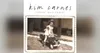
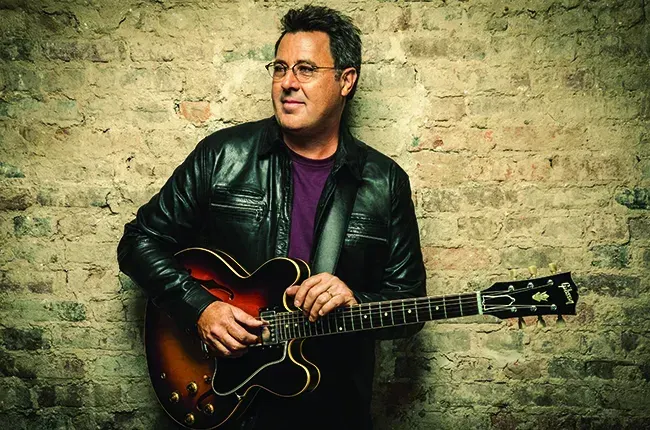
How does a country legend respond to artistic freedom? Vince Gill answered it in 2016 by abandoning Nashville's playbook entirely, twenty-five years after joining the Grand Ole Opry and with nothing left to prove. Down to My Last Bad Habit arrived not as country product but as soul testimony: his first solo album in five years, marking a deliberate turn toward Memphis rather than Music Row. After exhausting his interests in bluegrass, Western swing, and guitar heroics, Gill chose something more vulnerable: refined simplicity in service of raw emotion.
The album opens with "Reasons For The Tears I Cry," immediately establishing its soul-first priorities. Steve Jordan and Willie Weeks, the rhythm section that's backed everyone from Richards to Mayer, lay down a groove that owes more to Stax than to Broadway. Reese Wynans's Hammond B3 testifies rather than accompanies, turning heartbreak into something approaching redemption. This is Gill saying: forget what you think you know about my voice.
The title track, co-written with Al Anderson, transforms addiction metaphor into lived reality. Here, Willie Weeks's walking bassline and country-tinged guitar work, including Paul Franklin's steel guitar, create a musical environment where giving up cigarettes and vintage Corvettes means nothing when she remains in your bloodstream. The organ adds warmth to what could be cold turkey, suggesting that some dependencies we choose to keep. It's remarkable to hear Gill, already among Nashville's most gifted vocalists and guitarists, finding new depths at this stage of his career. His writing cuts closer to the bone than before, while his guitar work has the looseness of a man who stopped auditioning years ago. Throughout the album, his focus on melody recalls Roy Orbison's gift for making simple melodic lines carry enormous weight—hear it in how "I'll Be Waiting For You" lets each phrase resonate with Orbison-like patience, understanding that melody is memory itself.
Gill treats heartbreak as prismatic, refracting differently depending on where the light hits it. "I Can't Do This," co-written with Catt Gravitt and Brennin Hunt, builds from whispered vulnerability to full-throated anguish, the guitars and synthesizers shifting from clean introspection to distorted rage like stages of grief compressed into four minutes. The way it swells toward its climax echoes Phil Collins's emotional architecture—that same understanding of how to make restraint amplify the eventual release.
"My Favorite Movie," co-written with Ashley Monroe, might be the album's quiet revelation. Using cinema as metaphor for memory, the arrangement creates its own soft-focus atmosphere through reverb-drenched guitars, piano, and Paul Franklin's steel guitar. When Gill distinguishes between "Hollywood screens" and "real love," he's making an argument about authenticity that the entire album supports—real pain comes from real connection. The track shares Jackson Browne's literary approach to heartbreak, the knack for making the personal feel universal through precise imagery.
"Take Me Down" returns to the language of willing surrender introduced earlier, but now with anthem-sized conviction. This collaboration with Little Big Town, co-written with Richard Marx, brings Fleetwood Mac-style grandeur to the concept of being overwhelmed by love's power. The layered harmonies and driving rhythm turn personal capitulation into communal catharsis—not unlike the sophisticated rock dynamics Gill has since brought to the Eagles alongside Don Henley, though here the feel suits him particularly well, keeping the emotion immediate rather than observational.
It's "Sad One Comin' On (A Song for George Jones)" that stands as the album's true culmination. It lands as recognition more than resolution: that some of us are drawn to music that mirrors our damage, that the "king of broken hearts" rules a kingdom we choose to inhabit. The barroom imagery, crying steel guitar, and lost love narrative create a perfect, traditional country circle back to the album's opening declaration of tears and reasons. Written after Gill struggled to perform at Jones's funeral, it's both tribute and self-portrait, a final, poignant contrast to the album's prevailing soulful sound.
Throughout, the production by Gill and Justin Niebank serves these songs without overwhelming them. Working from his home studio, Gill exercised complete authorial control: writing or co-writing every track, playing the lead guitar throughout, layering his own harmonies, creating an intimacy that makes heartbreak feel less like performance than confession. The consistent presence of organ and keyboards across tracks creates sonic continuity—a warm blanket of sound that makes the pain feel shared rather than solitary. The guitar work, whether clean and contemplative or distorted and desperate, always serves the emotional moment. The rhythm section of Jordan and Weeks provides not just groove but gravity, keeping these songs grounded even when the emotions threaten to float away.
Down to My Last Bad Habit succeeds because it knows we don't move past certain loves so much as learn to carry them differently. The album's sonic consistency—that blend of '80s soul, adult contemporary polish, and rock dynamics—mirrors the persistence the songs keep circling. These aren't songs about getting over someone; they're songs about the beautiful impossibility of trying.
VERDICT: Vince Gill has crafted a breakup album that refuses easy resolution. By mapping the space between holding on and letting go, he offers something valuable: proof that the last bad habit is usually the first good thing that ever happened to you.
Essential tracks: "Reasons For The Tears I Cry," "Down to My Last Bad Habit," "I'll Be Waiting For You," "I Can't Do This," "My Favorite Movie," "Take Me Down"